玻璃洞察Glass Insight유리 인사이트 · 2026-04-04

韩国玻璃采购正在重排:反倾销阴影下,钢化与加工玻璃为何反而迎来更大窗口Korea Glass Buying Is Being Rewritten: Why Tempered and Processed Glass Gain Momentum Under Trade Pressure한국 유리 조달의 판이 바뀐다: 반덤핑 압력 속에서도 강화·가공유리가 기회를 넓히는 이유

韩国针对中国普通浮法玻璃的反倾销环境并没有让玻璃需求消失,真正变化的是采购结构。普通原片承压的同时,钢化、Low-E、中空、夹层等加工类产品的重要性正在同步上升。Trade pressure on standard float glass from China has not erased Korean demand. What is changing is the buying mix, with tempered, Low-E, insulated, and other processed categories becoming more important.중국산 일반 판유리를 둘러싼 반덤핑 압력이 있다고 해서 한국 유리 수요가 사라진 것은 아니다. 실제로 바뀌고 있는 것은 조달 구조이며, 강화유리·Low-E·복층·접합유리 같은 가공 제품의 중요성이 더 커지고 있다.

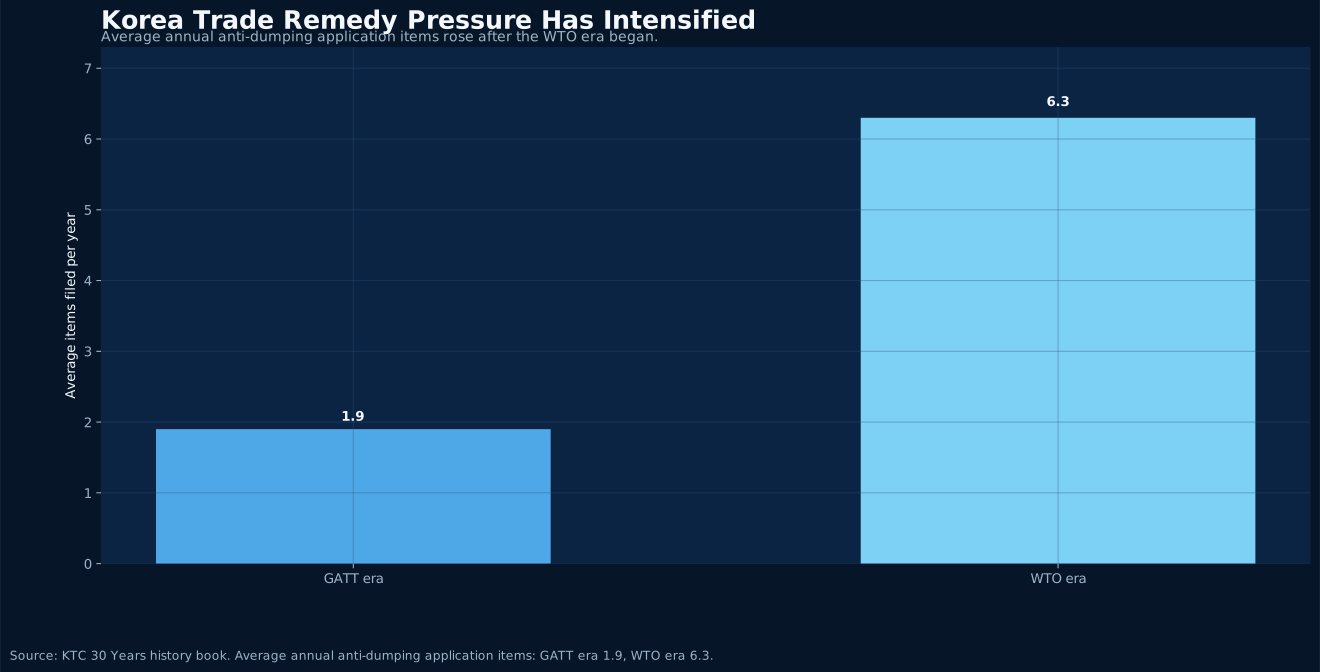
Official chart: KTC's 30-year history shows that average annual anti-dumping applications rose sharply in the WTO era, confirming trade pressure as a structural backdrop.
官方图表:韩国贸易委员会 30 年资料显示,WTO 时代反倾销申请年均品目数明显高于 GATT 时期,贸易压力已成为市场结构变化的重要背景。Official chart: KTC's 30-year history shows that average annual anti-dumping applications rose sharply in the WTO era, confirming trade pressure as a structural backdrop.공식 차트: 무역위원회 30년사에 따르면 WTO 체제 이후 연평균 반덤핑 신청 품목 수가 크게 늘었고, 이는 한국 유리 조달 구조 변화의 배경이 되고 있다.

一、韩国玻璃市场真正变化的不是需求总量,而是采购逻辑1. What is changing in Korea is not total demand, but the logic of procurement1. 한국 유리 시장에서 바뀌는 것은 총수요보다 조달 방식이다

很多人一看到韩国对中国普通浮法玻璃维持反倾销环境,就会下意识把结论做得过于简单,认为韩国市场对中国玻璃机会明显缩小。但如果把韩国建筑、家装、商用空间更新、节能改造以及安全玻璃应用放在一起看,就会发现需求并没有消失,真正发生变化的是采购链条内部的结构重排。采购方越来越少地把问题理解为“买一张普通玻璃”,而是更频繁地从“我要满足什么应用、需要什么性能、怎样规避不必要的贸易成本”出发来反推选型。At first glance, continued anti-dumping pressure on standard Chinese float glass may suggest that Korea offers fewer opportunities. But when construction, renovation, commercial interiors, energy upgrades, and safety-glass applications are viewed together, the picture is different. Demand has not disappeared. Instead, procurement is being reorganized. Buyers are less focused on simply sourcing a sheet of commodity glass and more focused on application fit, performance requirements, and avoiding avoidable trade costs.중국산 일반 판유리에 대한 반덤핑 압력이 계속된다고 해서 한국 시장의 기회가 바로 줄어드는 것은 아니다. 건축, 인테리어 리뉴얼, 상업 공간 개선, 에너지 절감 공사, 안전유리 적용 수요를 함께 보면 수요 자체는 유지되고 있다. 달라진 것은 조달 구조다. 바이어는 이제 단순히 판유리 한 장을 사는 것이 아니라, 어떤 용도에 어떤 성능이 필요하고 어떤 조달 방식이 불필요한 비용을 줄일 수 있는지를 먼저 따져 본다.

也正因为如此,普通原片承受政策与价格双重压力时,加工玻璃、功能玻璃和半成品配套反而更容易进入采购讨论。对于韩国买家而言,只要产品能够在安全、节能、安装效率或项目配套上创造更清晰的价值,供应链就不会只围绕最低单价展开。过去那种以大宗标准板为中心的比较方式,正在被更细分、更场景化的询价逻辑替代。That is why processed glass, functional glass, and semi-finished support products are becoming more visible in procurement discussions when commodity float categories face both policy and pricing pressure. Korean buyers will not organize supply decisions around the lowest unit price alone if a product creates clearer value in safety, energy performance, installation efficiency, or project support. The old comparison model centered on standard bulk sheet supply is giving way to a more segmented, application-led inquiry process.이 때문에 일반 원판이 정책과 가격 압력을 동시에 받을수록 가공유리, 기능성 유리, 반제품 성격의 보조 품목이 오히려 조달 논의에 더 자주 올라온다. 한국 바이어는 안전성, 에너지 성능, 시공 효율, 프로젝트 대응력에서 분명한 가치가 있다면 더 이상 최저 단가만으로 공급 결정을 내리지 않는다. 과거의 대량 표준 원판 비교 방식이 더 세분화되고 용도 중심적인 문의 구조로 바뀌고 있는 셈이다.

二、为什么钢化、Low-E、中空、夹层会成为新的重心2. Why tempered, Low-E, insulated, and laminated categories are becoming central2. 왜 강화유리, Low-E, 복층, 접합유리가 새로운 중심이 되는가

从项目端来看,韩国市场正在持续强调三类要求。第一类是安全要求,比如商业空间、淋浴隔断、栏杆、门窗、公共区域改造等都天然偏向钢化和夹层。第二类是节能要求,特别是涉及建筑外立面、办公与住宅更新时,Low-E 和中空的优先级往往高于普通玻璃。第三类是成品交付要求,也就是项目更希望收到接近可直接安装、可快速转入下一道工序的材料,而不是回到最初级的原片逻辑。On the project side, three priorities stand out in Korea. The first is safety, which naturally favors tempered and laminated products in commercial interiors, shower partitions, railings, doors, windows, and public-area upgrades. The second is energy performance, especially in facade, office, and residential renewal work where Low-E and insulated configurations often outrank standard glass. The third is delivery readiness: project teams increasingly prefer materials that are closer to installation-ready rather than basic undeveloped sheet input.프로젝트 현장에서 한국 시장이 꾸준히 강조하는 조건은 크게 세 가지다. 첫째는 안전성이다. 상업 공간, 샤워부스, 난간, 창호, 공공 구역 리모델링은 자연스럽게 강화유리와 접합유리 수요를 만든다. 둘째는 에너지 성능이다. 특히 외장, 오피스, 주거 리뉴얼에서는 일반 유리보다 Low-E와 복층 구성이 우선되는 경우가 많다. 셋째는 납품 형태다. 프로젝트는 점점 더 원판이 아니라 설치나 후공정에 바로 연결될 수 있는 수준의 자재를 선호한다.

这意味着谁能把“用途+规格+工艺+交期”四个维度同时说清楚,谁就更接近真实的韩国采购需求。韩国市场并不是不需要中国供应,而是不再欢迎只有单一价格表的供货方式。功能型产品的比例提升,本质上是在提高供应商的专业门槛,也在扩大有组织能力的供应商空间。This means that the supplier best positioned for Korea is the one that can align use case, specification, process route, and lead time in one coherent proposal. The market is not rejecting Chinese supply; it is rejecting supply that arrives only as a flat price sheet. As the share of functional products rises, the technical threshold goes up, but so does the opportunity for suppliers with stronger coordination capability.결국 한국 시장에 더 잘 맞는 공급사는 용도, 사양, 가공 방식, 납기를 하나의 제안 안에서 설명할 수 있는 곳이다. 한국 시장이 중국 공급 자체를 거부하는 것이 아니라, 단순 가격표만 내미는 방식에 덜 반응하고 있는 것이다. 기능성 제품 비중이 높아질수록 기술적 진입장벽은 올라가지만, 동시에 조율 능력이 있는 공급사에게는 기회가 커진다.
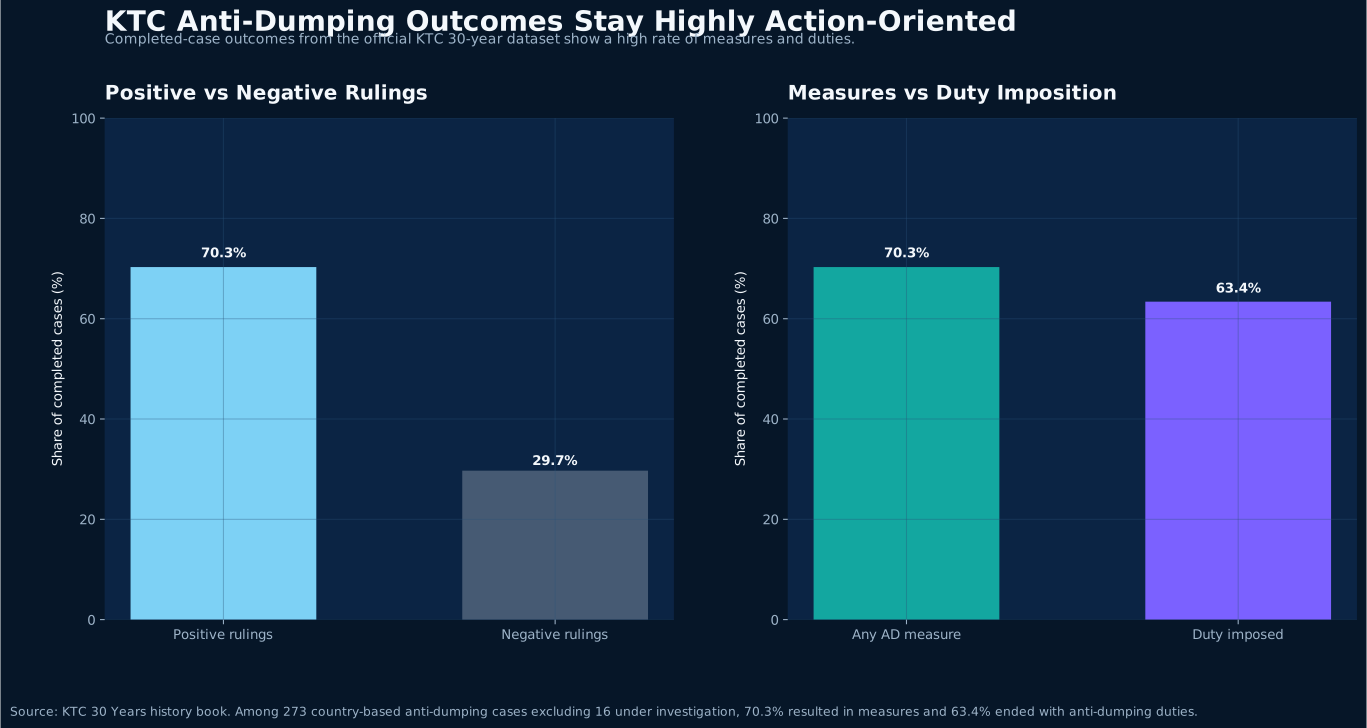
Official chart: 70.3% of completed KTC anti-dumping cases resulted in positive rulings, and 63.4% ended with duties, underscoring the policy pressure on commodity inputs.
官方图表:在韩国贸易委员会已完成的反倾销案件中,正面裁定占比 70.3%,其中 63.4% 最终落到正式征税,说明基础原片类目面临的政策约束并不轻。Official chart: 70.3% of completed KTC anti-dumping cases resulted in positive rulings, and 63.4% ended with duties, underscoring the policy pressure on commodity inputs.공식 차트: 무역위원회가 완료한 반덤핑 사건 중 70.3%가 긍정 판정, 63.4%가 실제 관세 부과로 이어져 일반 원판 계열의 정책 부담이 작지 않음을 보여 준다.

三、本地加工扩张,对外部供应商反而提出了更高层次的机会3. Local processing growth creates a higher-level opportunity for outside suppliers3. 한국 내 가공 확대는 외부 공급사에 더 높은 수준의 기회를 만든다

韩国本地加工企业、协会成员变化以及公开市场信号说明,韩国并不是要把所有链条都完全封闭在本地,而是在加强加工和项目端的组织能力。换句话说,韩国市场更重视的是“在哪里完成最关键的附加值”,而不是“所有环节是否全部自己做”。这对外部供应商来说并不是坏消息,因为许多项目仍然需要稳定的原料、半成品、定制规格以及更高灵活度的配合。Public industry signals suggest that Korea is not trying to localize every layer of the chain. Instead, it is strengthening processing and project-end coordination. In practice, this means the market cares more about where the highest-value step is completed than whether every step is domestic. For outside suppliers, that is not bad news. Many projects still require reliable base material, semi-finished formats, customized dimensions, and flexible cooperation.공개 시장 신호를 보면 한국은 모든 공정을 완전히 자국 내에서 닫아두려는 것이 아니라, 가공과 프로젝트 대응 조직력을 강화하는 방향으로 움직이고 있다. 즉 핵심 부가가치를 어디에서 만들 것인가가 더 중요해지고 있는 것이다. 외부 공급사 입장에서는 이것이 오히려 기회다. 많은 프로젝트가 여전히 안정적인 원재료, 반제품, 맞춤 규격, 유연한 협업을 필요로 하기 때문이다.

真正的问题不在于“是否还能卖进去”,而在于“你卖进去的是什么层级的产品”。如果还是停留在最初级、最容易被替代、最容易被税务和价格双重压缩的原片层面,当然会感受到压力;但如果把定位提升到安全、节能、规格复杂、交付要求更高的产品带,就会看到需求并没有消失,只是竞争方式已经升级。The real question is not whether supply can still enter Korea, but at what level it enters. Suppliers that remain trapped in the most basic, easiest-to-replace, tariff-sensitive commodity layer will feel pressure. Suppliers that move up into safety-oriented, energy-oriented, specification-heavy, and delivery-sensitive categories will see that demand remains; what changed is the standard of competition.핵심은 한국에 들어갈 수 있느냐가 아니라, 어떤 수준의 제품으로 들어가느냐다. 가장 기초적이고 대체가 쉽고 관세와 가격 압력을 동시에 받는 영역에 머물면 당연히 부담이 크다. 하지만 안전성, 에너지 성능, 복잡한 사양, 높은 납품 완성도가 요구되는 제품군으로 올라가면 수요는 여전히 존재한다. 바뀐 것은 경쟁의 기준이다.

四、韩国买家现在更在意的,不只是价格,而是沟通与执行确定性4. Korean buyers now care not only about price, but about communication and execution certainty4. 한국 바이어가 더 중요하게 보는 것은 가격만이 아니라 소통과 실행의 확실성이다

在玻璃这类容易受规格、尺寸、孔位、边部处理、镀膜差异影响的产品里,买家的风险并不只来自采购单价,而更多来自沟通偏差和返工成本。韩国市场在这一点上尤为明显,因为项目流程通常更强调时间表、材料一致性以及供应方对细节的确认能力。也就是说,一家供应商如果只能报一个笼统价格,却不能把技术参数与交付节点说清楚,那么哪怕价格看起来便宜,也未必会获得信任。In glass categories where dimensions, edge work, coating choices, hole positions, and performance details matter, buyer risk is driven less by nominal unit price and more by communication error and rework cost. Korea is especially sensitive to this because project workflows tend to demand tighter schedules, stronger consistency, and clearer confirmation of detail. A supplier that can quote a number but cannot explain technical and delivery implications will not automatically win trust, even if the price appears low.유리처럼 규격, 치수, 홀 가공, 엣지 처리, 코팅 차이가 중요한 품목에서는 바이어의 리스크가 단순 단가보다 커뮤니케이션 오류와 재작업 비용에서 더 크게 발생한다. 한국 시장은 특히 일정 관리와 자재 일관성, 세부 확인 능력을 중시하기 때문에 이런 특성이 더 뚜렷하다. 즉 단순 가격만 제시하고 기술 조건이나 납품 일정을 명확히 설명하지 못하면, 가격이 낮아 보여도 신뢰를 얻기 어렵다.

因此,从外贸视角看,韩国玻璃采购越来越像“技术配合型采购”,而不是“单纯批发型采购”。谁能把规格书读懂、把终端用途问清、把工艺限制提前讲明、把包装与交付节点安排清楚,谁就更容易成为稳定合作对象。这也是为什么多语言沟通、规格确认速度、样品与小单反应能力,会变成真正的成交影响因素。From a trade perspective, Korean glass buying is looking more like technical-coordination procurement than simple wholesale procurement. The supplier that can read the spec sheet correctly, ask the right application questions, explain process constraints early, and align packaging and delivery timing is more likely to become a stable partner. That is why multilingual communication, specification confirmation speed, and responsiveness on sample or small-batch requests increasingly affect closing outcomes.무역 관점에서 보면 한국의 유리 조달은 단순 도매형 구매보다 기술 협업형 구매에 가까워지고 있다. 사양서를 정확히 읽고, 최종 용도를 제대로 질문하고, 공정상 제약을 미리 설명하고, 포장과 납기 일정을 정리할 수 있는 공급사가 더 안정적인 파트너가 된다. 그래서 다국어 커뮤니케이션, 사양 확인 속도, 샘플과 소량 주문 대응력이 실제 거래 성사에 더 큰 영향을 미치고 있다.
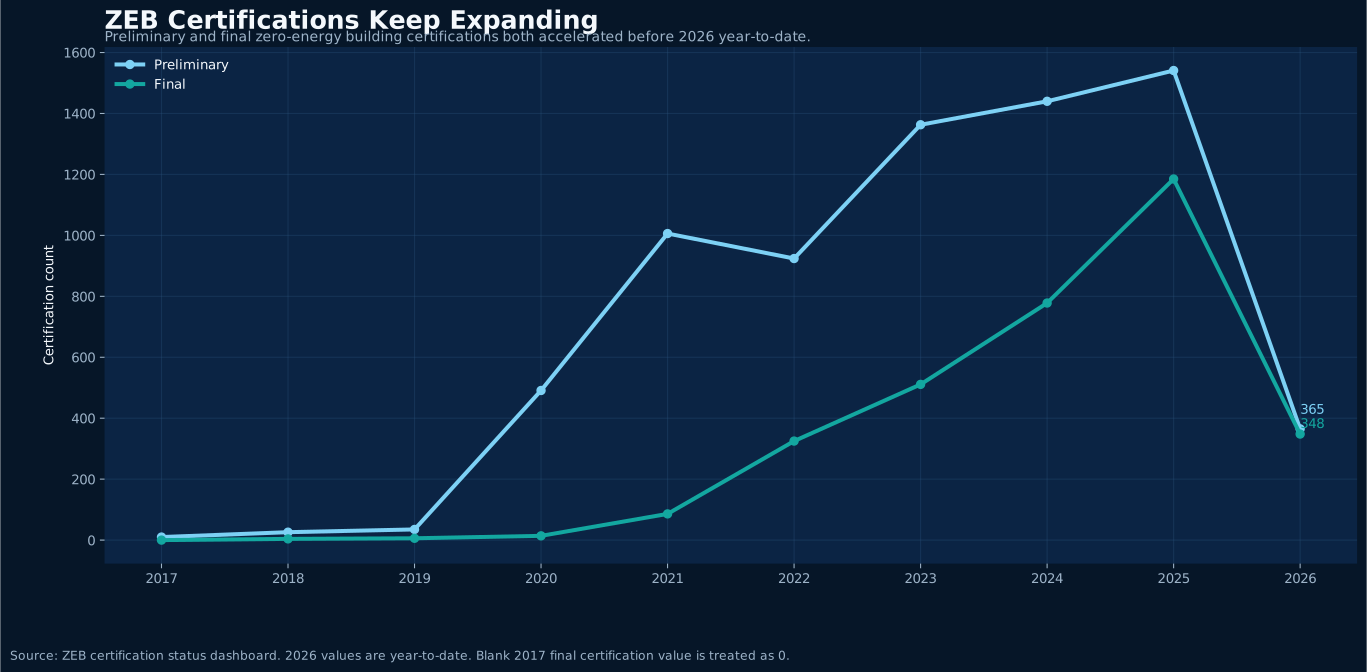
Official chart: Korea's ZEB certifications have expanded year after year, showing a growing project base for energy-performance glass configurations.
官方图表:韩国 ZEB 认证数量在近几年持续上升,预认证与本认证同步扩大,意味着节能型玻璃配置的项目基础正在变厚。Official chart: Korea's ZEB certifications have expanded year after year, showing a growing project base for energy-performance glass configurations.공식 차트: 한국의 ZEB 인증 건수는 최근 몇 년간 꾸준히 증가했고 예비인증과 본인증이 함께 확대되면서 고성능 유리 수요 기반이 두꺼워지고 있다.

五、接下来值得持续观察的三个公开信号5. Three public signals worth watching next5. 앞으로 계속 봐야 할 세 가지 공개 신호

第一,看韩国公开市场里与建筑节能、安全标准、旧建筑更新有关的政策与项目变化,因为这些内容往往最直接推动 Low-E、中空、钢化和夹层等高附加值品类。第二,看本地加工企业、协会成员、设备投资和市场活动,因为这能反映韩国本地供应链更需要什么样的输入。第三,看公开进口结构变化,如果某些基础品类承压,而半成品或加工类需求上升,就意味着市场并不是萎缩,而是在重新分层。First, monitor public policy and project shifts linked to energy efficiency, safety standards, and building renewal, since these often drive demand for Low-E, insulated, tempered, and laminated products. Second, watch processor memberships, equipment investment, and local industry activity to understand what Korean supply chains need upstream. Third, track public import-structure changes: if basic categories weaken while semi-finished or processed demand rises, the market is not shrinking; it is being re-layered.첫째, 건축 에너지 효율, 안전 기준, 노후 건물 리뉴얼과 관련된 공개 정책과 프로젝트 변화를 봐야 한다. 이런 변화는 Low-E, 복층, 강화, 접합 같은 고부가 제품 수요를 직접 자극한다. 둘째, 가공업체 회원 동향, 설비 투자, 업계 활동을 봐야 한다. 이것이 한국 공급망이 어떤 입력 자재를 필요로 하는지 보여준다. 셋째, 공개 수입 구조 변화를 봐야 한다. 기초 품목은 약해지고 반제품이나 가공 제품 수요가 늘어난다면, 시장은 줄어드는 것이 아니라 재편되고 있는 것이다.

对希望进入韩国市场的供应方而言,最危险的误判是把“普通原片不好做”直接等同于“玻璃机会变少”。更准确的判断应该是:韩国正在把玻璃采购从低附加值竞争,重新推向更强调功能、交付和沟通能力的竞争。对于真正能做规格配合和交付协同的供应商来说,这反而意味着更清晰的切入口。For suppliers targeting Korea, the most dangerous mistake is to treat pressure on ordinary float glass as proof that overall glass opportunity is shrinking. A more accurate conclusion is that Korea is moving procurement away from low-value competition and toward performance, delivery, and coordination capability. For suppliers that can handle specifications and execution well, that can create a clearer entry point rather than a narrower one.한국 시장을 노리는 공급사가 가장 경계해야 할 오해는 일반 판유리가 어렵다는 사실을 곧바로 전체 유리 기회 축소로 연결하는 것이다. 더 정확한 해석은 한국이 유리 조달을 저부가 경쟁에서 성능, 납기, 협업 능력 중심 경쟁으로 옮기고 있다는 점이다. 사양 대응과 실행 협업을 잘하는 공급사에게는 오히려 더 선명한 진입 기회가 생기는 셈이다.

六、对韩国项目型买家来说,未来更有价值的是“可执行方案”6. For Korean project buyers, executable solutions will matter more than broad promises6. 한국의 프로젝트형 바이어에게 더 중요한 것은 실행 가능한 제안이다

很多面向韩国的玻璃询价,表面上看是在问价格,实际上是在问供应商有没有把项目执行难点提前想清楚。比如尺寸偏差如何控制、是否能按项目节奏分批交付、包装是否适配现场搬运、不同用途之间能否做统一规格管理、若发生临时调整是否还有补救空间。这些问题在普通价格单里通常看不到,却正是买家判断供应商是否可靠的地方。越是强调安全、节能与工艺细节的项目,越会把这类执行问题提前放到桌面上讨论。Many Korean glass inquiries appear to be about price, but in reality they are asking whether the supplier has already thought through execution risk. Can size deviation be controlled? Can shipments be staged to match installation schedules? Is the packing suitable for site handling? Can specifications be managed consistently across multiple applications? Is there room to recover if project timing changes? These are rarely visible in a basic price sheet, yet they strongly influence whether a buyer sees the supplier as reliable.한국향 유리 문의는 겉으로는 가격을 묻는 것처럼 보여도 실제로는 공급사가 실행 리스크를 얼마나 미리 생각했는지를 묻는 경우가 많다. 치수 오차를 어떻게 관리하는지, 시공 일정에 맞춰 분할 납품이 가능한지, 포장이 현장 이동에 적합한지, 여러 용도 사이에서 사양을 어떻게 통일할지, 일정이 바뀌면 얼마나 유연하게 대응할 수 있는지 등이 핵심이다. 이런 요소는 단순 가격표에는 잘 드러나지 않지만, 바이어의 신뢰를 결정하는 요인이 된다.

因此,韩国玻璃市场未来最有竞争力的表达方式,不是笼统地说“我们什么都能做”,而是把应用场景、规格区间、工艺能力、交付节奏和沟通流程拆开讲清楚。只要市场继续向功能化、项目化和精细化采购推进,能够提供可执行方案的供应商,就会比只会报低价的供应商拥有更稳定的合作机会。That is why the most competitive message for Korea will not be “we can do everything,” but a clearer explanation of application scenarios, specification windows, process capability, delivery rhythm, and communication workflow. As long as the market continues moving toward more functional, project-driven, and precision-focused procurement, suppliers that present executable solutions will keep outperforming suppliers that rely only on low pricing.그래서 앞으로 한국 시장에서 더 경쟁력 있는 표현은 “무엇이든 할 수 있다”가 아니라, 적용 시나리오, 사양 범위, 가공 능력, 납품 리듬, 커뮤니케이션 흐름을 구체적으로 설명하는 방식이다. 시장이 계속 기능 중심, 프로젝트 중심, 정밀 조달 중심으로 이동하는 한, 실행 가능한 제안을 제시하는 공급사가 단순 저가 경쟁형 공급사보다 더 안정적인 기회를 확보하게 될 것이다.

如果把这种变化放到更长的时间轴上看,韩国玻璃采购的门槛其实是在提高,但机会也在同步变得更清晰。那些能把材料能力、工艺理解和项目执行连接起来的供应商,会更容易被市场识别;反之,只停留在原片思维和价格思维里的供货方式,会越来越难建立稳定位置。Viewed over a longer horizon, the threshold for serving Korean glass demand is rising, but the opportunity is also becoming clearer. Suppliers that connect material capability, process understanding, and project execution will become easier for the market to recognize. Those that remain locked in commodity-sheet thinking and pure price competition will find it harder to hold stable ground.이 변화를 더 긴 시간축에서 보면 한국 유리 시장의 진입 기준은 높아지고 있지만, 동시에 기회는 더 분명해지고 있다. 소재 역량, 가공 이해, 프로젝트 실행을 연결할 수 있는 공급사는 시장에서 더 쉽게 인식된다. 반대로 원판 중심 사고와 가격 경쟁에만 머무는 방식은 안정적인 위치를 확보하기가 점점 더 어려워질 것이다.
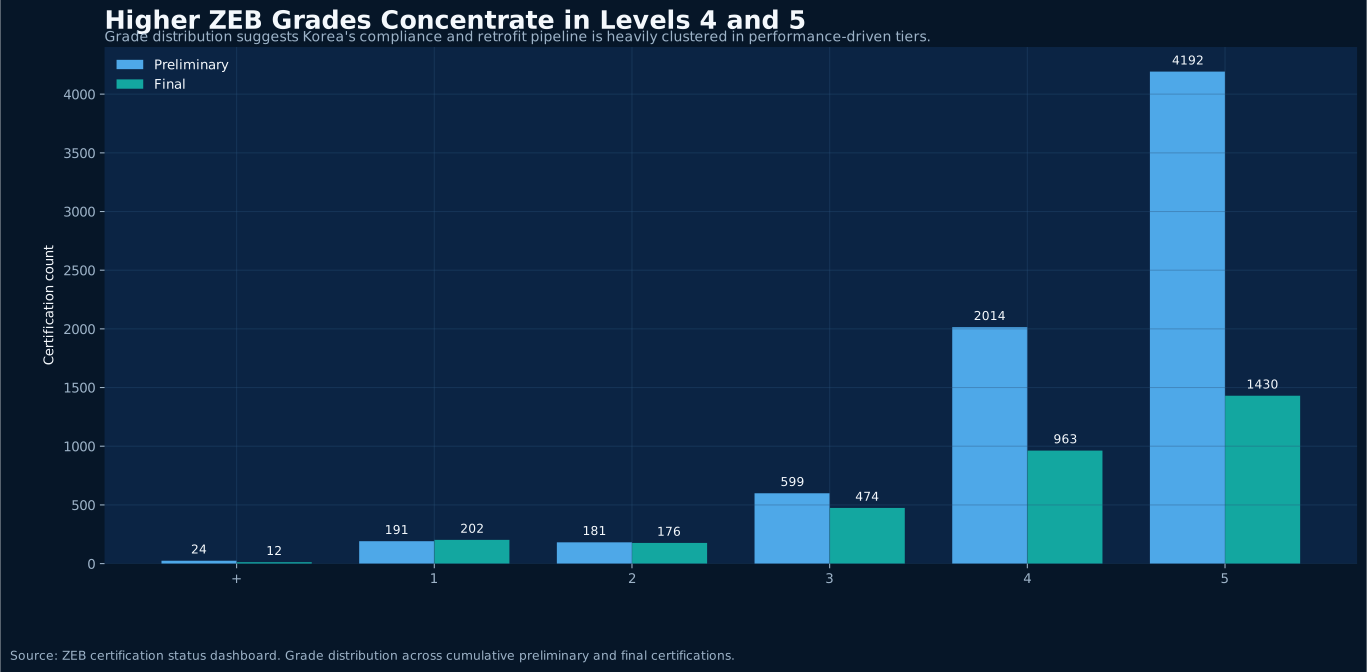
Official chart: ZEB certifications cluster heavily in Grades 4 and 5, suggesting demand is concentrating around scalable, compliance-ready energy configurations.
官方图表:ZEB 等级分布高度集中在 4 级与 5 级,说明韩国项目端的需求越来越偏向“够用且可批量落地”的节能配置,而不是单纯价格比较。Official chart: ZEB certifications cluster heavily in Grades 4 and 5, suggesting demand is concentrating around scalable, compliance-ready energy configurations.공식 차트: ZEB 등급 분포가 4등급과 5등급에 집중되어 있어 한국 프로젝트 수요가 단순 가격 비교보다 양산 가능한 에너지 성능 조합으로 이동하고 있음을 보여 준다.