1. What is changing in Korea is not total demand, but the logic of procurement
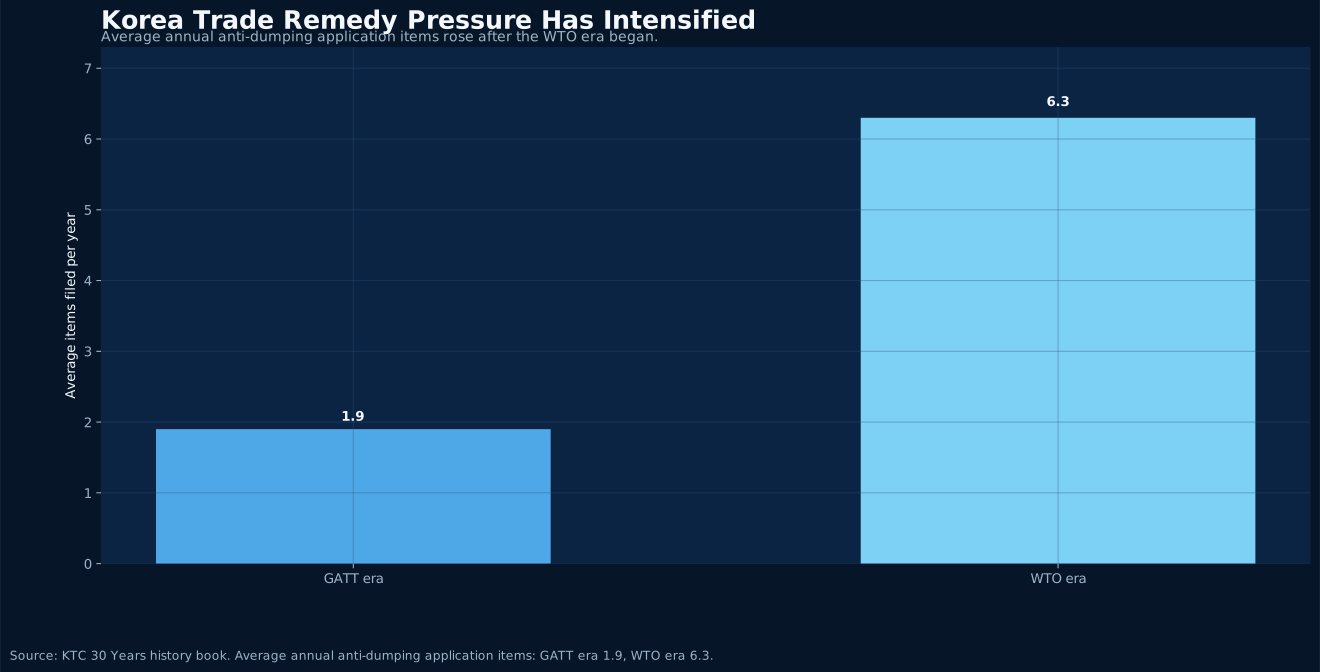
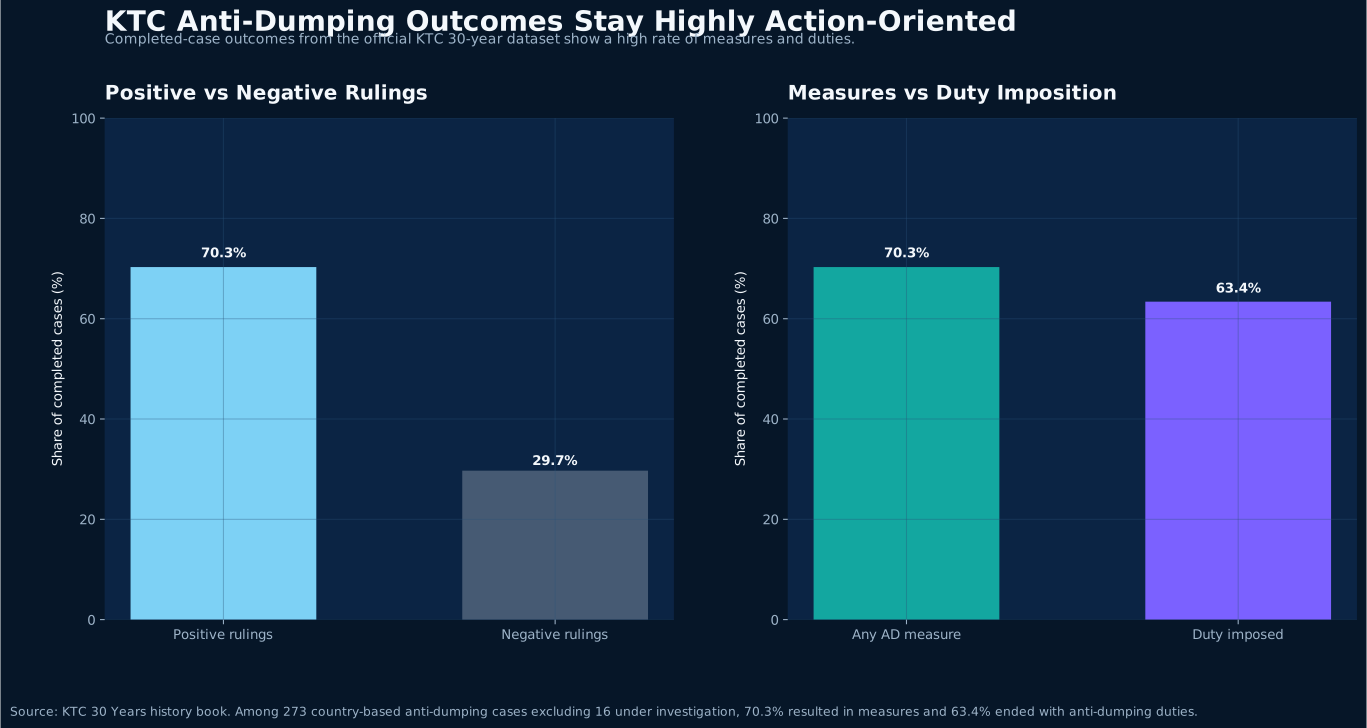
At first glance, continued anti-dumping pressure on standard Chinese float glass may suggest that Korea offers fewer opportunities. But when construction, renovation, commercial interiors, energy upgrades, and safety-glass applications are viewed together, the picture is different. Demand has not disappeared. Instead, procurement is being reorganized. Buyers are less focused on simply sourcing a sheet of commodity glass and more focused on application fit, performance requirements, and avoiding avoidable trade costs.
That is why processed glass, functional glass, and semi-finished support products are becoming more visible in procurement discussions when commodity float categories face both policy and pricing pressure. Korean buyers will not organize supply decisions around the lowest unit price alone if a product creates clearer value in safety, energy performance, installation efficiency, or project support. The old comparison model centered on standard bulk sheet supply is giving way to a more segmented, application-led inquiry process.
2. Why tempered, Low-E, insulated, and laminated categories are becoming central
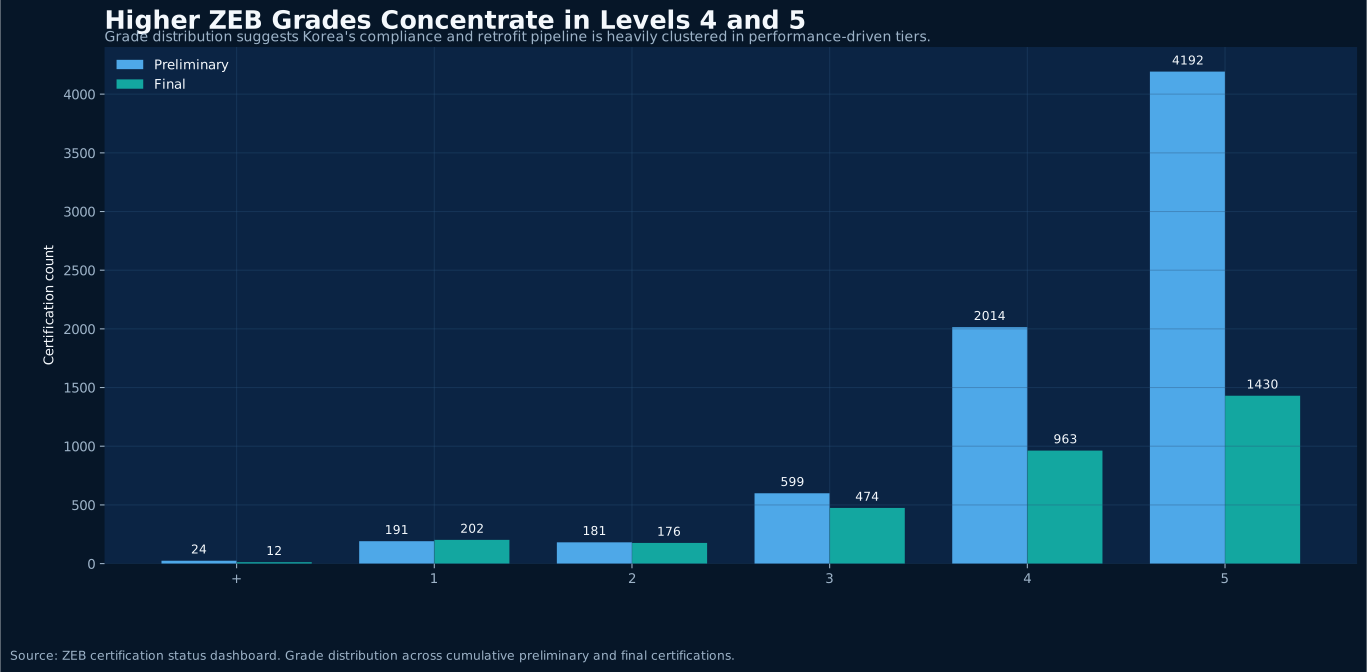
On the project side, three priorities stand out in Korea. The first is safety, which naturally favors tempered and laminated products in commercial interiors, shower partitions, railings, doors, windows, and public-area upgrades. The second is energy performance, especially in facade, office, and residential renewal work where Low-E and insulated configurations often outrank standard glass. The third is delivery readiness: project teams increasingly prefer materials that are closer to installation-ready rather than basic undeveloped sheet input.
This means that the supplier best positioned for Korea is the one that can align use case, specification, process route, and lead time in one coherent proposal. The market is not rejecting Chinese supply; it is rejecting supply that arrives only as a flat price sheet. As the share of functional products rises, the technical threshold goes up, but so does the opportunity for suppliers with stronger coordination capability.
3. Local processing growth creates a higher-level opportunity for outside suppliers
Public industry signals suggest that Korea is not trying to localize every layer of the chain. Instead, it is strengthening processing and project-end coordination. In practice, this means the market cares more about where the highest-value step is completed than whether every step is domestic. For outside suppliers, that is not bad news. Many projects still require reliable base material, semi-finished formats, customized dimensions, and flexible cooperation.
The real question is not whether supply can still enter Korea, but at what level it enters. Suppliers that remain trapped in the most basic, easiest-to-replace, tariff-sensitive commodity layer will feel pressure. Suppliers that move up into safety-oriented, energy-oriented, specification-heavy, and delivery-sensitive categories will see that demand remains; what changed is the standard of competition.
4. Korean buyers now care not only about price, but about communication and execution certainty
In glass categories where dimensions, edge work, coating choices, hole positions, and performance details matter, buyer risk is driven less by nominal unit price and more by communication error and rework cost. Korea is especially sensitive to this because project workflows tend to demand tighter schedules, stronger consistency, and clearer confirmation of detail. A supplier that can quote a number but cannot explain technical and delivery implications will not automatically win trust, even if the price appears low.
From a trade perspective, Korean glass buying is looking more like technical-coordination procurement than simple wholesale procurement. The supplier that can read the spec sheet correctly, ask the right application questions, explain process constraints early, and align packaging and delivery timing is more likely to become a stable partner. That is why multilingual communication, specification confirmation speed, and responsiveness on sample or small-batch requests increasingly affect closing outcomes.
5. Three public signals worth watching next
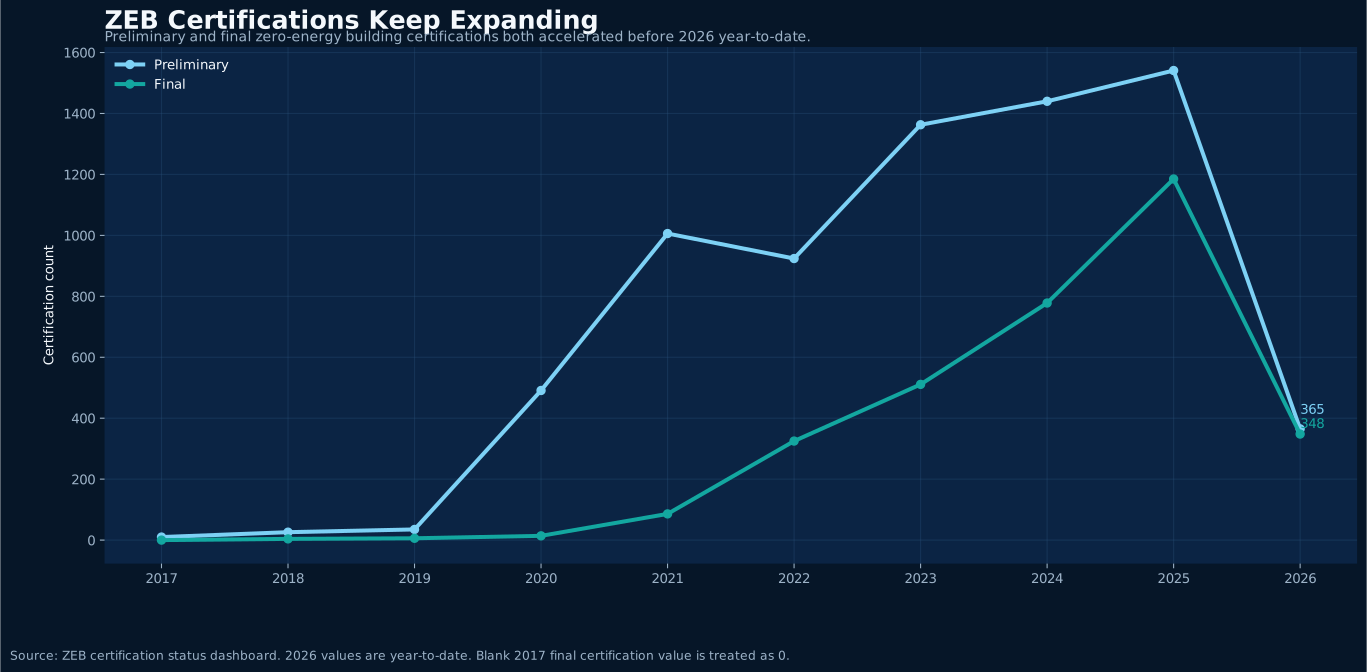
First, monitor public policy and project shifts linked to energy efficiency, safety standards, and building renewal, since these often drive demand for Low-E, insulated, tempered, and laminated products. Second, watch processor memberships, equipment investment, and local industry activity to understand what Korean supply chains need upstream. Third, track public import-structure changes: if basic categories weaken while semi-finished or processed demand rises, the market is not shrinking; it is being re-layered.
For suppliers targeting Korea, the most dangerous mistake is to treat pressure on ordinary float glass as proof that overall glass opportunity is shrinking. A more accurate conclusion is that Korea is moving procurement away from low-value competition and toward performance, delivery, and coordination capability. For suppliers that can handle specifications and execution well, that can create a clearer entry point rather than a narrower one.
6. For Korean project buyers, executable solutions will matter more than broad promises
Many Korean glass inquiries appear to be about price, but in reality they are asking whether the supplier has already thought through execution risk. Can size deviation be controlled? Can shipments be staged to match installation schedules? Is the packing suitable for site handling? Can specifications be managed consistently across multiple applications? Is there room to recover if project timing changes? These are rarely visible in a basic price sheet, yet they strongly influence whether a buyer sees the supplier as reliable.
That is why the most competitive message for Korea will not be “we can do everything,” but a clearer explanation of application scenarios, specification windows, process capability, delivery rhythm, and communication workflow. As long as the market continues moving toward more functional, project-driven, and precision-focused procurement, suppliers that present executable solutions will keep outperforming suppliers that rely only on low pricing.
Viewed over a longer horizon, the threshold for serving Korean glass demand is rising, but the opportunity is also becoming clearer. Suppliers that connect material capability, process understanding, and project execution will become easier for the market to recognize. Those that remain locked in commodity-sheet thinking and pure price competition will find it harder to hold stable ground.