I. Chinese Platforms in Korea: From Price Advantage to Market Dominance
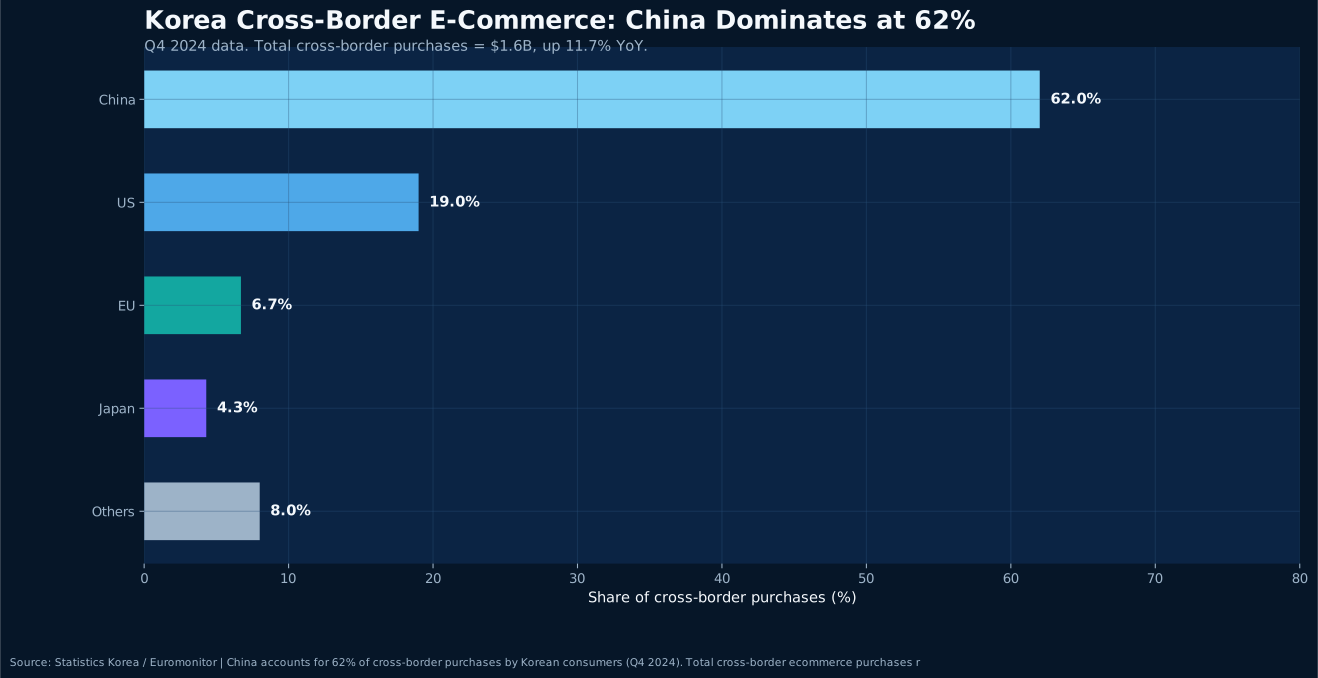
The expansion of Chinese cross-border ecommerce platforms in Korea is striking. According to Statistics Korea, Chinese goods accounted for 62% of Korean consumers' overseas direct purchases in Q4 2024—far surpassing the US at 19% and the EU at 6.7%. AliExpress and Temu command 8.88 million and 8.3 million monthly active Korean users respectively, second only to domestic giant Coupang. This market structure was built primarily on hyper-competitive pricing: Chinese platforms use fully-managed models connecting factories directly to consumers, compressing intermediary costs to a minimum.
Korea's overall cross-border ecommerce market is expanding rapidly. Transaction volume reached $1.6 billion (KRW 2.19 trillion) in 2024, up 11.7% year-on-year. By category, apparel/fashion leads at 45.5%, food/grocery at 17.2%, and home/auto at 9%. Notably, Alibaba Group invested KRW 100 billion ($71.4 million) in Korean women's fashion app Ably in December 2024, signaling Chinese platforms' shift from direct sales to ecosystem building. Korean consumer demand for low-price goods combined with Chinese supply chain cost advantages creates powerful market momentum.
II. Product Safety Crisis: The 144 Toxic Substance Violations Warning
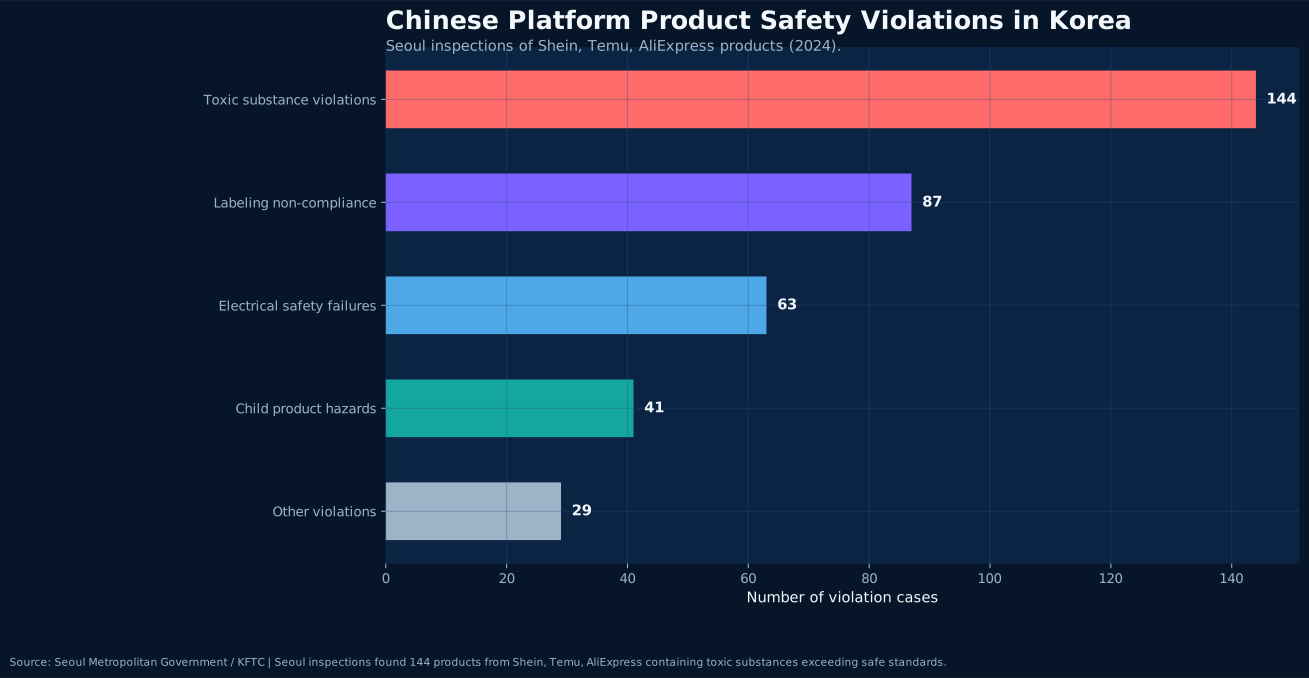
The flipside of rapid expansion is serious safety compliance gaps. Random inspections by Seoul Metropolitan Government on products from Shein, Temu, and AliExpress found 144 items with toxic substances exceeding Korean safety standards. Violation categories span toxic substance exceedances, labeling non-compliance, electrical safety failures, and children's product hazards. Most of these products entered Korea through small-parcel direct mail, bypassing traditional import inspection processes.
Korea's Fair Trade Commission (KFTC) has also launched compliance investigations into Chinese platforms' personal data collection and usage practices. AliExpress has already undergone KFTC inspections following elevated consumer complaint rates. Regulation is no longer limited to products themselves—it now extends to data protection and consumer rights across the entire chain. For SMEs selling through Chinese platforms into Korea, compliance costs are rising sharply—from KC certification and ingredient testing to privacy policy compliance, every link requires professional investment.
III. 2026 Year of Compliance: Global Duty Exemption Abolition and KC Certification Tightening
2026 is defined as the 'Year of Compliance' for cross-border ecommerce. The EU, Japan, Thailand, Mexico, and other major markets are simultaneously abolishing or sharply tightening small-parcel duty exemptions, fundamentally challenging business models that relied on low declared values to avoid duties. While Korea has not fully eliminated the sub-$150 duty exemption, regulatory trends clearly point toward stricter import inspections and higher compliance requirements.
The KC (Korea Certification) system is Korea's core product safety gateway. Under the Electrical Appliances Safety Management Act, all electronic products must obtain KC certification before sale in Korea, with annual factory audits and product sampling. However, cross-border small-parcel direct mail has partially bypassed this system. As regulations tighten, KATS is pushing to extend KC certification requirements to all products sold through cross-border channels. The impact on Chinese sellers is profound: from upfront certification costs to ongoing compliance maintenance, operating costs may rise 15-25%.
IV. From Traffic Era to Quality Era: Chinese Platforms' Strategic Pivot
Facing regulatory escalation, Chinese cross-border platforms are accelerating strategic transformation. The industry is transitioning from a 'universal growth era' to structural differentiation, with growth flowing to companies possessing 'localization DNA' and 'brand cores.' Temu and Shein have begun establishing local customer service teams and return processing centers in Korea, while AliExpress invests in Korean domestic companies to strengthen ecosystem stickiness. This shift from pure price competition to a 'compliance + experience + repurchase' closed loop is an inevitable response to regulatory pressure.
For SMEs exporting to Korea through Chinese cross-border platforms, response strategies should be layered. Short-term: prioritize KC certification and Korean ingredient labeling compliance to prevent products from being returned or destroyed during inspections. Medium-term: establish independent Korean local warehousing and after-sales systems to boost consumer trust. Long-term: develop customized products aligned with Korean consumer preferences, upgrading from a 'low-price channel' to a 'quality channel.' Compliance is not a cost burden but an investment in building long-term competitive moats.
V. The Future of China-Korea Cross-Border E-Commerce: Compliance-Driven Competition
Looking ahead, competition in the China-Korea cross-border ecommerce market will shift from 'who is cheaper' to 'who is more compliant.' Korea's cross-border ecommerce logistics market is projected to grow from $4.95 billion in 2025 to $6.91 billion by 2030, at a 7.09% CAGR. This growth will be captured primarily by compliance-driven operators. Platforms and sellers that first establish robust KC certification systems, data compliance frameworks, and localized after-sales networks will win in the next industry shakeout.
For MO-TEK's China-Korea trade client base, the compliance trend in cross-border ecommerce is both challenge and opportunity. The challenge lies in rising compliance costs and operational complexity; the opportunity is that compliance barriers will eliminate low-quality competitors, creating healthier markets for professionally-operated businesses. Key action items: first, immediately initiate KC certification and Korean Personal Information Protection Act compliance assessments; second, establish long-term partnerships with Korean local testing agencies; third, incorporate compliance capability into supplier screening criteria. Firms that move first in the 'Year of Compliance' will hold advantageous positions in the market restructuring over the next three to five years.