1. China’s Explosive Livestream E-Commerce Growth
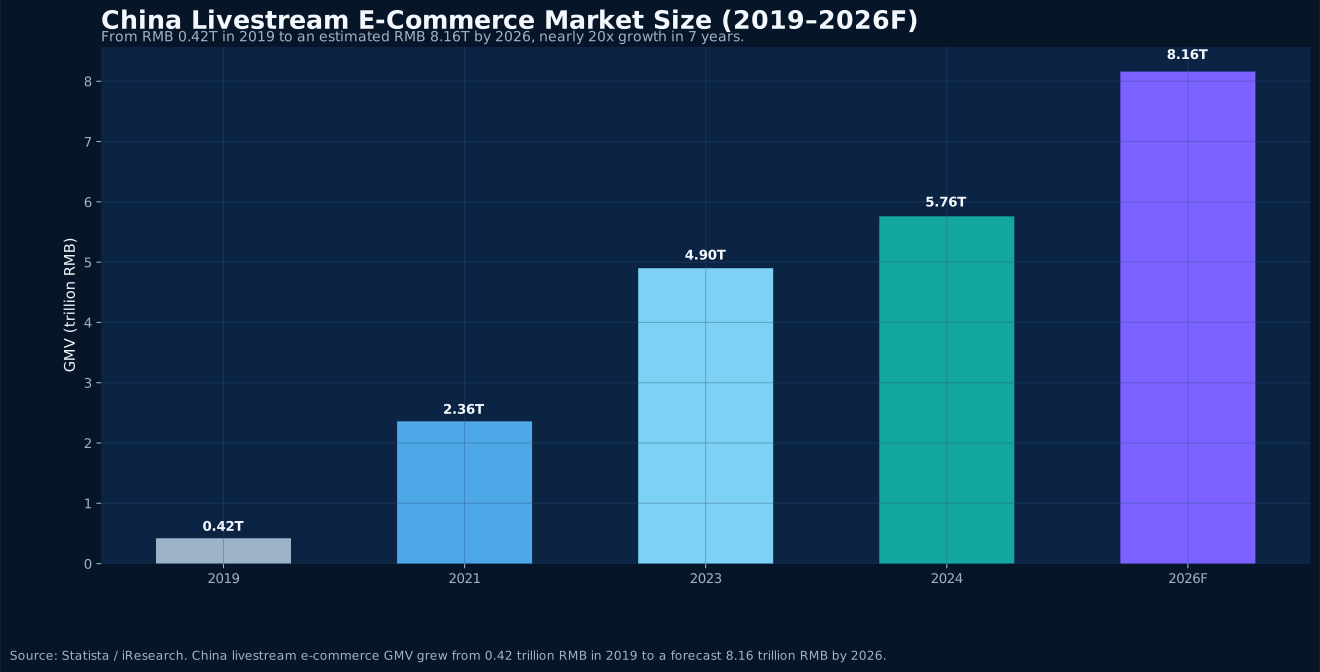
China’s livestream e-commerce market is experiencing unprecedented growth. Statistics show that China’s livestream e-commerce GMV started at RMB 0.42 trillion in 2019, reached 5.76 trillion in 2024, and is projected to exceed 8.16 trillion by 2026—nearly twenty-fold growth in just seven years. This growth rate is virtually unparalleled in global e-commerce history, reflecting Chinese consumers’ strong preference for content-driven shopping.
Behind this transformation lies fierce competition among platforms like Douyin, Taobao Live, and Kuaishou. Douyin has become China’s largest livestream e-commerce platform, with its interest-based commerce model deeply integrating product traffic with content traffic through algorithmic recommendations, fundamentally changing the traditional search-based shopping path. For Korean companies hoping to enter the Chinese market, understanding livestream e-commerce’s operational logic has become an unavoidable business imperative.
2. Korea’s Rapid Rise in Live Commerce
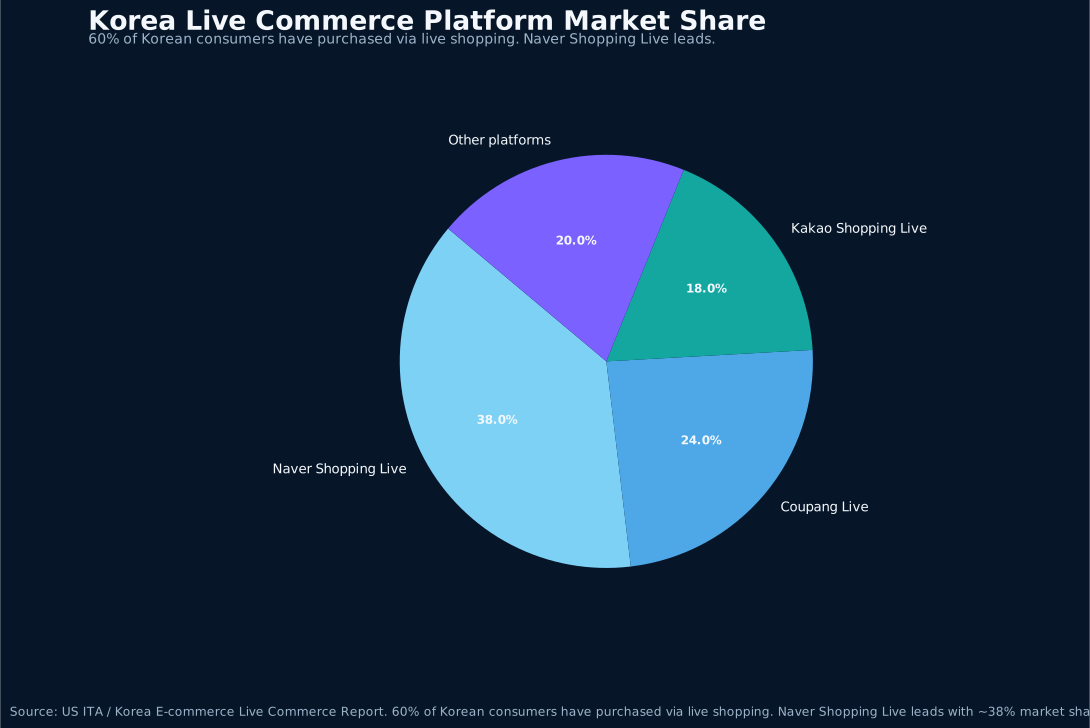
Korea’s livestream e-commerce sector is likewise entering rapid growth. Surveys show approximately 60% of Korean consumers have completed purchases through livestream formats, and live retail is projected to capture one-fifth of Korea’s online retail revenue by 2025. Among platforms, Naver Shopping Live leads with approximately 38% market share through deep integration with Naver Smart Store and Naver Pay, while Coupang Live and Kakao Shopping Live hold 24% and 18% respectively.
Compared to China’s market, Korea’s livestream e-commerce is characterized by greater emphasis on quality content and brand storytelling. Korean consumers demand higher conversion rates from live shopping and show lower tolerance for exaggerated claims and low-price disruption. This differentiation means Chinese companies conducting livestream e-commerce in the Korean market need to localize their content strategies rather than simply replicating domestic models.
3. China’s Comprehensive Tightening of Livestream Regulations
In June 2025, China’s State Administration for Market Regulation and the Cyberspace Administration of China jointly issued the Draft Regulations for Livestream E-Commerce Supervision and Administration—China’s first comprehensive national-level regulatory framework specifically targeting livestream e-commerce. The regulation spans seven chapters with fifty-seven articles, covering key areas including false advertising, price fraud, data manipulation, and counterfeit products.
In January 2026, regulators further released two separate documents implementing more granular supervision of livestream e-commerce and online trading platforms. The new rules explicitly require livestream platforms to bear joint liability for streamer behavior and establish product quality traceability systems. For Korean companies selling products to the Chinese market through livestreaming, this means compliance infrastructure must receive significantly greater attention.
4. Korea’s Parallel Regulatory Evolution
Korea is simultaneously strengthening cross-border e-commerce regulation. With the rapid expansion of Chinese cross-border platforms like Temu, AliExpress, and SHEIN in the Korean market, the Korean government has significantly raised consumer protection and product safety requirements for cross-border e-commerce. Particularly in livestream e-commerce, Korea’s Fair Trade Commission and the Ministry of Science and ICT are developing stricter platform responsibility regulations.
For Chinese companies hoping to sell to Korean consumers through livestreaming, it is essential to monitor the latest changes in Korea’s e-commerce legal framework, including product safety certification (KC mark), consumer rights protection, and return and exchange policies. Korea has also begun implementing stricter penalties for fake reviews and order manipulation in live shopping.
5. Compliance Challenges and Market Opportunities
Against the backdrop of tightening regulations in both countries, cross-border livestream compliance has become a new imperative for China-Korea trade enterprises. For Korean companies, conducting livestream e-commerce in China requires establishing compliant streamer management systems, product promotion review processes, and ensuring all products meet relevant Chinese certification requirements. In Korean-advantaged categories like cosmetics, food, and health products, regulatory complexity is particularly pronounced.
However, tightening regulations also bring opportunities. Companies that can build comprehensive compliance systems will gain competitive advantages, as strict regulation will filter out non-compliant smaller competitors. For international trade firms like MO-TEK that understand both countries’ regulatory environments, helping clients build cross-border livestream compliance frameworks is emerging as a new service opportunity.
6. Outlook and Recommendations
Looking ahead, China-Korea livestream e-commerce will exhibit several clear trends. First, AI technology will be deeply integrated into live commerce scenarios—from AI hosts and real-time translation to intelligent product recommendations—technology will lower the language and cultural barriers of cross-border livestreaming. Second, the convergence of both countries’ regulatory frameworks will create conditions for establishing unified cross-border livestream compliance standards.
For companies planning to develop China-Korea cross-border livestream business, we recommend: first, proactively building compliance teams familiar with both countries’ regulatory requirements; second, prioritizing content localization and adjusting livestream strategies according to target market consumer habits; third, leveraging professional trade service institutions to reduce compliance risks and hedge against policy uncertainty.