1. The Official Implementation of CBAM
In January 2026, the European Union’s Carbon Border Adjustment Mechanism (CBAM) officially began levying carbon tariffs. This is the world’s first major policy directly linking carbon pricing with trade legislation, marking the formal entry of international trade into the era of carbon pricing. CBAM initially covers six sectors: cement, iron and steel, aluminum, fertilizers, electricity, and hydrogen. Importers must purchase and surrender CBAM certificates to cover the embedded carbon emissions of imported products.
From a design logic perspective, CBAM’s core purpose is preventing carbon leakage—the scenario where EU companies relocate production to countries with lower carbon costs. As EU ETS free allowances are gradually phased out, actual CBAM costs will rise year by year, with full pricing expected by 2034. This will have profound implications for export enterprises in both China and Korea.
2. Structural Analysis of Korea’s Affected Exports
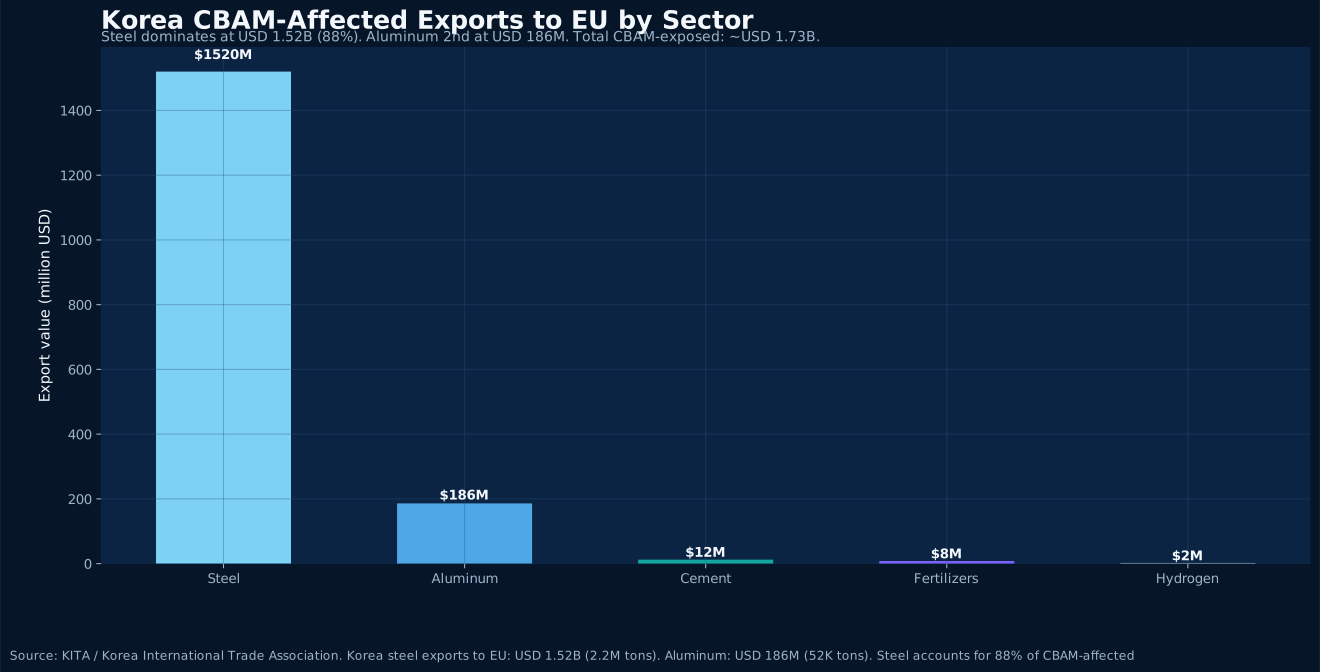
According to Korea International Trade Association data, Korea’s steel exports to the EU reach USD 1.52 billion (over 2.2 million tonnes), holding an absolute dominant position among the five CBAM-affected categories at 88%. Aluminum exports rank second at approximately 52,000 tonnes valued at USD 186 million. Cement, fertilizer, and hydrogen export volumes are relatively small.
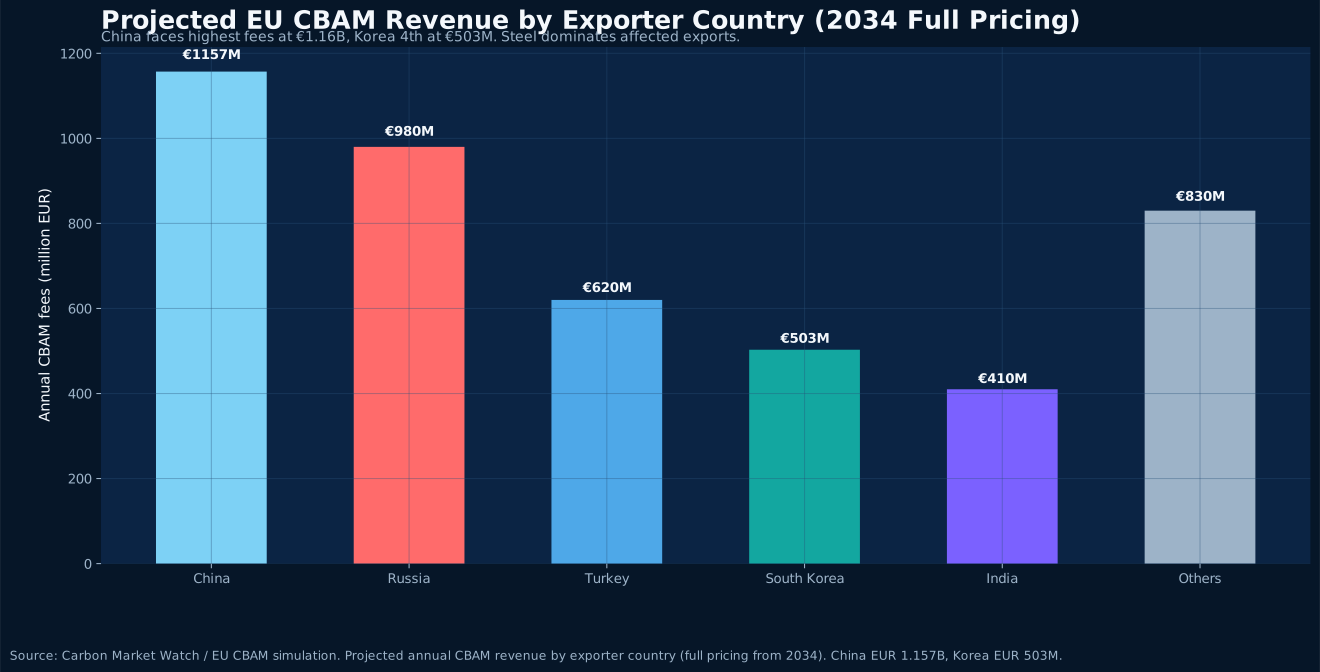
CBAM fee calculation is based on the difference between EU carbon prices and the exporting country’s carbon price. As of 2025, the gap between EU ETS and Korea’s K-ETS carbon prices is approximately USD 64 per tonne. This means Korean exporters face significant CBAM supplementary costs, particularly in the steel sector. Under full pricing simulation, Korea faces approximately €503 million in annual CBAM fees.
3. China’s Even Larger Scale Impact
As the world’s largest producer of steel and aluminum, China faces the highest absolute costs under the CBAM framework. Under full pricing simulation, China faces approximately €1.157 billion in annual CBAM fees, ranking first globally. Although CBAM-covered products account for only about 1.8% of China’s total exports to the EU, the impact on the steel and aluminum sectors specifically is enormous.
China currently exports most of its steel and aluminum products to Southeast Asia, with only 9% and 12% respectively going directly to the EU. However, as other countries may emulate the EU in establishing CBAM-like mechanisms, Chinese companies must view low-carbon transition as a long-term strategy rather than short-term compliance. This also creates new opportunities for China-Korea cooperation in green technology.
4. Differences and Connections in China-Korea Carbon Markets
Both China and Korea have established their own carbon emissions trading systems. Korea’s K-ETS was East Asia’s first national carbon trading market, but its current carbon price is only about USD 6.45 per tonne, far below the EU ETS level of approximately USD 70. China’s national carbon market launched in 2021, currently covering mainly the power sector, with similarly low carbon prices.
The enormous gap between both countries’ carbon prices and the EU’s directly affects CBAM payment costs. If Korea’s K-ETS carbon price rises to approximately €20 per tonne in the future, its annual CBAM fees could decrease from €503 million to €377 million. This provides strong economic incentives for China and Korea to explore carbon market interconnection. If both countries could establish a carbon price mutual recognition mechanism, it would significantly reduce the carbon costs of exports to Europe.
5. Green Transition Strategies for China-Korea Enterprises
Facing CBAM pressure, China-Korea enterprises need to advance green transition on multiple fronts. First, establishing comprehensive carbon footprint traceability systems is foundational. EU CBAM requires importers to report embedded carbon emissions of products; if exporters cannot provide accurate data, default values (usually higher) will be applied. This means China-Korea companies must build full supply chain carbon data management capabilities from raw materials to finished products.
Second, investing in low-carbon production technology is the fundamental solution. Korea’s POSCO has announced accelerating R&D of hydrogen-based steelmaking technology, while China’s Baowu Steel is exploring electric arc furnace steelmaking alternatives. In the aluminum sector, promoting renewable energy-powered aluminum smelting technology will significantly reduce embedded carbon emissions. China and Korea have strong complementarity in these green technology areas, with broad cooperation potential.
6. Trade Landscape Reshaping and MO-TEK’s Perspective
CBAM’s implementation is reshaping the global trade landscape, affecting not only direct EU exports but also China-Korea bilateral trade through supply chain transmission. For example, if Korean companies import Chinese steel semi-finished products for further processing and export to the EU, the carbon emissions from Chinese mining and component manufacturing stages also need to be included in CBAM calculations. This supply chain carbon responsibility transmission effect will profoundly influence the pattern of China-Korea industrial cooperation.
As an international trade firm familiar with both countries’ trade environments, MO-TEK believes CBAM will accelerate the greening of China-Korea trade. Companies should proactively deploy carbon footprint management, build EU-standard carbon reporting capabilities, and actively explore China-Korea green technology cooperation opportunities to transform CBAM pressure into competitive advantage.