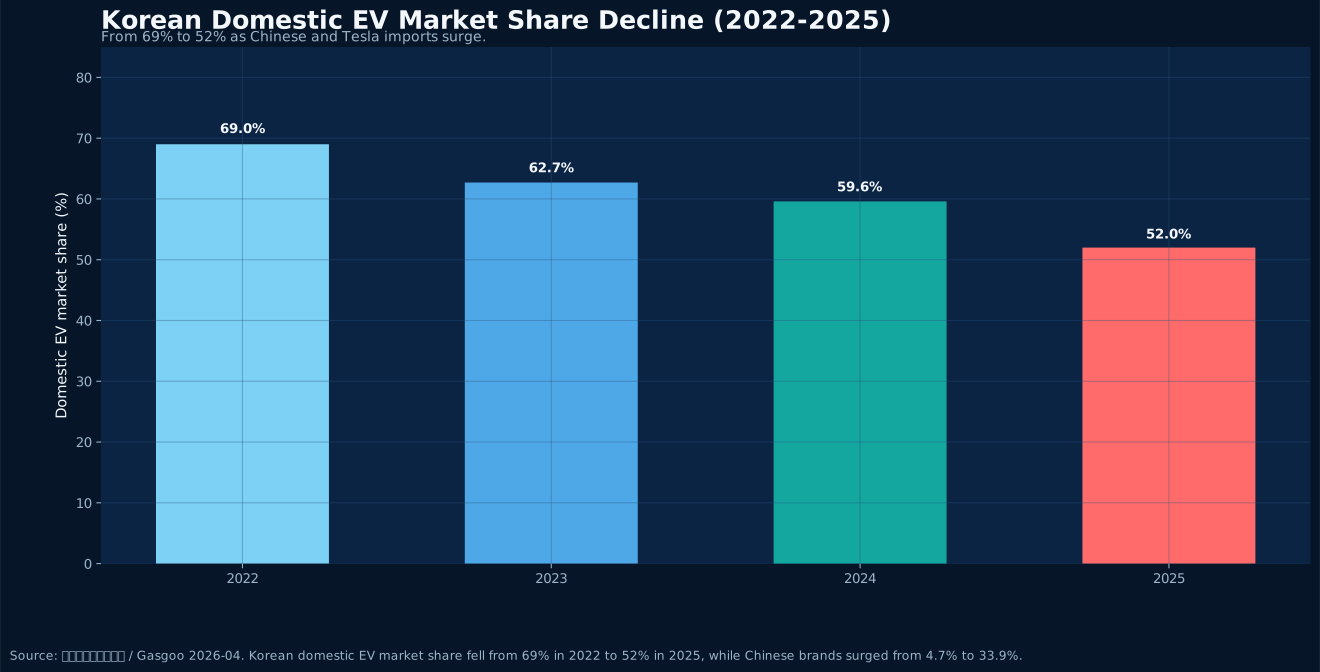
An Earthquake in Korea’s EV Market
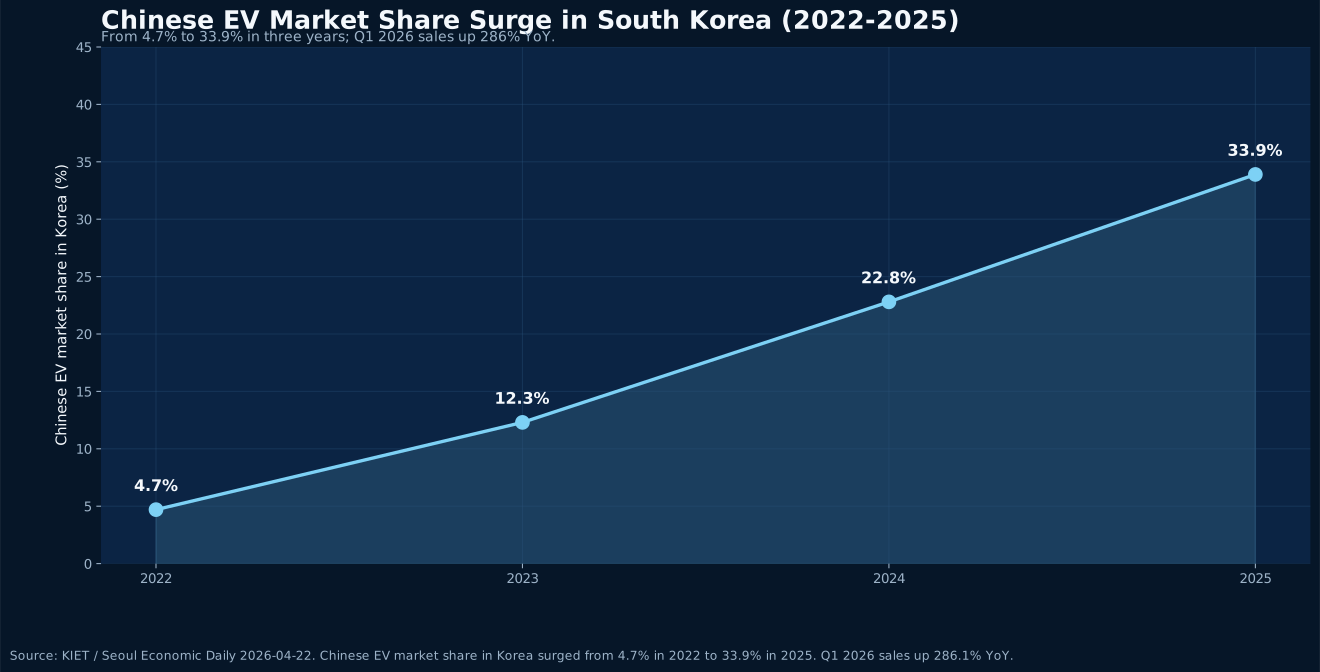
In April 2026, data released by the Korea Automobile Importers & Distributors Association (KAIDA) sent shockwaves through the Korean auto industry: Chinese EV brands sold approximately 25,000 units in Korea during Q1 2026, a staggering 286.1% year-on-year increase. This figure not only set a historical record but also marked China’s transition from peripheral market testing to comprehensive market penetration in Korea.
Tracing the trajectory over the past four years, Chinese EV market share in Korea climbed from 4.7% in 2022 to 12.3% in 2023, 22.8% in 2024, and 33.9% in 2025. Meanwhile, Korean domestic EV market share slid from 69% in 2022 to a historic low of 52% in 2025. The domestic dominance that Korea’s auto industry once took pride in is being rapidly dismantled.
BYD: A Disruptor in Its First Year
Among Chinese EV brands advancing into Korea, BYD stands out as the most prominent pioneer. In 2025, BYD officially entered the Korean market and sold 6,107 units in its first year, instantly becoming the second-largest imported EV brand behind Tesla’s 59,916 units. By March 2026, BYD’s monthly sales reached 1,664 units with cumulative sales of 3,968 units, maintaining strong growth momentum.
BYD’s competitive strategy is precise and aggressive. Its flagship models are priced around 20 million KRW (approximately USD 15,000), directly targeting Korean consumers’ value-for-money sensitivity. Compared to Hyundai IONIQ 5’s starting price of about 50 million KRW and Kia EV6’s roughly 55 million KRW, BYD offers comparable or superior configurations at less than half the price. BYD has set a target of exceeding 10,000 units sold in Korea in 2026, with three new models planned for launch within the year.
New Forces Accelerating: Zeekr and XPeng Enter the Stage
BYD is not the only Chinese brand eyeing the Korean market. Zeekr has confirmed that its 7X model will debut in Korea in summer 2026. This mid-size pure electric SUV is priced between RMB 200,000 and 280,000 in China and is expected to be competitively priced in Korea as well. XPeng is also actively exploring Korean market entry.
Beyond price advantages, several key factors enable Chinese brands’ rapid expansion in Korea: first, Chinese EVs have achieved world-leading maturity in the ‘three-electric’ systems (battery, motor, electronic control); second, Chinese brands innovate in intelligent cockpit and assisted driving software far faster than traditional automakers; third, a well-established global supply chain enables Chinese manufacturers to achieve high-quality production at exceptionally low costs.
Korea’s Policy Response and Industry Anxiety
Facing the surge of Chinese EVs, the Korean government has adopted a multi-pronged response. In 2026, Korea’s passenger EV subsidy budget increased 20% from 780 billion KRW in 2025 to 936 billion KRW (approximately USD 658 million). The dual purpose is clear: stimulate overall EV demand while using subsidy thresholds to create competitive breathing room for domestic brands.
The government also released the ‘New Energy Vehicle and Battery Competitiveness Enhancement Plan,’ allocating 430 billion KRW for R&D in EV core materials, components, and manufacturing technology. Additionally, Korea provides over 15 trillion KRW in policy financing for auto parts suppliers and strengthens guarantee mechanisms for Korean component manufacturers operating overseas. However, industry consensus holds that subsidies and policy support alone cannot fundamentally reverse the competitive landscape—Korean automakers must achieve breakthrough improvements in product competitiveness and cost control.
The New Landscape of China-Korea Automotive Competition and Cooperation
The rise of Chinese EV brands in the Korean market is reshaping the competitive and cooperative dynamics of the China-Korea automotive industry. On one hand, Korean automakers face an unprecedented battle to defend their home market; on the other, an increasing number of foreign automakers are adopting Chinese technology to manufacture EVs. Though Hyundai Motor Group maintains a significant global position, it faces a ‘two-front squeeze’ at home—Tesla descending from the premium segment and BYD ascending from the mass market—with its competitive space being continuously compressed.
For Chinese EV supply chain companies, Korea’s market opening also represents broader component export opportunities. From power batteries to electric drive systems, from intelligent cockpit chips to charging equipment, Chinese suppliers are accelerating penetration through direct exports or joint ventures with Korean companies. Over the next three to five years, deep integration between China and Korea’s EV industries will become an irreversible trend. How to seek cooperation through competition and maintain competitiveness through cooperation will test the strategic wisdom of both nations’ automotive sectors.