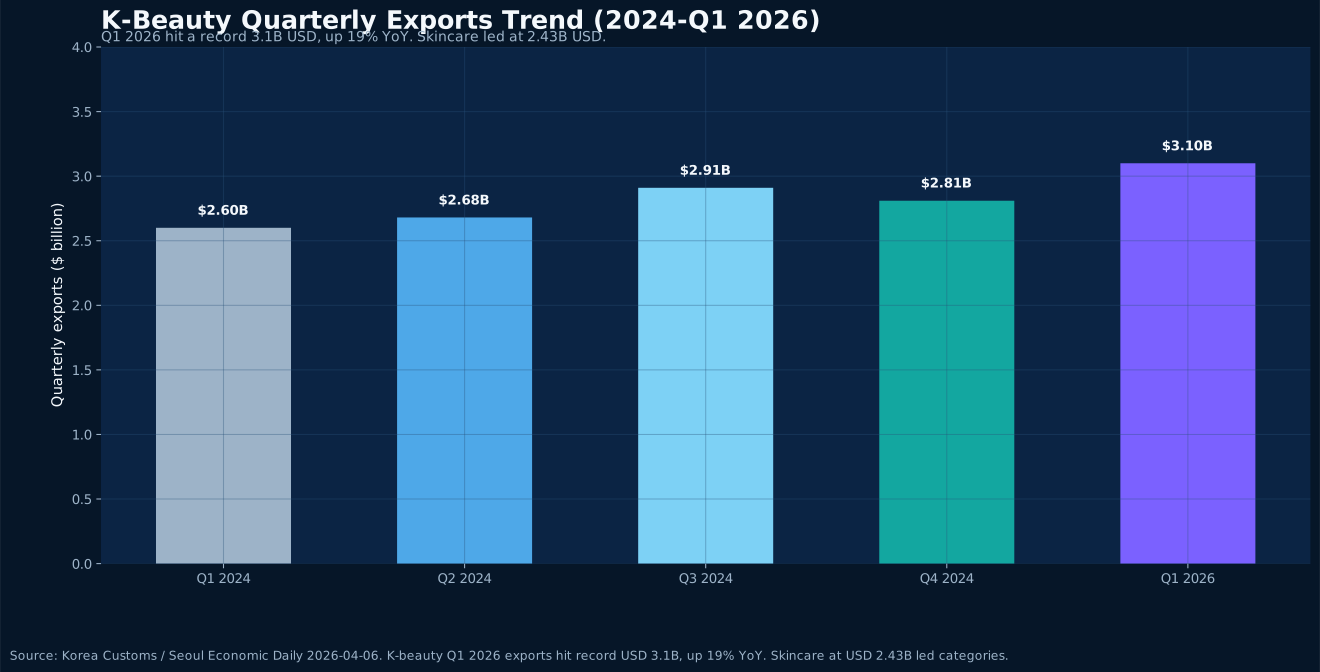
A Historic Quarterly Record: The USD 3.1 Billion Milestone
In Q1 2026, Korea's cosmetics exports totaled USD 3.1 billion, up 19% year-on-year, setting the highest single-quarter export record in history. March alone saw exports of USD 1.19 billion, a 29.3% YoY surge that drove the quarterly breakthrough. This figure continues the strong upward trajectory since 2024—when annual exports first crossed the USD 10 billion mark at USD 10.2 billion—and 2025, which saw total exports exceed USD 11 billion.
Skincare remained the dominant category at USD 2.43 billion, accounting for 78.4% of total exports, followed by color cosmetics and personal cleansing products. Notably, K-fragrance exports have seen explosive growth, emerging as a new growth pole within the K-Beauty landscape. The sustained export growth reflects global consumers' continued enthusiasm for Korean beauty's innovative formulations, natural ingredients, and sophisticated packaging.
A Historic Shift: The US Overtakes China
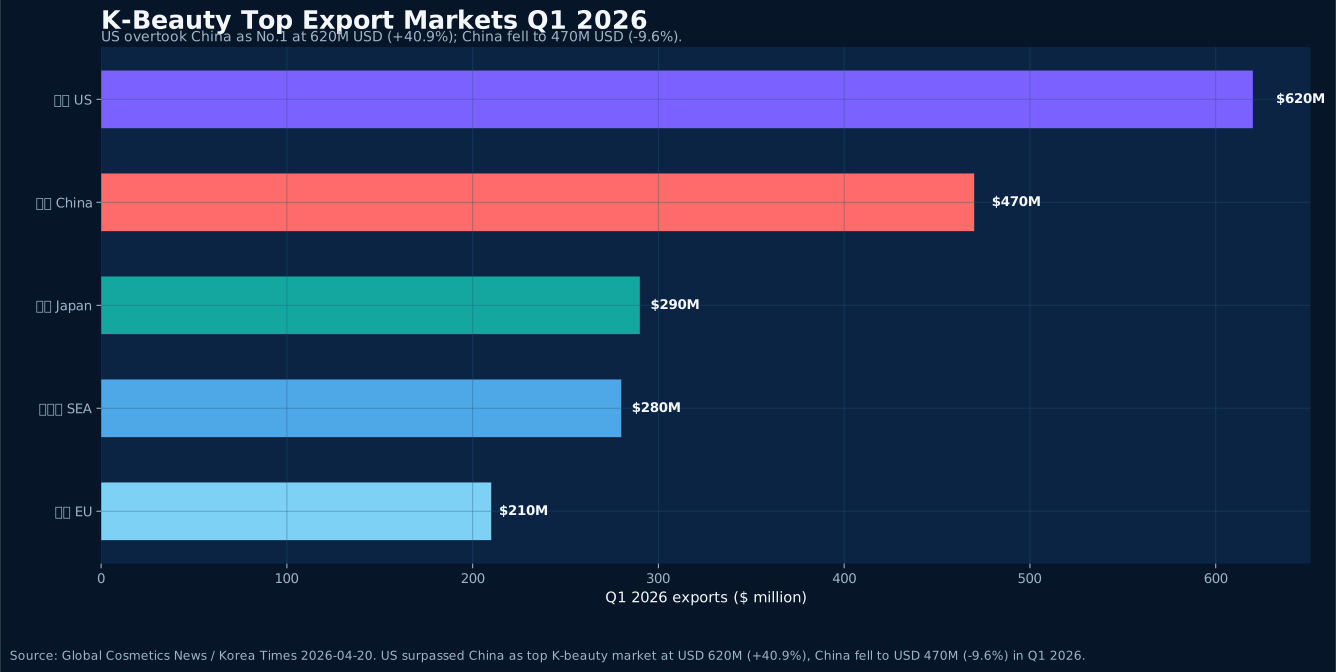
The most significant structural change in Q1 2026 was the United States surpassing China to become K-beauty's top export market at USD 620 million. US-bound exports grew 40.9% YoY, accounting for 19.8% of total exports and leading all major markets in growth rate. China meanwhile continued under pressure, with Q1 exports falling to USD 470 million, down 9.6% YoY.
This historic reversal was no accident. China had long been the undisputed top market for Korean cosmetics, still leading at USD 2.49 billion in 2024. But China's share in Korean cosmetics exports has been declining from its 2021 peak, first falling below 25% in 2024. The rise of domestic Chinese beauty brands, shifting consumer preferences, and increasingly stringent NMPA regulations have collectively weakened demand for Korean imported cosmetics.
Decoding the US Market Boom
K-beauty's explosive growth in the US market is driven by multiple factors. First, viral K-Beauty content on social media platforms like TikTok and Instagram continues to generate massive traffic dividends for Korean beauty brands. Concepts like 'Glass Skin' and '10-Step Skincare' have become embedded in mainstream American consumer consciousness.
Second, an increasing number of Korean indie beauty brands are directly reaching US consumers through major retail channels like Amazon, Sephora, and Ulta Beauty, dramatically expanding distribution. Additionally, Korean beauty's continued R&D investment—from functional skincare (sunscreen, anti-aging, brightening) to natural organic ingredients—produces differentiated products meeting increasingly diverse American consumer needs. The US market's higher profit margins have also attracted more Korean brands to shift their strategic focus westward.
China Market Challenges and C-Beauty's Rise
Weakening demand for Korean cosmetics in China results from multiple converging factors. The powerful rise of C-Beauty brands is the most critical variable—Proya, Florasis, and Winona have built strong brand loyalty among Chinese consumers through precise 'guochao' marketing, extreme value-for-money, and efficient livestream commerce models. The 'domestic substitution' trend in China's cosmetics market is accelerating.
Simultaneously, NMPA's regulatory requirements for imported cosmetics registration have become increasingly stringent, with new ingredient filing systems and efficacy claim regulations raising both compliance costs and time-to-market for Korean brands entering China. Some Korean SME beauty brands have begun proactively scaling back China operations in favor of emerging markets in Southeast Asia, the Middle East, and Latin America. However, China's sheer volume as the world's second-largest cosmetics market means that completely abandoning it would be unwise for any international brand.
Global Diversification: K-Beauty's Next Chapter
Facing this historic market shift, Korea's beauty industry is accelerating global diversification. In 2025, Korean cosmetics exports reached 205 countries and territories, up from 202 in 2024. Japan remained solid at USD 290 million in Q1 (+7.4%), Southeast Asia followed closely at USD 280 million, and the EU reached USD 210 million.
The Korean government and industry associations are actively supporting beauty export globalization. KOTRA has established K-Beauty promotion centers in major global markets, while the Korea SMEs and Startups Agency provides dedicated financing for export-oriented beauty companies. For importers and agents in the Chinese market, K-beauty's export diversification means intensified competition but also more rational evaluation of China market strategies by Korean brands. Those that offer differentiated value and commit to localized China operations will continue to hold their ground.