1. China’s explosive cold chain logistics growth
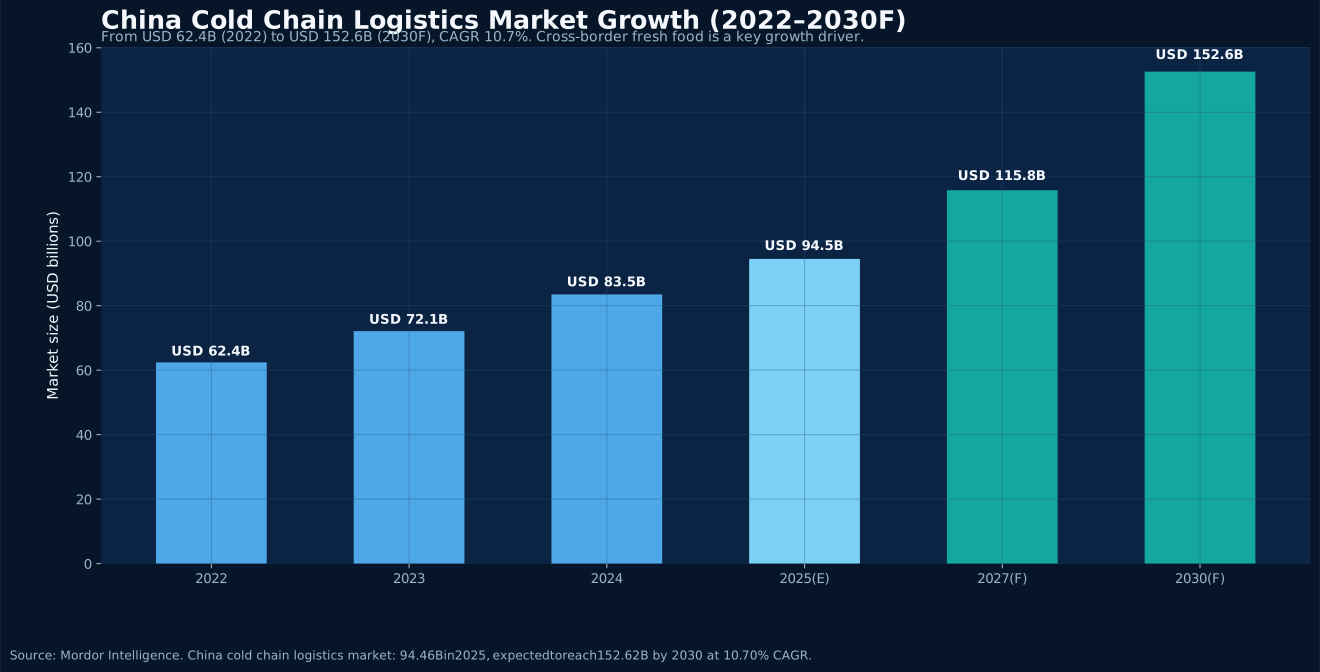
China’s cold chain logistics market is experiencing unprecedented rapid growth. According to industry research, the market reached USD 94.46 billion in 2025 and is projected to grow to USD 152.62 billion by 2030, at a 10.7% CAGR. This growth is driven by the explosive expansion of fresh food e-commerce, pharmaceutical cold chain upgrades, and rising consumer expectations for fresh food quality.
China’s cold chain infrastructure investment is also accelerating. National cold storage capacity continues to expand, with eastern coastal regions accounting for 32.4% of the market. Major logistics companies are integrating micro-fulfillment hubs into existing long-haul networks to shorten delivery times. Cold chain logistics is evolving from traditional “storage + transport” toward smart, digital operations.
2. Korea’s cold chain market: current state and challenges
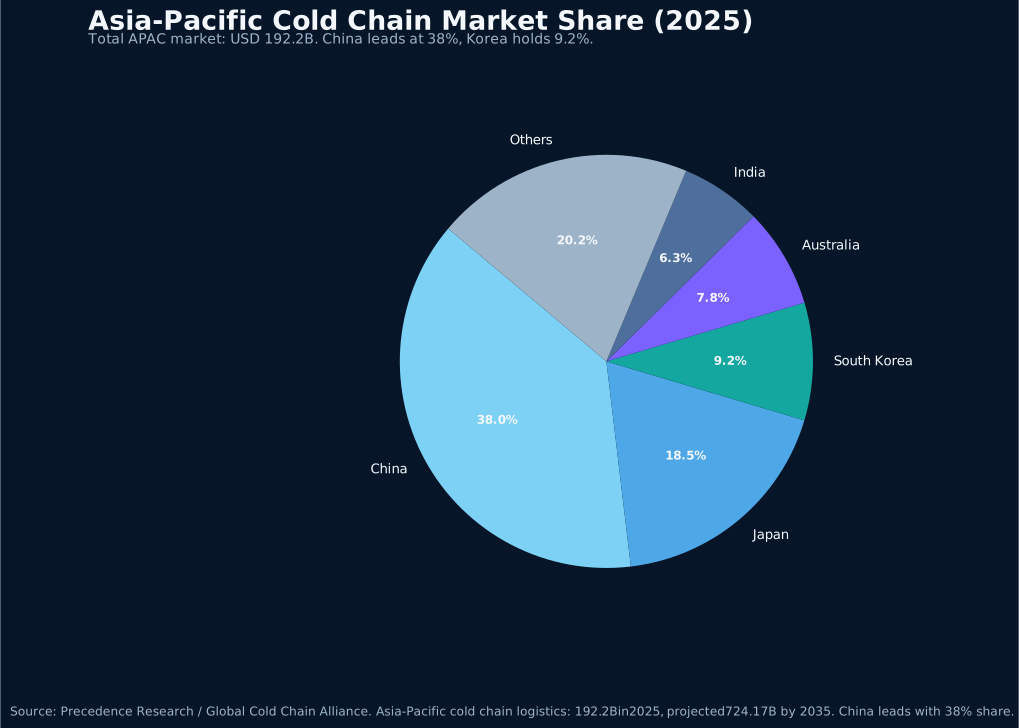
Korea holds 9.2% of the Asia-Pacific cold chain logistics market, valued at approximately USD 17.66 billion. Korea’s cold chain infrastructure is quite mature, particularly in fresh food delivery. Thanks to heavy investment by e-commerce platforms like Coupang, Korea has established a globally leading fresh food last-mile delivery system.
However, Korea’s cold chain market faces challenges. A surge in cold storage construction in the early 2020s created oversupply, with some facilities converting cold space to dry storage. This short-term imbalance is expected to normalize as long-term fundamentals remain sound. The Korean government plans to invest KRW 13.4 billion in 2025 to build overseas shared logistics centers, which will help drive international cold chain cooperation.
3. New trends in China-Korea cross-border fresh trade
Cross-border fresh trade between China and Korea is entering a new phase of opportunity. With the rapid development of fresh food e-commerce, online purchasing of fresh products has become a daily habit for consumers in both countries. Korean demand for Chinese fresh seafood, vegetables, and fruits continues to grow, while Chinese consumers show increasing interest in Korean dairy, fermented foods, and snacks.
Geographic proximity provides favorable conditions for cold chain logistics between the two countries. Shipping from Qingdao to Busan takes only about 14 hours, and Shanghai to Incheon about 24 hours—distances that make cross-border cold chain transport of fresh food entirely feasible. With advances in temperature control and packaging technology, spoilage rates for cross-border fresh food are declining significantly.
4. Cold chain technology upgrades and digital transformation
Both countries are investing heavily in cold chain technology upgrades. In China, smart temperature control systems, IoT sensor networks, and blockchain traceability are being widely deployed in cold chain logistics. Companies like Qingdao Sanhu Foods have established professional cold chain distribution systems supporting the sales and distribution of Korean refrigerated and frozen products in China.
Korea leads globally in eco-friendly refrigerant technology, actively developing refrigeration equipment using natural refrigerants. This technical advantage opens new avenues for China-Korea cold chain cooperation. China’s massive cold chain market demand can provide broad application scenarios for Korean green cold chain technology and equipment, while Korean expertise can help China’s cold chain industry achieve a green upgrade.
5. Policy support and industry development opportunities
Both governments are actively supporting cold chain logistics development. China’s 14th Five-Year Plan designates cold chain logistics as a key development area, promoting national backbone cold chain bases. Korea’s Ministry of Trade plans to expand overseas shared logistics centers to 300, supporting approximately 1,700 SMEs with export logistics. These policies create a favorable environment for China-Korea cold chain cooperation.
For China-Korea trade service enterprises, cold chain logistics opportunities include three key areas: helping Chinese fresh food companies access the Korean market with full-chain cold chain services from origin to endpoint; introducing Korean eco-friendly cold chain technology and equipment to serve China’s green upgrade demand; and helping Korean food companies build cold chain distribution networks in China.
6. Summary and outlook
China-Korea cold chain logistics cooperation is at a strategic inflection point. China’s rapid market growth, Korea’s technological advantages, and both countries’ rising consumer expectations for fresh food quality together form the foundation for cooperation. From infrastructure development to technology collaboration, from cross-border e-commerce to traditional trade, cold chain logistics is an indispensable link.
We recommend China-Korea trade enterprises build cold chain logistics capability as a core competitive advantage. Whether helping Chinese companies export fresh products to Korea or helping Korean firms build cold chain distribution in China, cold chain capability will be a key differentiator. As the market continues to expand, the investment return outlook in this field is promising.