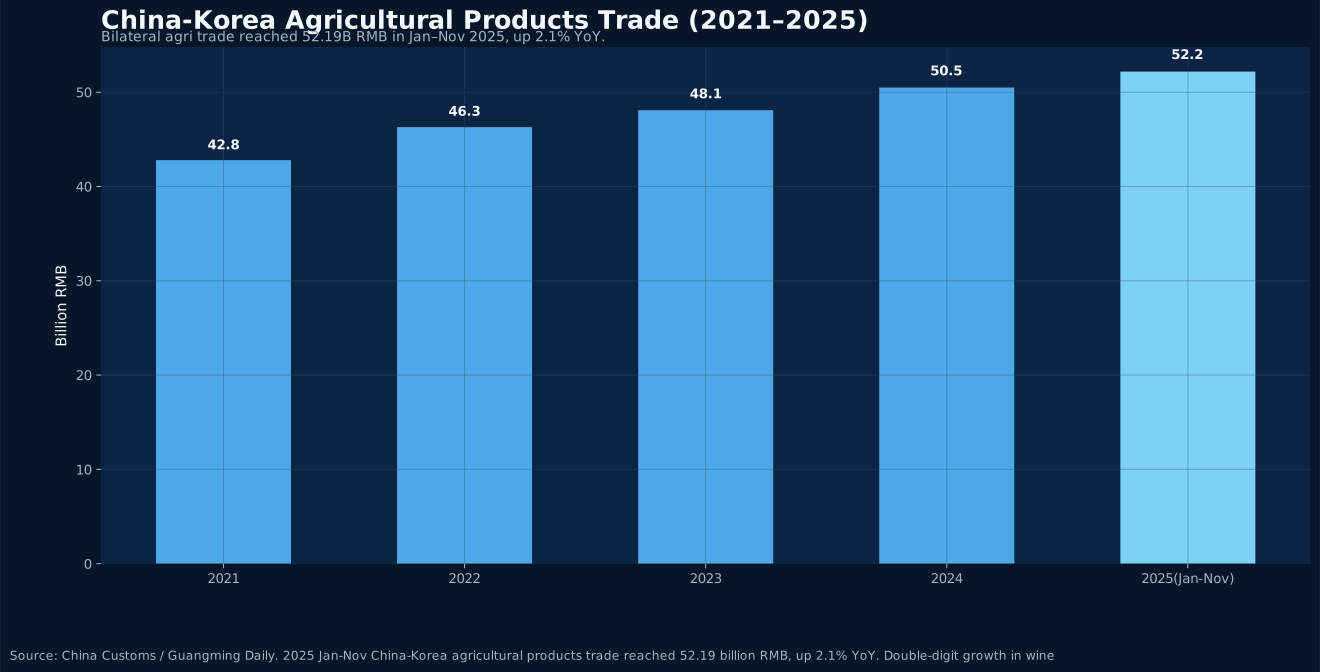
1. Overview: steady growth in China-Korea agricultural trade
In the first 11 months of 2025, China-Korea agricultural product trade reached 52.19 billion RMB, up 2.1% year-on-year. Against the backdrop of total bilateral trade of 2.14 trillion RMB, agricultural trade’s steady growth reflects deepening food sector cooperation. China has become Korea’s second-largest agricultural supplier at approximately USD 6.8 billion annually, behind only the US at USD 8.2 billion.
Notably, the structure of China-Korea agricultural trade is evolving. Traditionally dominated by primary products like seafood and vegetables, Chinese exports to Korea now show double-digit growth in higher-value categories including dried fruits, tea, wine, and beverages—signaling an upgrade toward premium, branded agricultural exports.
2. Growth highlights in specialty categories
On the export side, dried fruits, nuts, and tea from China to Korea all achieved double-digit growth. This is driven by Korean consumers’ growing demand for healthy foods and improved branding of Chinese premium agricultural products. For example, Xinjiang raisins and Yunnan Pu’er tea are gaining recognition in the Korean market.
On Korea’s export side, noodle products and alcoholic beverages showed impressive growth. Korean instant noodles, BBQ sauces, and soju continue to expand in China, driven by the enduring influence of Korean culture and growing Chinese consumer familiarity with Korean food. Food trade opportunities between the two countries are becoming increasingly diverse.
3. Competitive landscape of Korea’s food import market
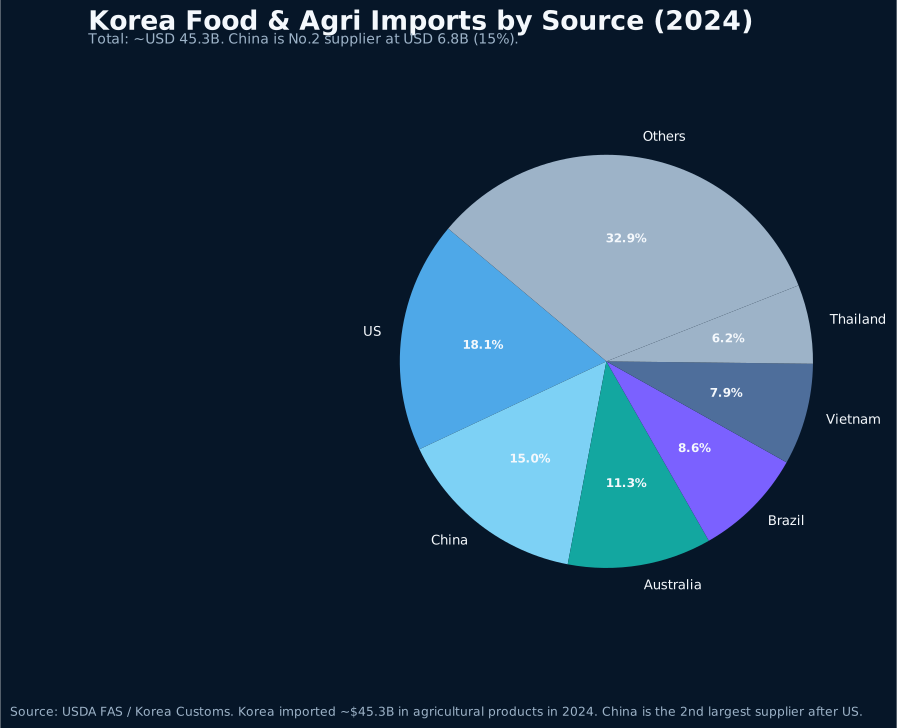
Korea imported approximately USD 45.3 billion in agricultural products in 2024. The US led at USD 8.2 billion, followed by China at USD 6.8 billion, Australia (USD 5.1B), Brazil (USD 3.9B), Vietnam (USD 3.6B), and Thailand (USD 2.8B). China holds about 15% of Korea’s food import market—a share that has remained stable over the past five years.
However, competition for China in Korea’s agricultural market is intensifying. Vietnam and Thailand leverage geographic proximity and lower labor costs to challenge China in seafood and tropical fruits. Australia and Brazil dominate in meat and dairy. To maintain and grow its market share, China needs to invest in food safety, brand building, and product differentiation.
4. Cross-border e-commerce driving new trade models
Cross-border e-commerce platforms are becoming new channels for China-Korea agricultural trade. As Korean platforms like Coupang, TMON, and WeMakePrice open to cross-border sellers, Chinese agricultural products can reach Korean consumers more easily. Chinese platforms like Temu and AliExpress are also rapidly expanding in Korea, providing additional export channels.
However, cross-border agricultural e-commerce faces unique challenges. Food safety certification, cold chain logistics, and shelf-life management all need addressing. Korea’s MFDS is tightening regulations on imported food, requiring cross-border e-commerce firms to fully understand and comply with Korean food safety laws.
5. China-Korea FTA and the future of agricultural trade
The China-Korea FTA’s impact on agricultural trade is gradually materializing. As tariff reduction progresses, more agricultural products will benefit from preferential rates. However, agriculture remains one of the most sensitive areas in FTA negotiations—Korea maintains strong protections, with rice, peppers, and other core products excluded from tariff concessions.
Looking ahead, growth potential lies in processed foods, functional foods, and specialty agricultural products. As consumers in both countries increasingly pursue healthy, natural, and high-quality foods, these segments are poised to become new growth engines. For trade service companies, connecting Chinese and Korean businesses with specialty agricultural resources represents a significant business opportunity.
6. Recommendations for China-Korea trade enterprises
For China-Korea trade enterprises, the agricultural sector offers diversified opportunities. Key focus areas include: helping Chinese specialty products obtain MFDS certification for Korean market access; exploring small-batch, multi-category agricultural trade through cross-border e-commerce; and capitalizing on Korean Wave-driven demand for Korean food products in China.
While individual agricultural trade transactions tend to be smaller, the sector offers strong stability, high repeat purchase rates, and relative insulation from geopolitical disruptions. For small and medium trade enterprises, this is a track worth deep cultivation. We suggest starting with a specific sub-category, building stable supply chains and customer relationships, then gradually scaling up.