1. Data Panorama: Chinese Platforms' User Explosion in Korea
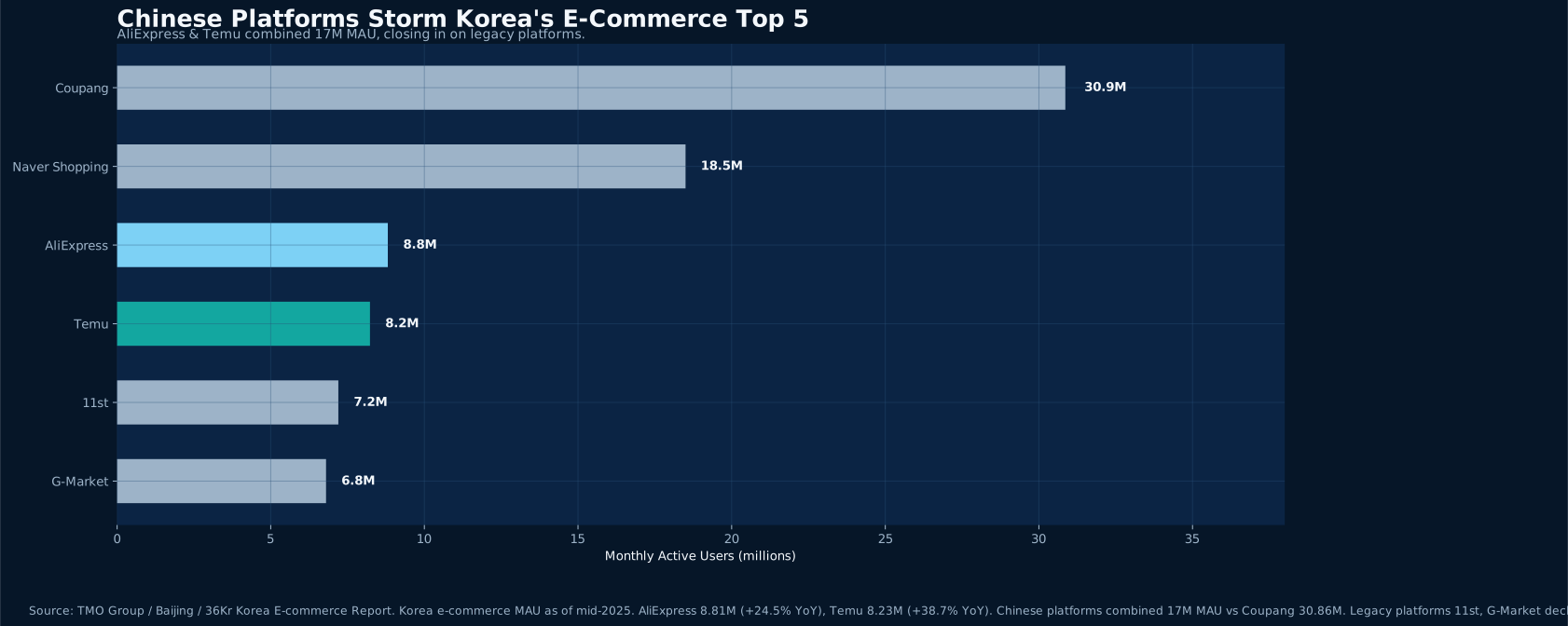
Korea is the world's fourth-largest e-commerce market, with 2025 online shopping transactions expected to exceed $120 billion. In this highly developed digital consumer market, Chinese cross-border platforms are penetrating at astonishing speed. As of mid-2025, AliExpress had 8.81 million monthly active users in Korea, up 24.5% YoY; Temu's MAU stabilized above 8.23 million, up 38.7% YoY. Combined, the two platforms' 17 million MAU already surpasses the total of legacy Korean e-commerce platforms 11st (7.2 million) and G-Market (6.8 million).
By contrast, Korean domestic leader Coupang had 30.86 million MAU, growing just 5%. While Coupang still leads in absolute user count, Chinese platforms are growing 5 to 8 times faster. Equally notable, Naver Shopping ranks second with 18.5 million MAU but grows at just 3.2%. A clear trend is emerging: Korea's incremental e-commerce users are being absorbed in large numbers by Chinese platforms.
2. Sales Surge: From 1 Trillion to 4.3 Trillion KRW in Three Years
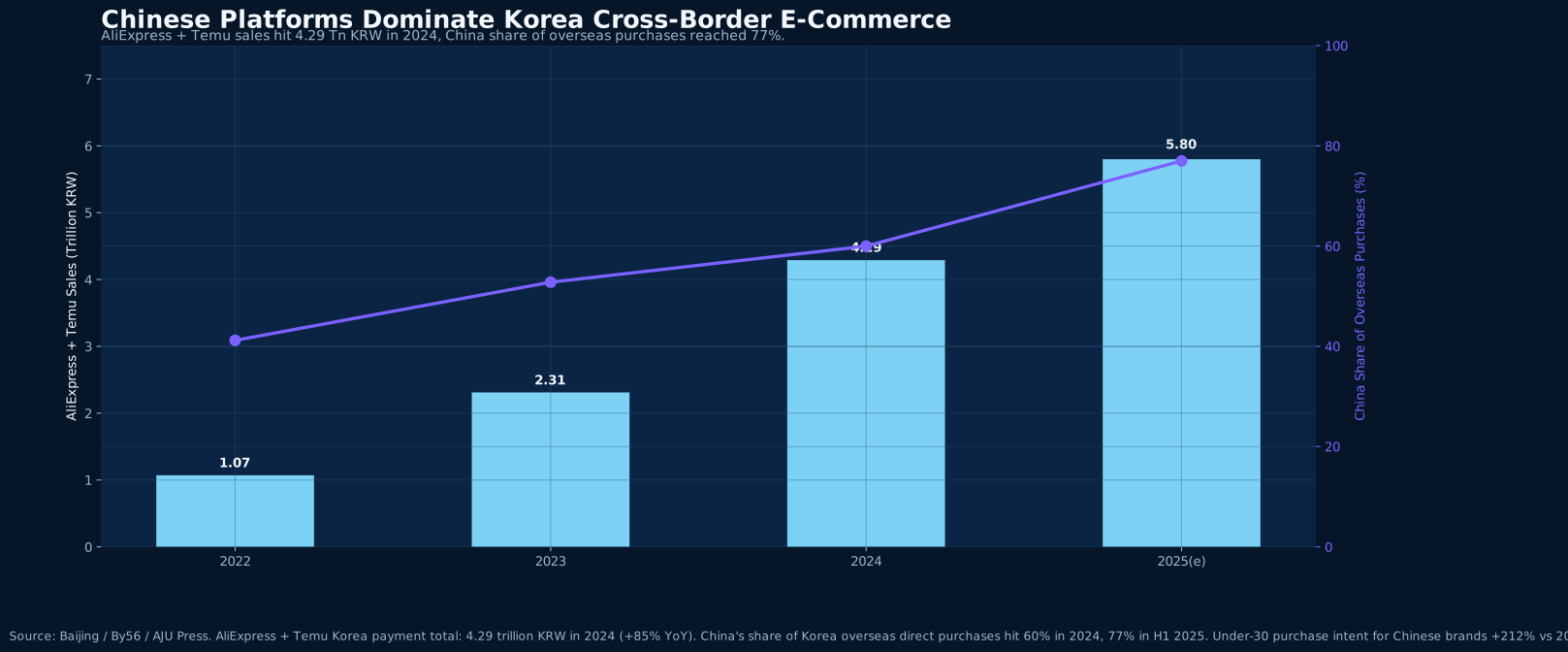
Behind user growth lies explosive transaction volume. In 2022, AliExpress and Temu's combined Korea payments totaled approximately 1.07 trillion KRW; by 2024, this surged to 4.29 trillion KRW (roughly $3.2 billion), a 300% increase over two years. Full-year 2025 is estimated to exceed 5.8 trillion KRW. The deeper shift shows in market share: Chinese platforms' share of Korea's total overseas direct purchases leaped from 41.2% (2022) to 60% (2024), reaching 77% in H1 2025.
Three core drivers fuel this growth. First is extreme value — Temu's group-buying model and AliExpress's 'Choice' channel target price-sensitive consumers, with average order values one-third to one-half of Coupang's. Second is continually improving logistics — AliExpress achieved 5-7 day standard delivery in Korea, with some categories supporting 3-day delivery. Third is a fundamental shift in young Korean consumers' perception of 'Made in China' — purchase intent for Chinese brands among under-30 consumers has grown 212% since 2020.
3. Korean Domestic Platforms: Crisis and Counterattack
The aggressive expansion of Chinese platforms has created unprecedented pressure on Korean domestic e-commerce. 11st and G-Market saw MAU decline 2-5% YoY, with GMV losses even more severe in certain vertical categories. Korean e-commerce association data shows that H1 2025 transaction volumes in domestic platforms' imported goods sections dropped 18% YoY — consumers are shifting imported product purchases from domestic platforms to Chinese cross-border platforms.
Korea's government and industry response is multidimensional. On the regulatory front, the Korea Fair Trade Commission has intensified consumer protection reviews of cross-border platforms, requiring Chinese platforms to meet Korean local standards for product safety labeling, return policies, and personal data protection. In H2 2025, Korea also introduced new customs oversight for low-value import parcels, imposing stricter quality inspections on packages under $150. On the commercial strategy front, Coupang continues strengthening its 'Rocket Delivery' logistics moat — same-day and next-day delivery coverage exceeds 95%, a competitive barrier Chinese platforms cannot match in the short term.
4. Live Commerce: Localizing the Chinese Model in Korea
Chinese platforms' Korea expansion goes beyond traditional search-and-buy shopping — live commerce is becoming a new growth pole. Korea's live commerce market has reached $2.3 billion with over 53% penetration, and Chinese platforms demonstrate clear model export advantages in this space. AliExpress's live shopping channel in Korea replicates core Taobao Live mechanics — flash sales, host interaction, red packet rain — achieving high acceptance among young Korean users.
Notably, SHEIN also officially entered Korea in 2025, forming a three-way rivalry with AliExpress and Temu. SHEIN's ultra-fast fashion model — design to shelf in just 7-14 days — poses direct competition to Korean domestic apparel brands and Dongdaemun wholesale markets. Chinese platforms' Korea offensive has evolved from pure price wars to all-dimensional competition across price, logistics, content, and fashion. For businesses watching China-Korea trade, understanding this e-commerce landscape shift is not just about retail channel selection but about reading Korean consumption trend trajectories. Author: Minghao, MO-TEK International Trade (Shanghai)
5. Implications for China-Korea Trade Services
The rise of Chinese e-commerce platforms in Korea places new demands on traditional China-Korea trade service models. Previously, Chinese goods entered the Korean market primarily through Korean local importers and wholesale channels; now, increasing numbers of Chinese SME manufacturers reach Korean consumers directly via AliExpress and Temu, bypassing traditional intermediaries. What does this mean for trade service firms? On one hand, traditional B2B import agency business faces shrinking pressure; on the other, new service demands around cross-border e-commerce are emerging — including Korean market compliance consulting (KC certification, food safety labeling), Korean-language localization operations, and Korean warehousing logistics integration.
Moreover, the rise of live commerce creates new cooperation opportunities for Chinese brand promotion in Korea. Service providers who can connect Chinese suppliers with Korean KOLs (Key Opinion Leaders) and help Chinese brands build influence on Korean social media are becoming new market participants. The shift in Korea's e-commerce landscape is not a short-term phenomenon but a structural trend inflection. For firms like MO-TEK International Trade that are deeply rooted in China-Korea trade, keeping pace with e-commerce channel transformation and capturing new service demands is key to continuously creating value for clients. Author: Minghao, MO-TEK International Trade (Shanghai)