China’s E-Label Pilot: Accelerating Digital Compliance in Cosmetics
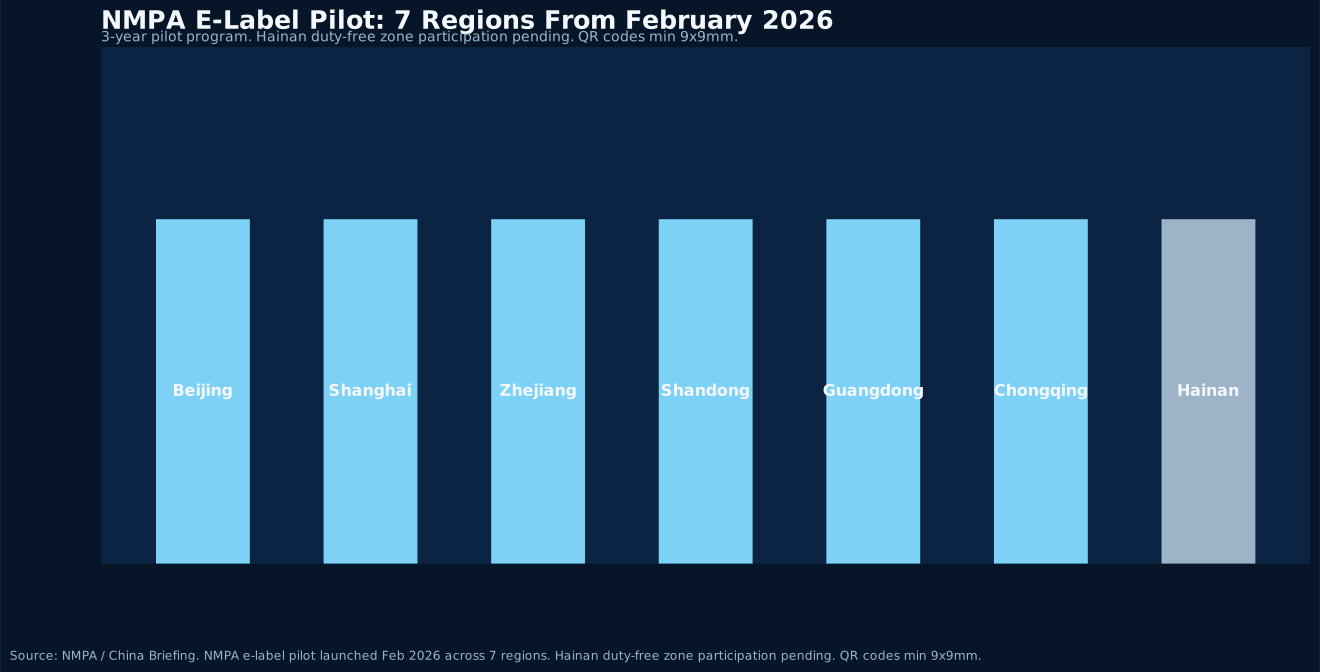
Starting February 1, 2026, China’s National Medical Products Administration (NMPA) officially launched a three-year cosmetics e-label pilot across six provinces and municipalities—Beijing, Shanghai, Zhejiang, Shandong, Guangdong, and Chongqing—with Hainan’s offshore duty-free zone also expected to participate. This is a core initiative from the NMPA’s November 2025 opinion on deepening regulatory reform, marking China’s formal entry into digital compliance transformation for cosmetics.
Technical requirements specify that physical packaging continues to display mandatory basics while complete legal label information can be presented digitally. QR codes must be at least 9x9mm, clearly marked as cosmetic e-labels, and must link directly to complete label information without pop-ups or extra steps. Companies must maintain historical versions of label information, ensure traceability, and keep QR codes functional throughout the product lifecycle.
Korea’s Safety Assessment System Moves Toward Mandatory Status
In parallel with China’s digital reforms, Korea’s MFDS is advancing a mandatory cosmetic safety assessment system, with detailed rules to be drafted from 2026 and full implementation by 2031. The system will require all cosmetics sold in Korea to provide systematic safety assessment reports covering ingredient safety, product stability, and human risk assessment. Korea is also establishing a new Cosmetics Safety Information Center for centralized safety data management.
Korea is similarly institutionalizing cosmetic e-labeling, using QR codes to provide comprehensive product information online while maintaining key on-pack labeling. Notably, a September 2025 China-Korea exchange on cosmetics regulatory systems covered e-labeling, ingredient management, and safety assessment, signaling accelerating bilateral regulatory convergence. For companies selling in both markets, this convergence stands to significantly reduce compliance costs.
A Historic Shift in K-Beauty Export Patterns
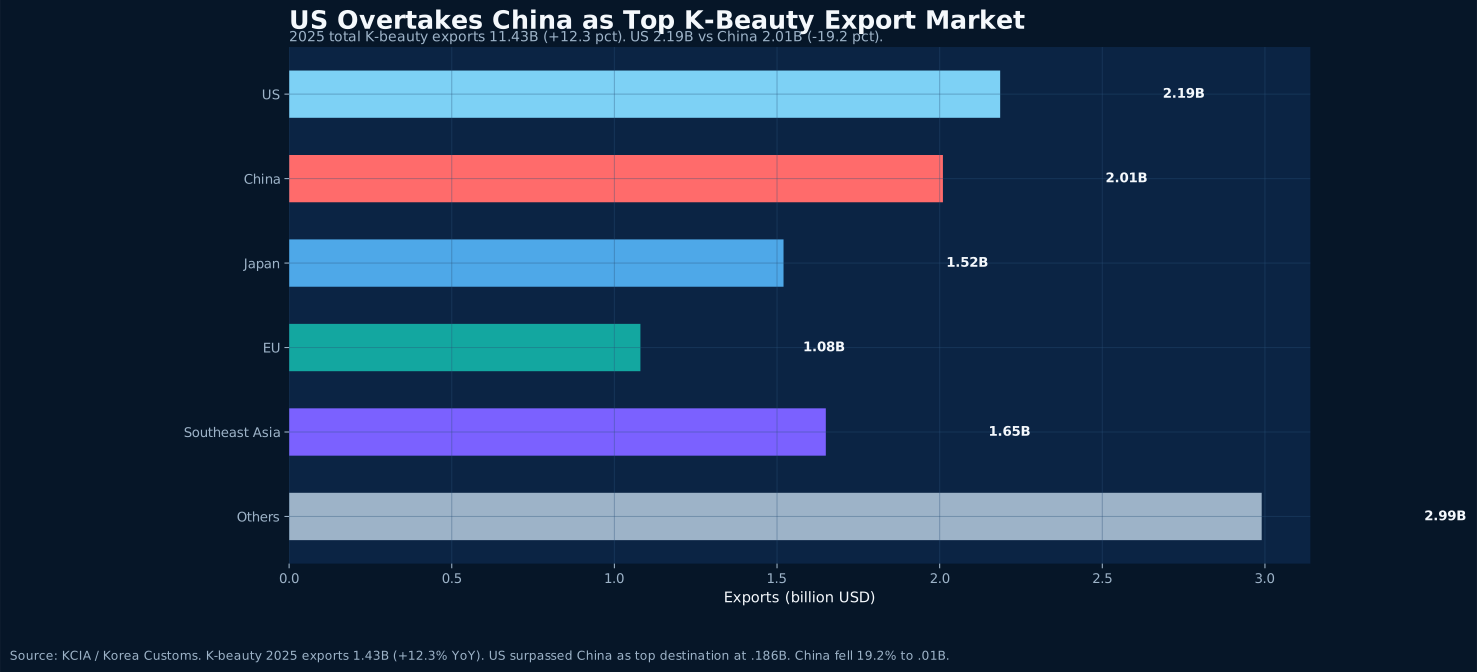
Korea’s 2025 cosmetics exports reached $11.43 billion, up 12.3% year-on-year to a new record. But the more striking story is the fundamental shift in export destinations: the US overtook China for the first time at $2.186 billion (+15.1%) versus China’s $2.01 billion (-19.2%). This reversal marks a structural decline in the Korean cosmetics industry’s dependence on the Chinese market.
The number of export destinations grew from 172 to 202 countries between 2024 and 2025, adding 30 new markets and showing K-beauty’s rising penetration in Europe, the Middle East, and Latin America. Market researchers project the global K-beauty market growing from $11.9 billion in 2026 to $21.5 billion by 2036 at a 6.1% CAGR. This diversification significantly reduces Korean cosmetics exporters’ risk exposure to any single market.
Trade Impact of NMPA’s ‘First Launch in China’ Policy
Another notable NMPA reform is the elimination of the requirement for imported cosmetics to provide evidence of prior overseas sales. This means qualifying imported cosmetics can enter China even if not yet marketed abroad. For Korean cosmetics companies, this opens a new market entry strategy—products developed specifically for Chinese consumers can launch directly in China without prior sales in Korea or other markets.
In January and March 2026, the NMPA accepted 19 and 15 new cosmetic ingredient notifications respectively, indicating accelerating regulatory approval speed. These reform signals show China attracting quality imported cosmetics by streamlining processes and lowering entry barriers, while raising market oversight through e-labeling and traceability requirements. Written by Minghao, published by Shanghai MO-TEK International Trading Co., Ltd.
Compliance Recommendations for Trade Practitioners
The bilateral cosmetics regulatory reforms in China and Korea are creating new compliant trade windows. For Korean exporters, early adaptation to NMPA e-label specifications can provide first-mover advantages during the pilot period, especially in core consumer markets like Beijing, Shanghai, and Guangdong. Meanwhile, Korea’s new MFDS safety assessment rules mean Chinese cosmetics sold in Korea will face higher compliance thresholds, challenging Chinese exporters’ R&D and testing capabilities.
Companies in China-Korea cosmetics trade should track three dimensions: first, NMPA e-label pilot implementation details and pass rates across the seven regions; second, specific requirements for imported cosmetics and transition arrangements in Korea’s draft safety assessment rules; and third, bilateral regulatory dialogue progress, especially on technical topics like ingredient list mutual recognition and test report sharing. These will directly impact product registration timelines and launch costs.