Geothermal Energy · 2026-07-27
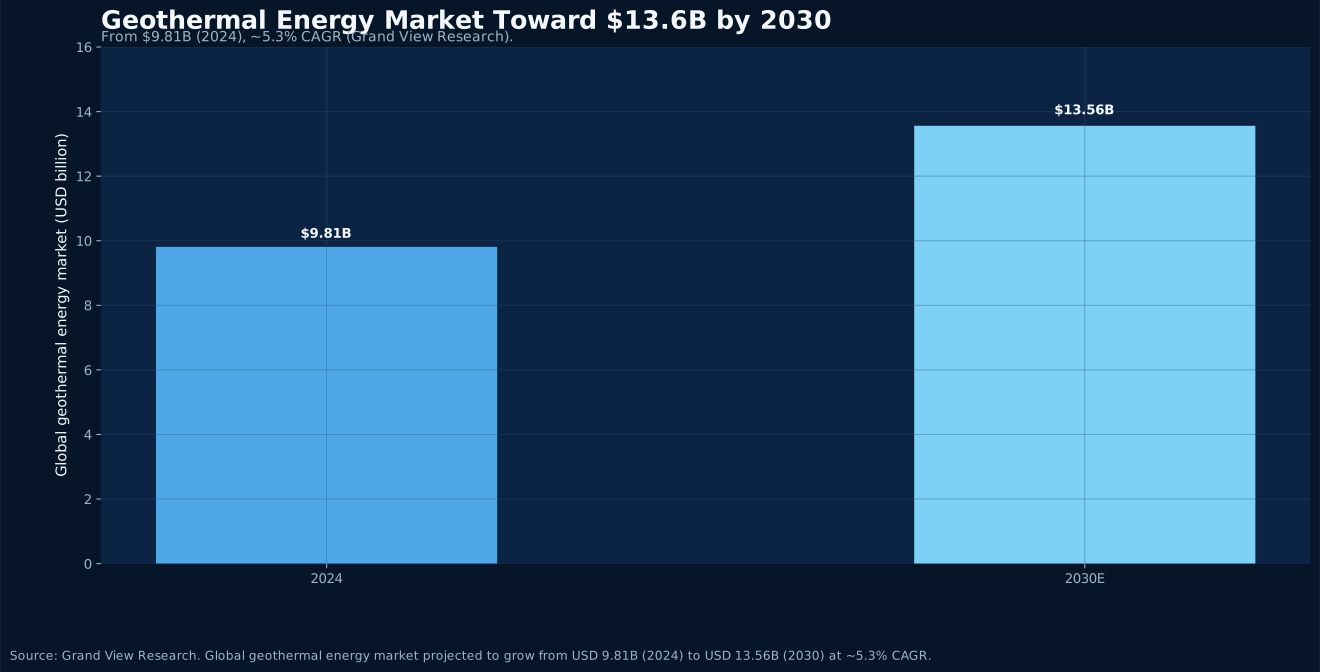
Enhanced geothermal systems (EGS) are crossing the 'valley of death.' In 2026, Fervo Energy secured a $421M non-recourse loan for its flagship Cape Station project in Utah and prepared a clean-energy IPO of up to ~$1.33B—one of 2026's largest. More decisively, on the demand side, Fervo signed a framework agreement with Google to support up to 3 gigawatts (GW) of geothermal capacity through 2033, with Cape Station's initial 100 MW grid connection expected in 2026. The broader geothermal market is more modest—per Grand View Research it grows from ~$9.81B (2024) to ~$13.56B (2030). The real variable is AI data centers' thirst for round-the-clock clean power.
Read Article
Space Economy · 2026-07-13
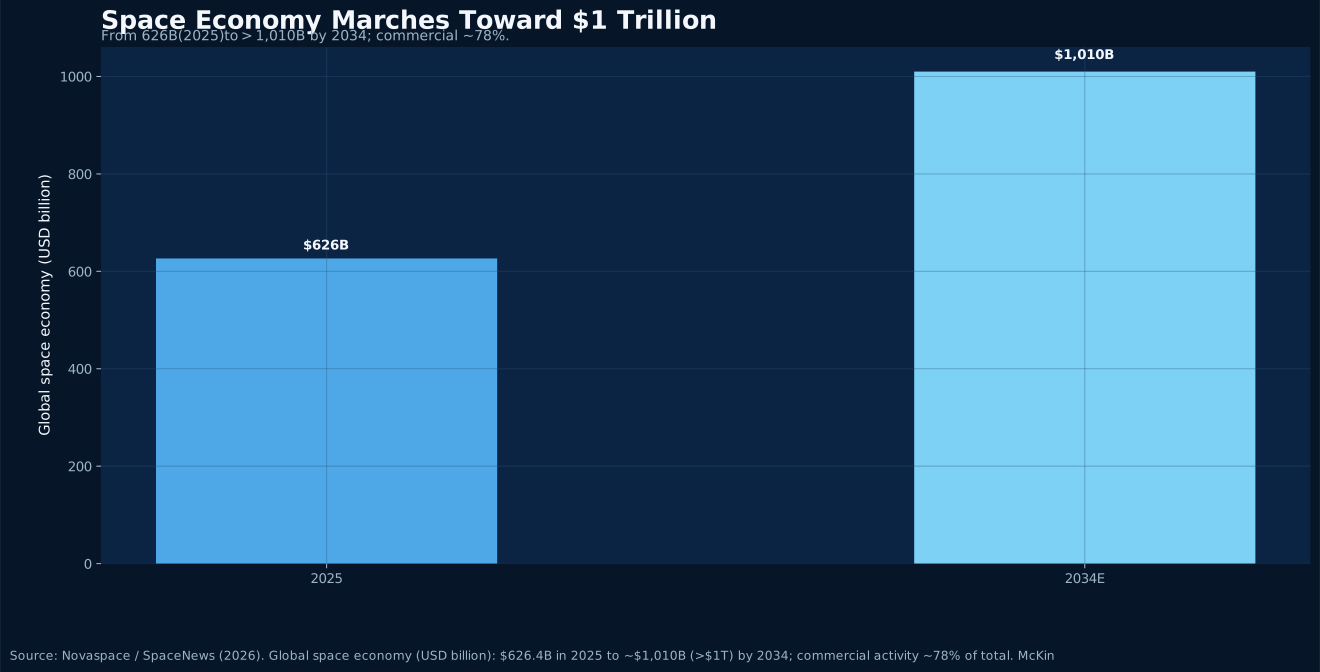
The space economy is crossing a historic threshold. Per Novaspace, the global space economy reached $626.4B in 2025 and is expected to top $1 trillion by 2034; commercial activity has risen to about 78% of the total, the main growth engine. The launch surge is just as striking: in 2025 global orbital launch attempts hit a record 324, more than double the pace of five years ago—of which SpaceX alone flew 165+ Falcon 9 missions, over 60% of global launches, reusing individual boosters 20+ times. Reusable rockets have pressed orbital cost to historic lows, turning 'access to space' from a state-only capability into a commercial service you can buy at scale. For satellite, comms, remote-sensing and cross-border logistics clients, space is shifting from a distant concept to usable infrastructure.
Read Article
Semiconductors · 2026-07-06
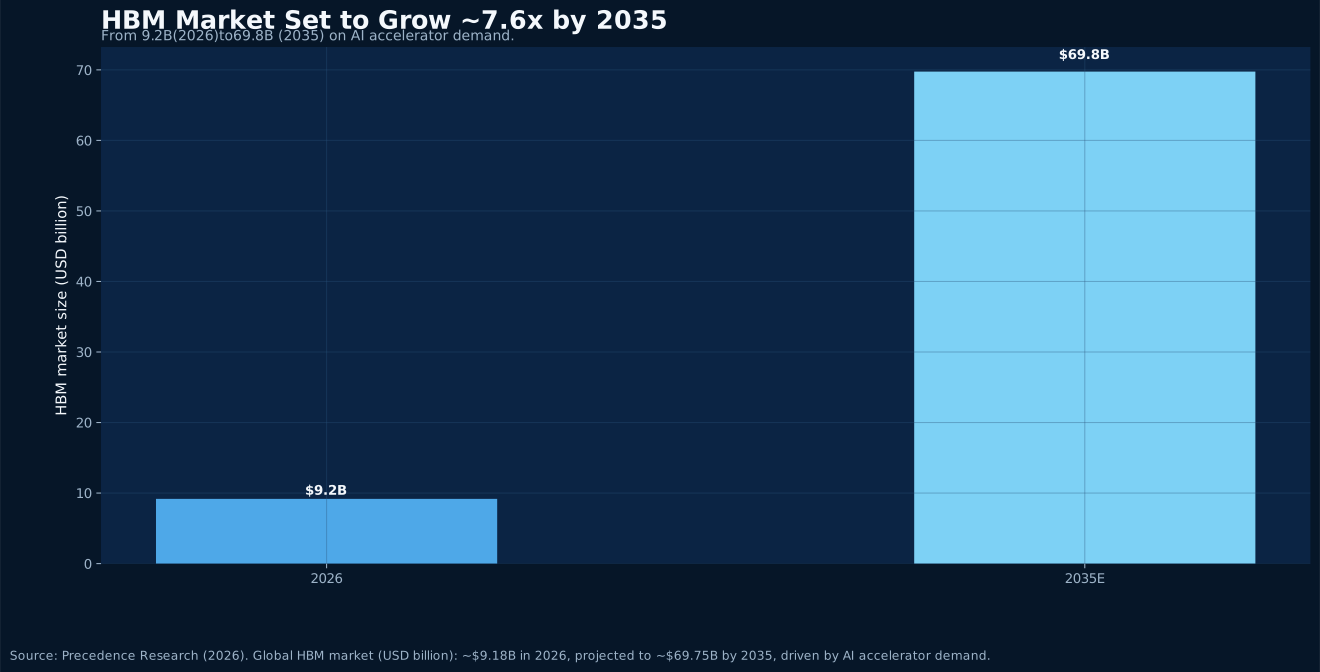
What powers the AI boom is not only GPUs but the high-bandwidth memory (HBM) sitting right next to the compute. As model training and inference scale exponentially, HBM has moved from a supporting role to the core bottleneck—and profit engine—of AI servers. Precedence Research expects the global HBM market to grow from about $9.18B in 2026 to roughly $69.75B by 2035. Supply is highly concentrated: SK Hynix leads with ~62% share, Micron has overtaken Samsung, and the 2026 battle has pivoted fully to sixth-generation HBM4. For MO-TEK's tech-supply-chain clients, reading this supercycle means an edge in sourcing and negotiating servers, storage and cooling.
Read Article
Smart Hardware · 2026-06-07
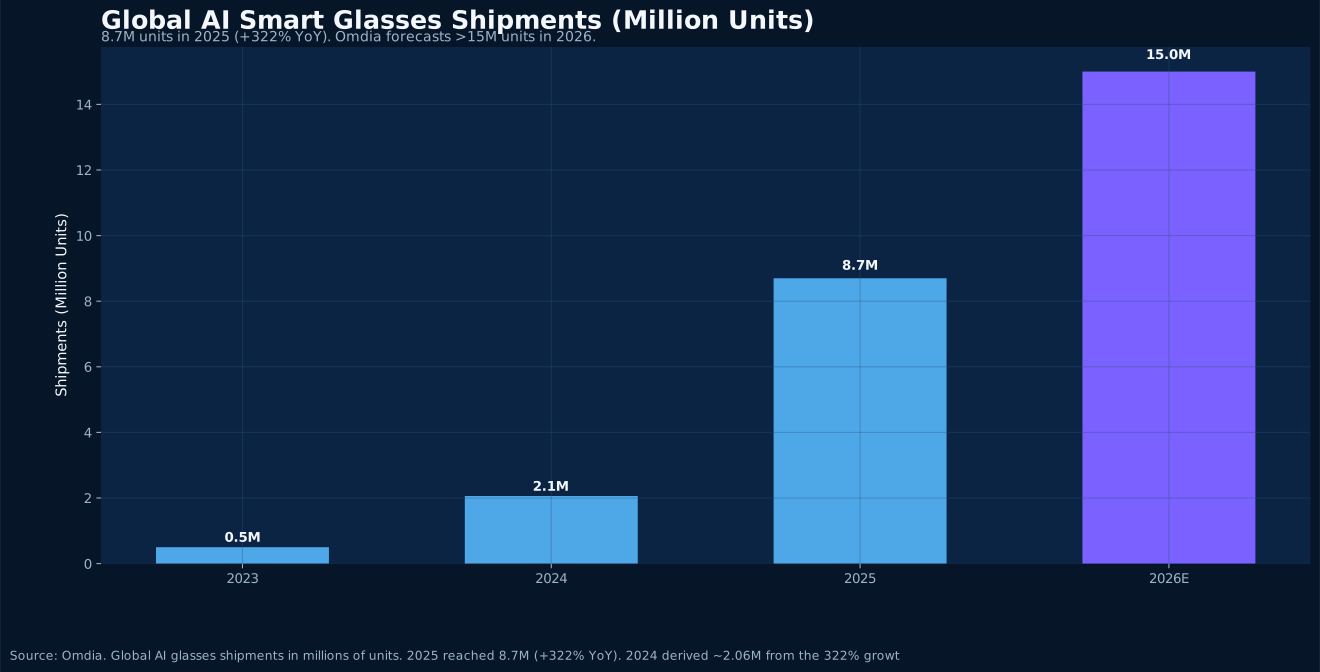
Per Omdia, global AI smart glasses shipments reached 8.7 million units in 2025, up 322% year-on-year, with 2026 forecast to exceed 15 million. Mainland China became the second-largest and fastest-growing market at ~10.9% share. China's supply-chain strength in display modules, acoustics and batteries is creating new OEM and sourcing opportunities for Korean and global brands.
Read Article
Satellite Internet · 2026-06-07
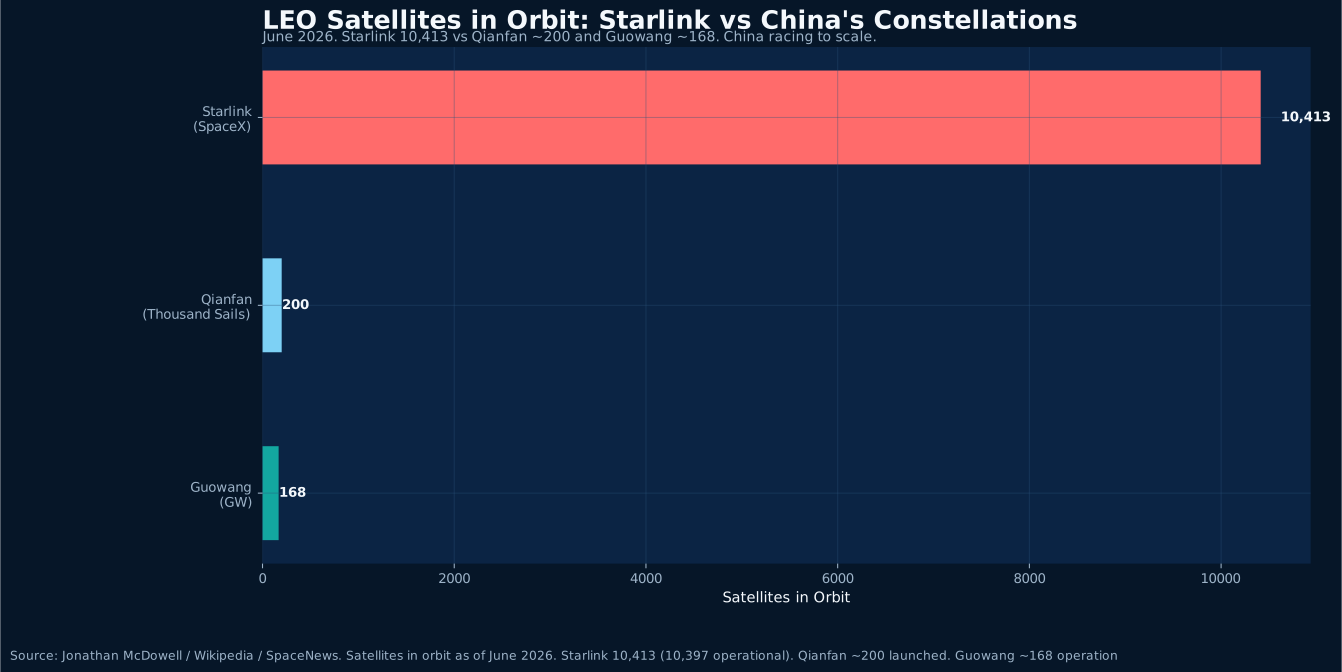
As of June 2026, SpaceX's Starlink has deployed over 10,400 satellites, while China's Qianfan (~200) and Guowang (~168) remain at an early stage. Yet the two constellations together plan over 28,000 satellites, with Qianfan targeting 5,000 launches in a single year by 2030. Across LEO satellite manufacturing, launch capacity and terminal equipment, China is mounting a mega-constellation race over digital-infrastructure sovereignty, driving global sourcing demand across the value chain.
Read Article
Beauty & Cosmetics · 2026-05-18
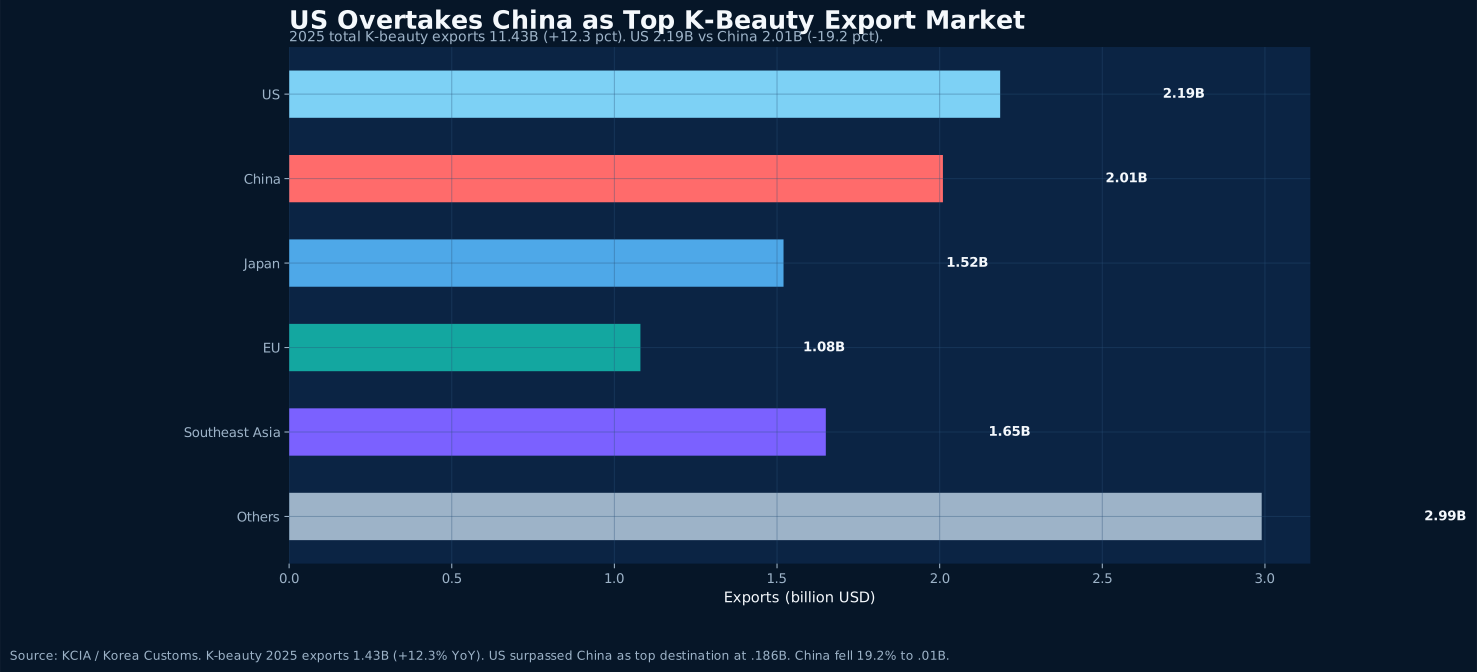
China’s NMPA launches a three-year e-label pilot across seven regions while Korea’s MFDS advances mandatory safety assessments by 2031. K-beauty exports hit $11.43B but China fell 19.2%, as bilateral regulatory convergence creates new compliant trade windows.
Read Article
Cross-Border E-Commerce Insight · 2026-05-11
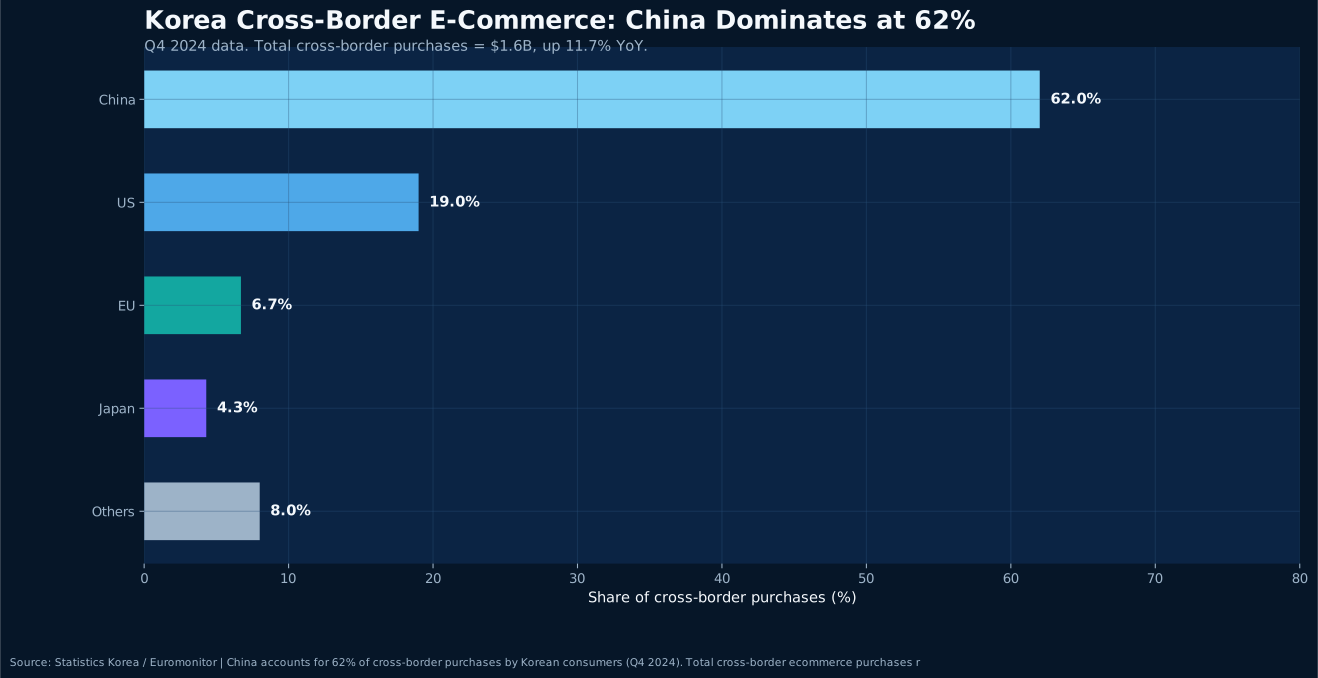
Chinese cross-border platforms command 62% of Korea's overseas direct purchase market, but Seoul inspections found 144 products with toxic substances exceeding safe limits. KFTC launched data compliance investigations. 2026 is the industry's 'Year of Compliance' as product safety, data protection, and consumer rights regulations escalate simultaneously.
Read Article
Food Trade Insight · 2026-05-11
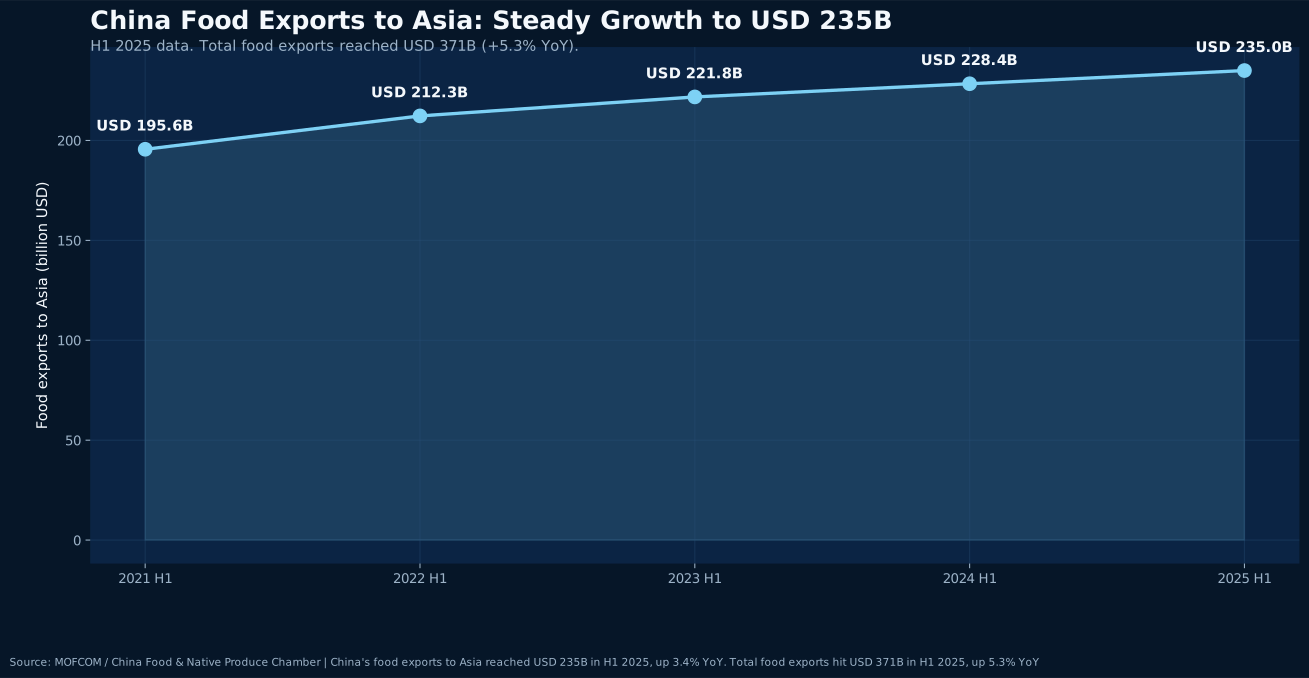
China's food exports to Asia reached $235B in H1 2025, but MFDS violations on Chinese food imports persist. Korea revised its Special Act on Imported Food Safety—simplifying poultry feed imports while tightening processed food scrutiny. China-Korea food trade firms must balance compliance investment with market opportunity.
Read Article
Cross-Border E-Commerce & Compliance · 2026-04-25
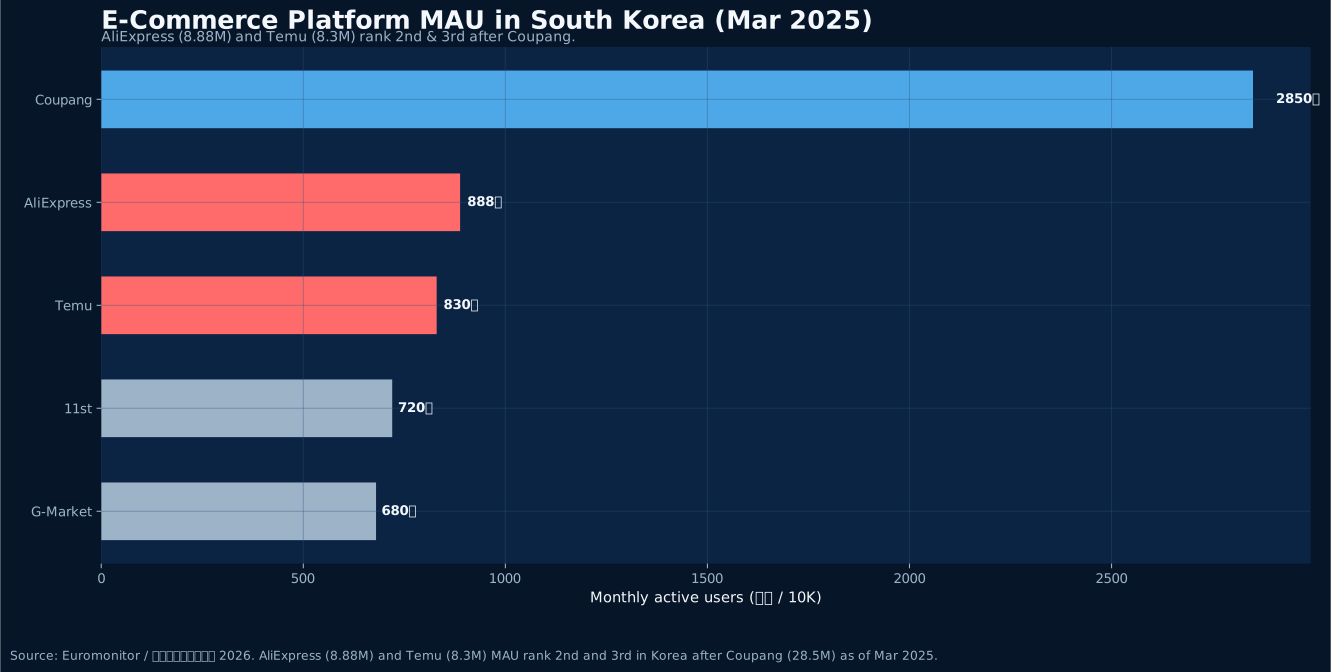
Chinese CBEC platforms account for nearly 50% of Korea's market, with AliExpress and Temu at 8.88M and 8.3M MAU. As global duty-free parcel policies end, 2026 is the 'Year of Compliance.'
Read Article
Cold Chain Logistics · 2026-04-14
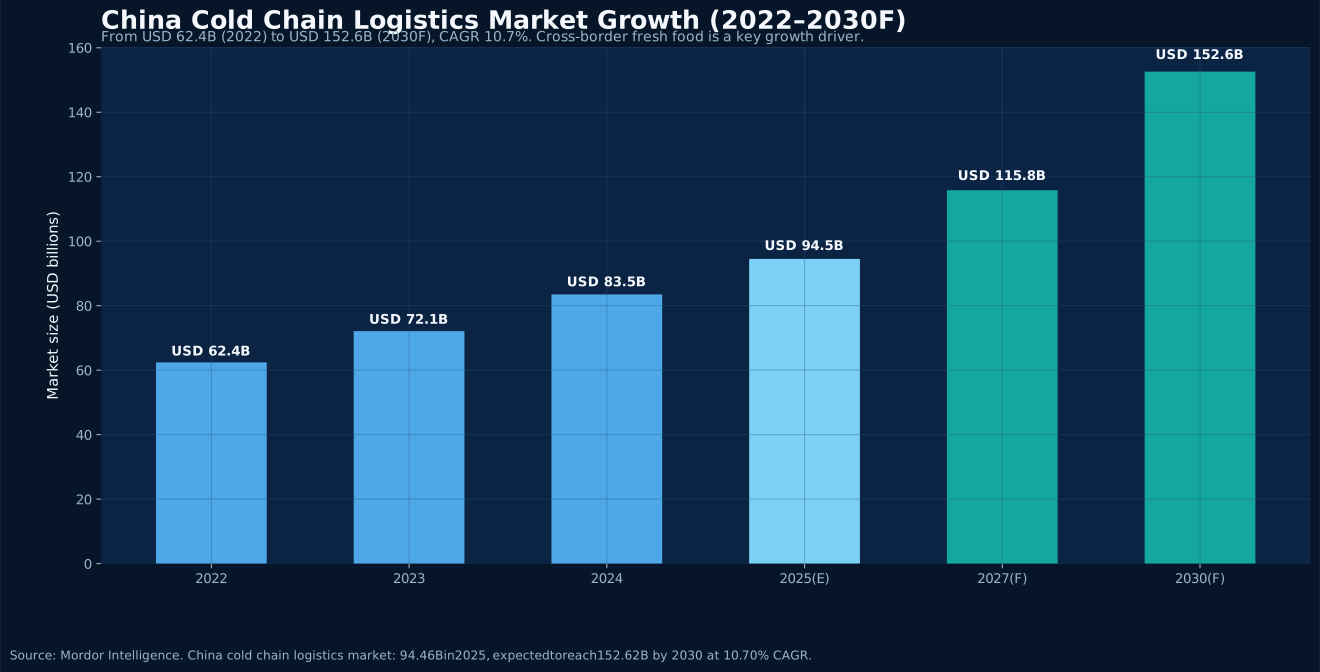
China’s cold chain logistics market reached USD 94.46B in 2025, growing at 10.7% CAGR. China holds 38% of Asia-Pacific share, Korea 9.2%. Cross-border fresh food e-commerce is emerging as a new growth driver for bilateral cold chain cooperation.
Read Article
Livestream E-Commerce · 2026-04-14
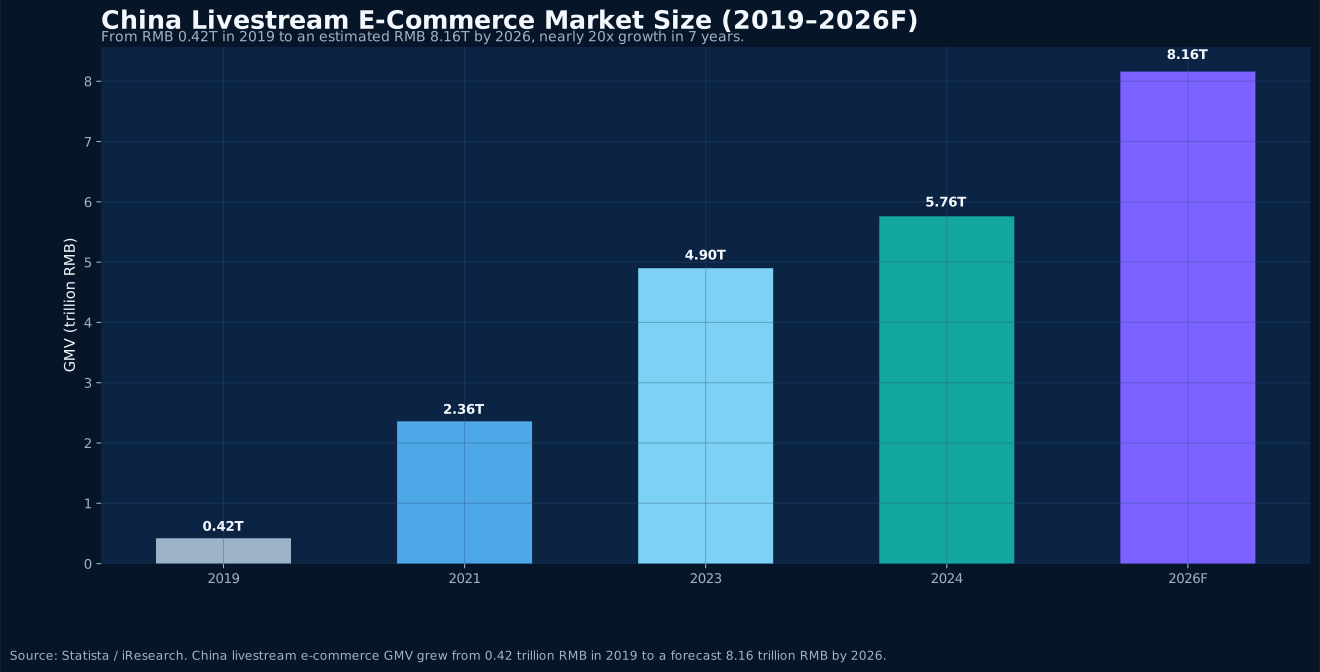
China’s livestream e-commerce market is projected to reach RMB 8.16 trillion by 2026, while 60% of Korean consumers have purchased via live shopping. As both countries tighten regulations, cross-border livestream compliance is becoming a new trade topic.
Read Article
Health Industry · 2026-04-11
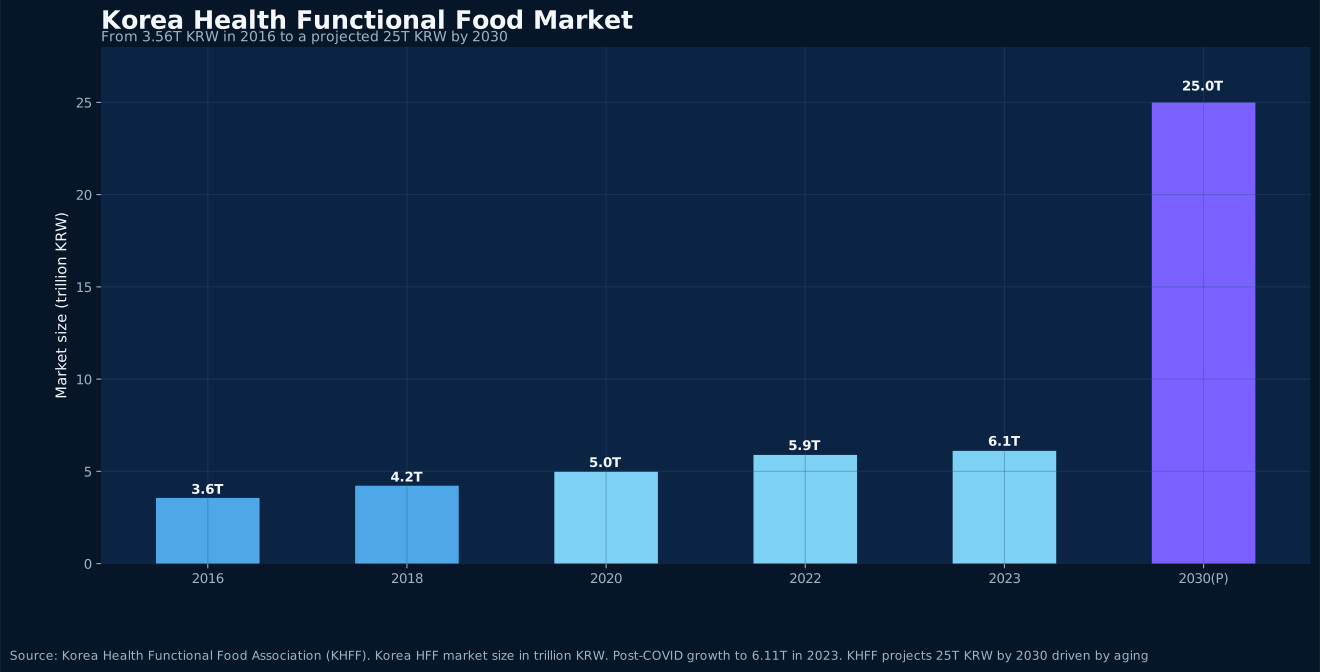
Korea’s health functional food market has surpassed 6 trillion KRW and is projected to reach 25 trillion by 2030. Chinese suppliers have opportunities across ingredients, OEM, and finished goods—but MFDS compliance is non-negotiable.
Read Article
Policy & Tariffs · 2026-04-10
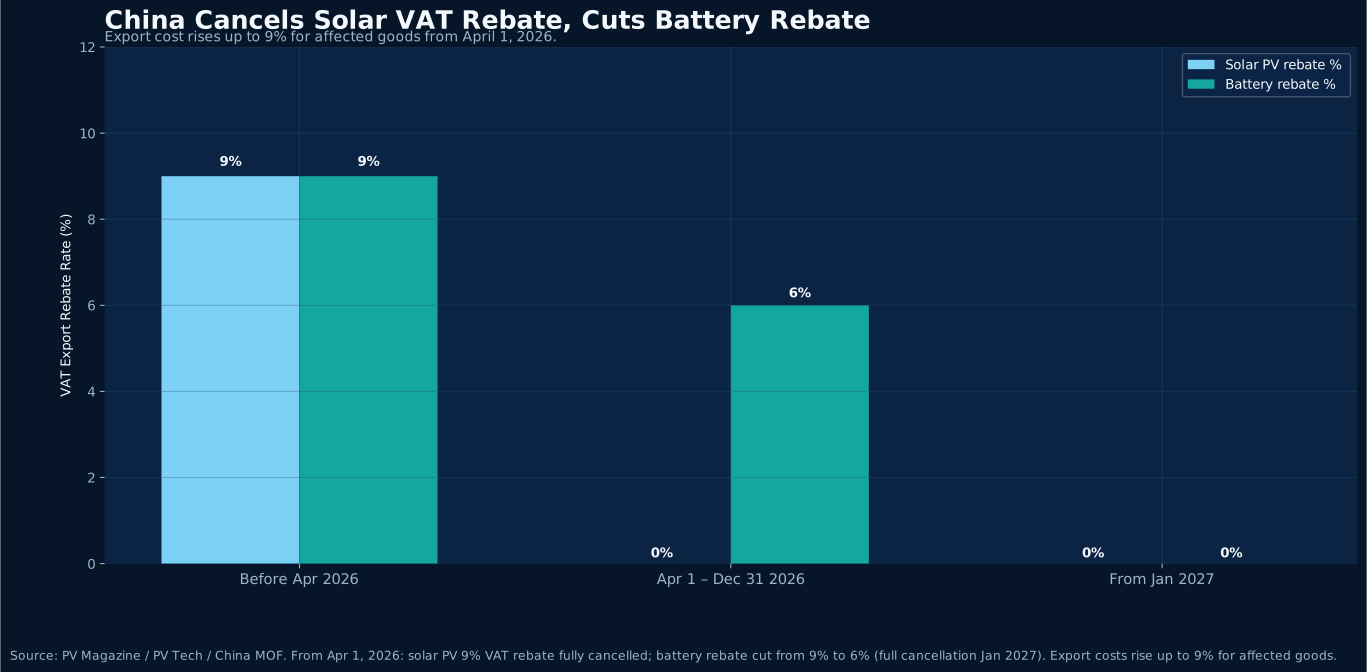
From April 1, 2026, China eliminates the 9% VAT export rebate on solar PV products and cuts battery rebates from 9% to 6% (full phase-out from 2027). Export costs rise up to 9%, reshaping Korea's clean energy supply chain.
Read Article
Cross-Border E-Commerce · 2026-04-10
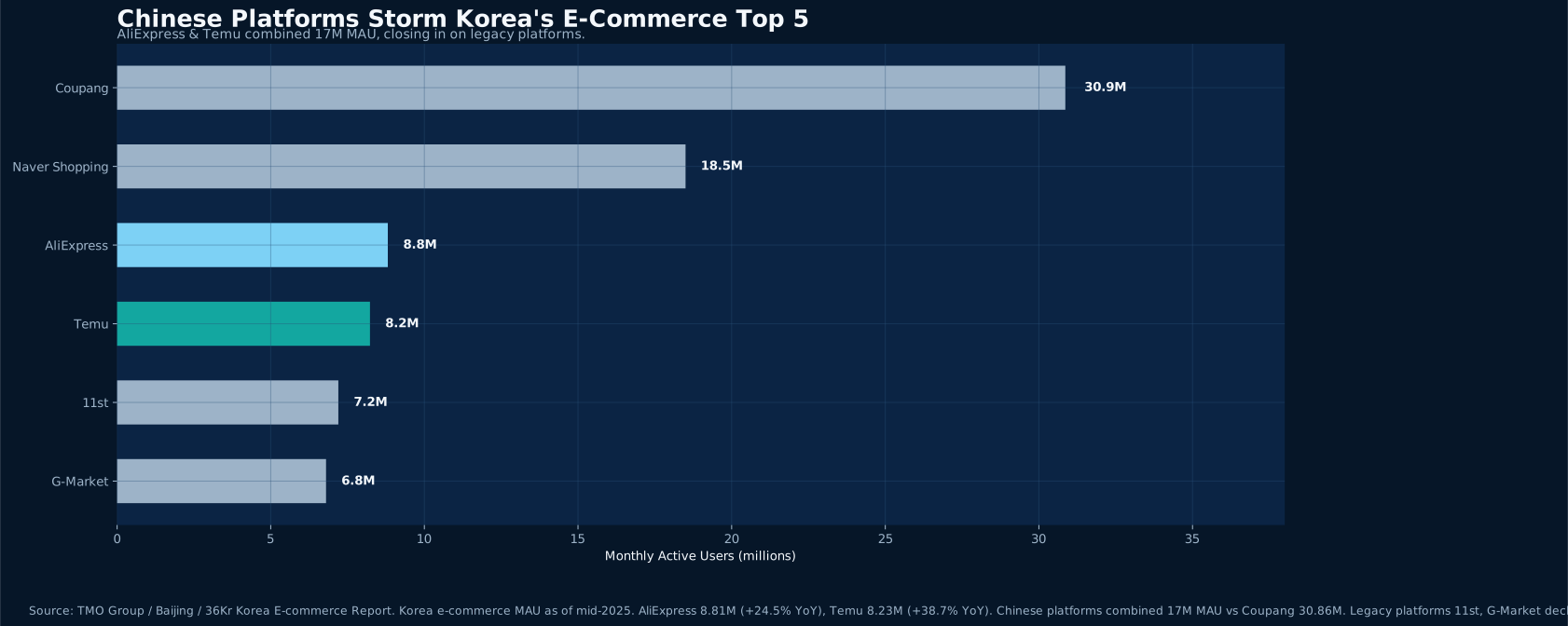
In 2025, AliExpress and Temu reached a combined 17 million MAU in Korea, growing 24.5% and 38.7% YoY respectively. Chinese cross-border e-commerce's share of Korea's overseas direct purchases surged from 41% (2022) to 77% (H1 2025).
Read Article
Policy & Tariffs · 2026-04-10
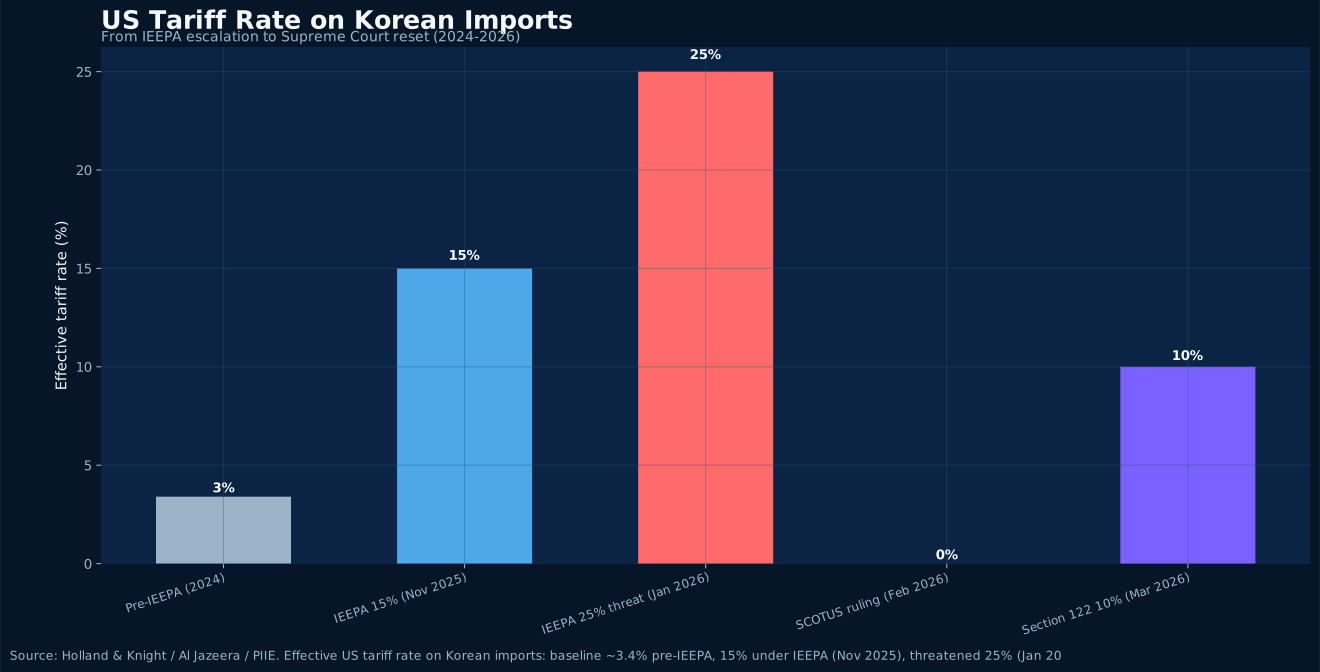
On February 20, 2026, the US Supreme Court ruled 6-3 that IEEPA does not authorize presidential tariffs, invalidating all related executive orders. This landmark decision reshapes not only US-Korea trade law but introduces new variables for China-Korea commerce. We trace the full arc from IEEPA escalation to judicial reset and analyze impacts on supply chains, cross-border e-commerce, and exporters.
Read Article
Cross-Border E-Commerce · 2026-04-10
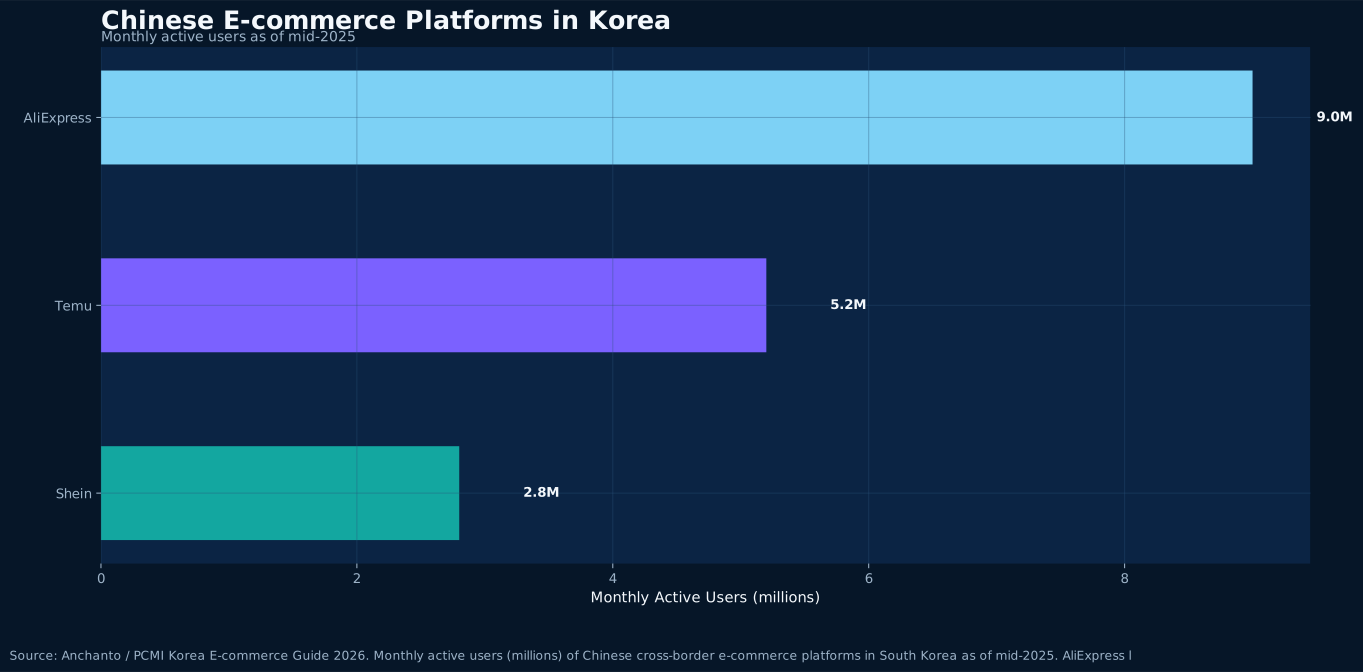
Korean consumers spent $3.1 billion on Chinese e-commerce platforms in 2024, an 84% YoY surge. AliExpress leads with 9 million monthly active users, followed by Temu and SHEIN. This China-platform-led cross-border wave is fundamentally changing Korea's retail competition, logistics infrastructure demands, and the microstructure of China-Korea trade.
Read Article
Beauty Insight · 2026-04-10
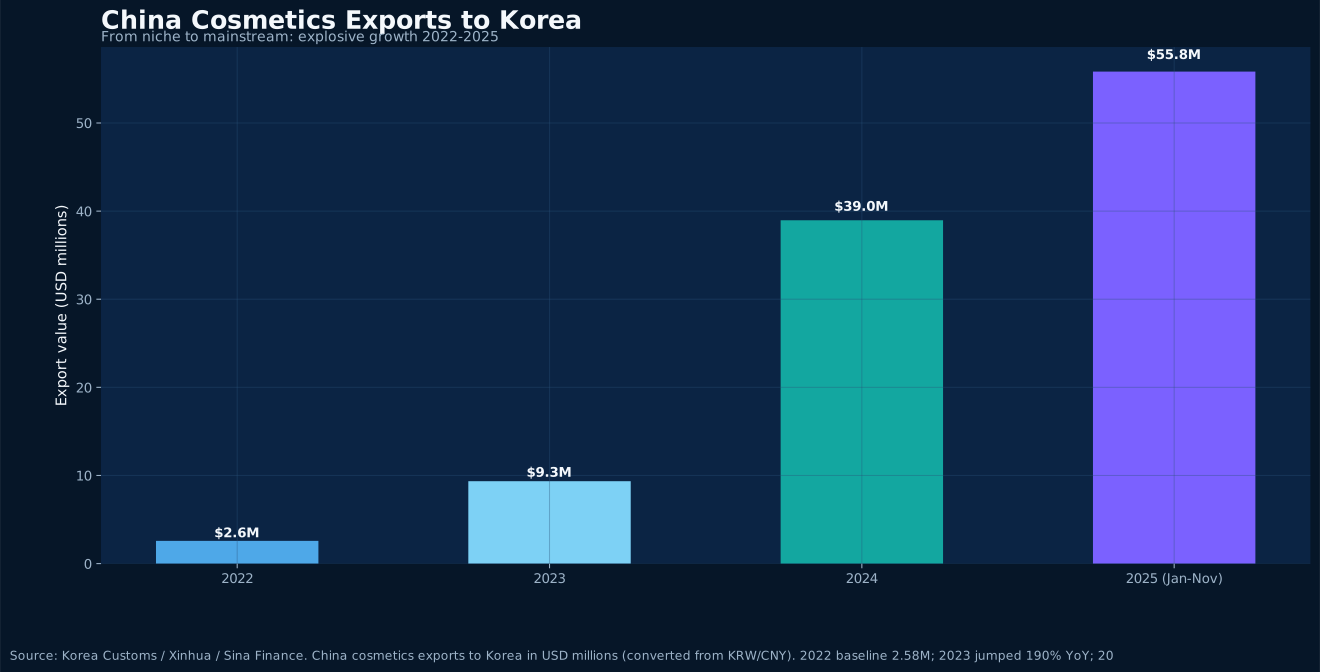
In the first 11 months of 2025, China's cosmetics exports to Korea reached $55.83 million, surpassing all of 2024. Korean consumers' cross-border purchases of Chinese cosmetics hit $155 million in Q1-Q3 2025, up 39.6% YoY. The China-Korea beauty trade — once defined by K-beauty's dominance — is undergoing a quiet role reversal.
Read Article
Biopharma Insight · 2026-04-09
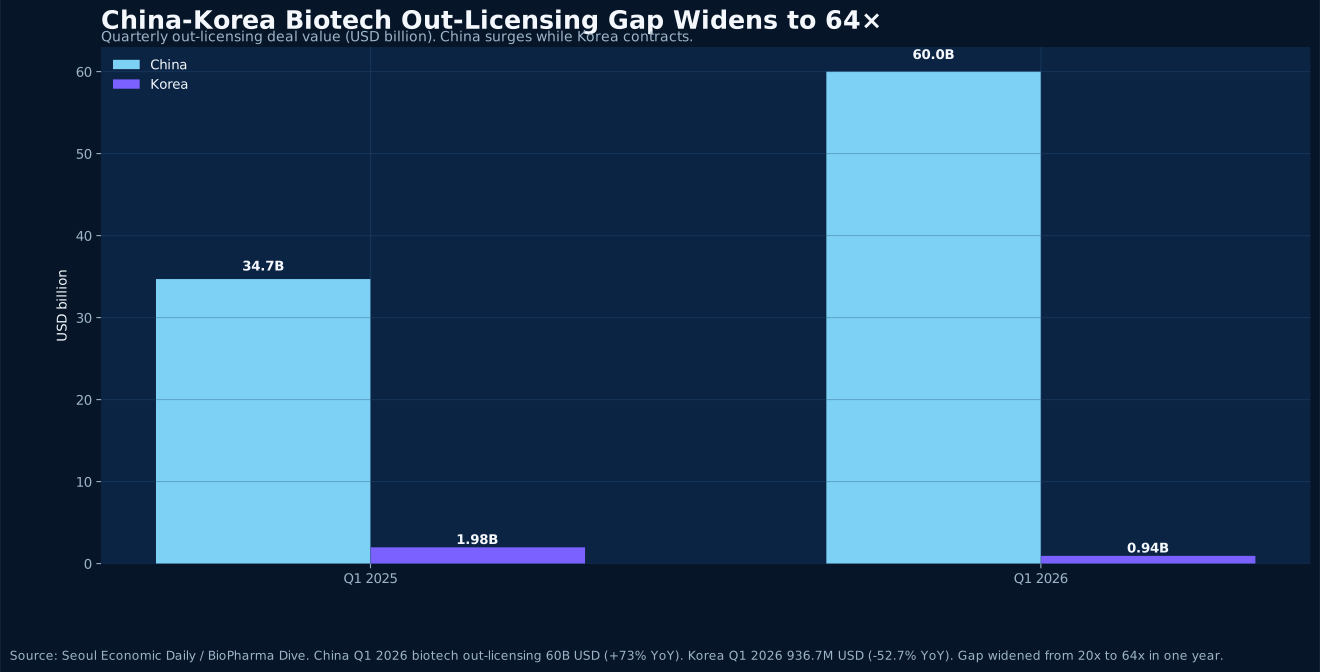
China's biotech out-licensing value climbed to USD 60 billion in Q1 2026 while Korea fell below USD 1 billion. What looks like a capital-market gap is also forcing Korean firms to reassess China-facing market access, expo strategy, BD channels, and partnership timing.
Read Article
Game Export Insight · 2026-04-09
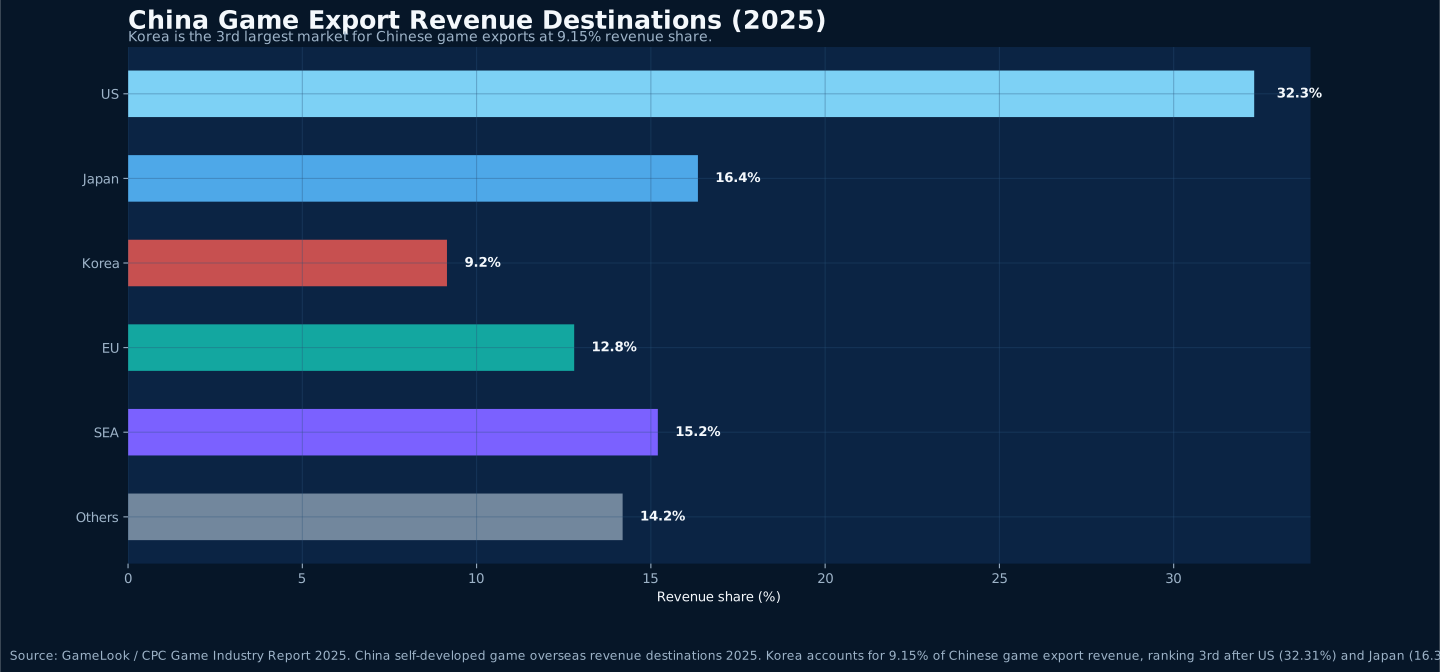
Korea accounted for 9.15% of revenue destinations for Chinese self-developed game exports in 2025, ranking behind only the U.S. and Japan. At the same time, Korea's game market is still expanding and mobile continues to gain share. The real barrier is no longer market entry itself, but whether localization, compliance disclosure, and operating rhythm can be executed together.
Read Article
Textile & Apparel · 2026-04-08
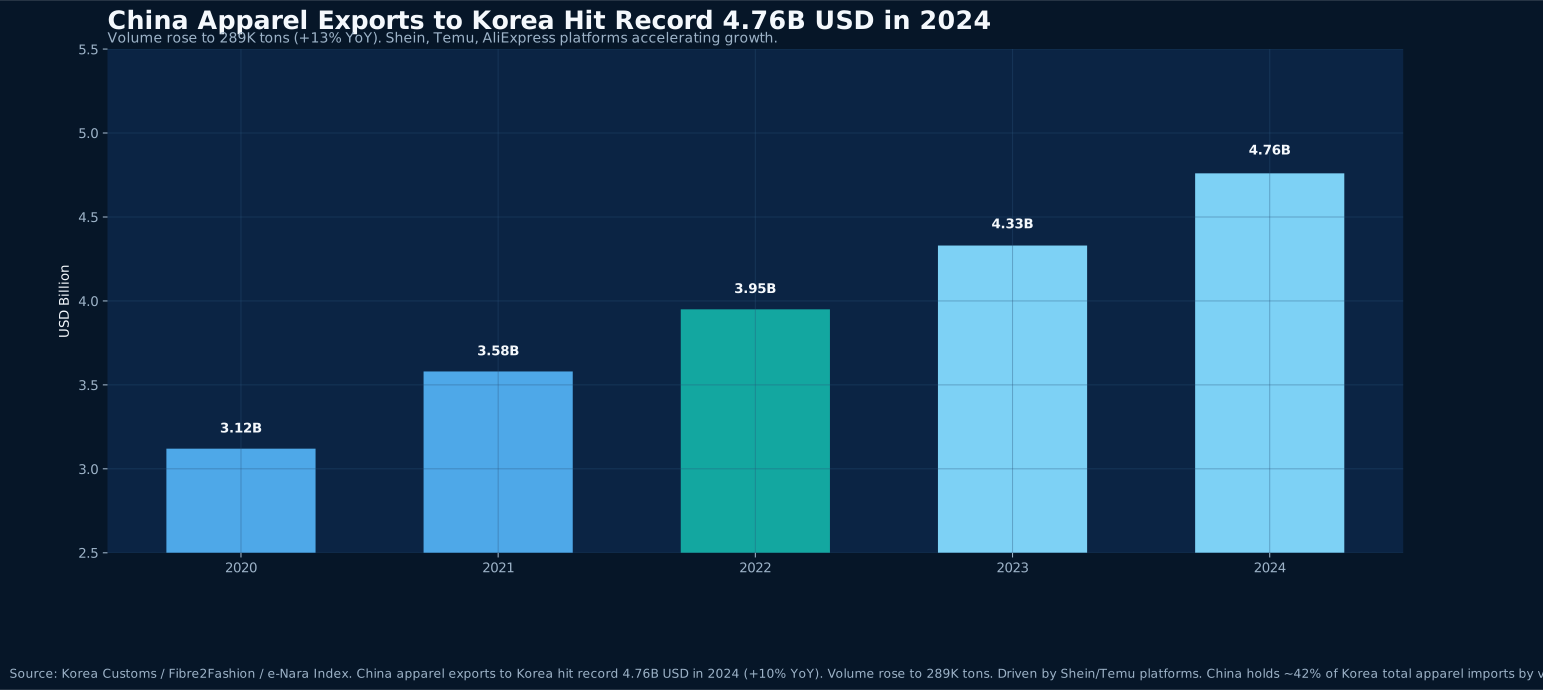
China's apparel exports to Korea hit a record $4.76B in 2024 (+10% YoY), while Korea's domestic textile production shrank from 28.5T KRW (2021) to 22.5T (2024). Temu's MAU surpassed 7.21 million, disrupting Korea's fashion retail landscape.
Read Article
Beauty Regulation · 2026-04-08
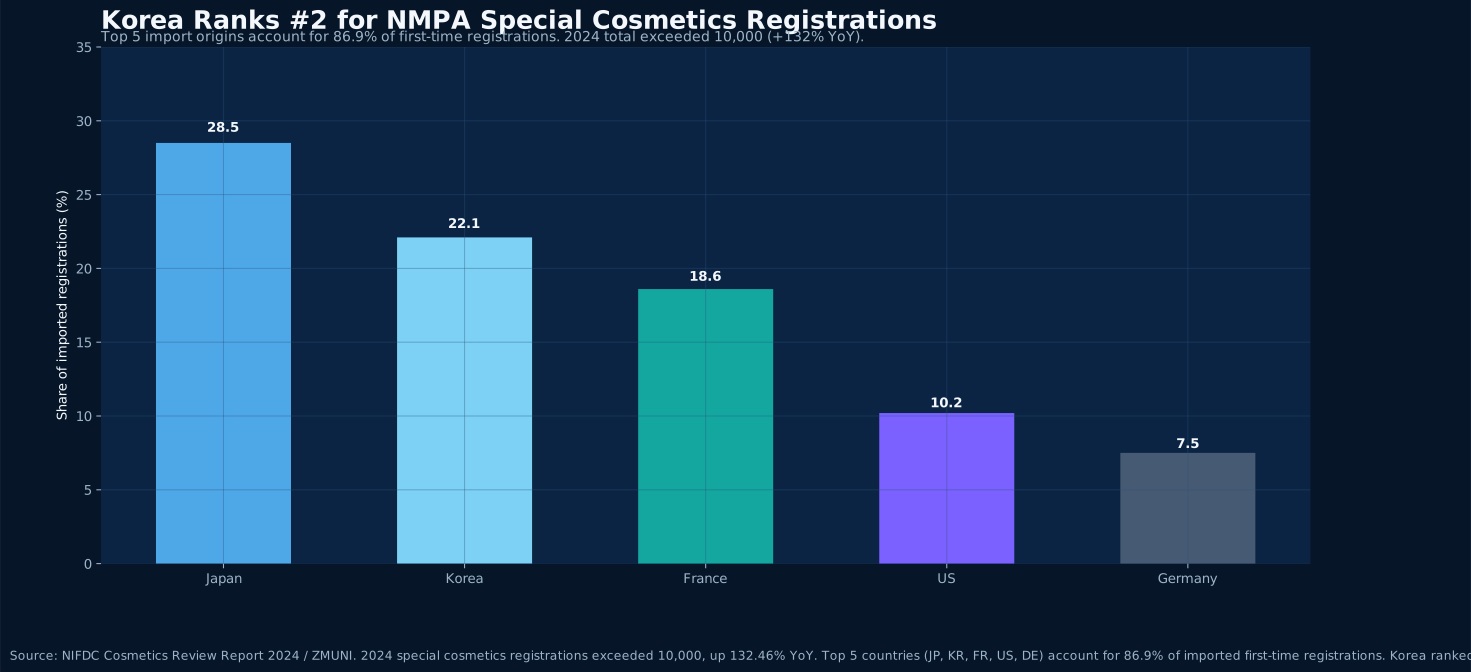
From February 2026, China launched a cosmetics e-labeling pilot in six major cities while NMPA continues to reform its registration system. Special cosmetics registrations exceeded 10,000 in 2024, up 132% YoY. Korea, as the second-largest import source, faces both opportunity and compliance complexity.
Read Article
Channel Insight · 2026-04-08
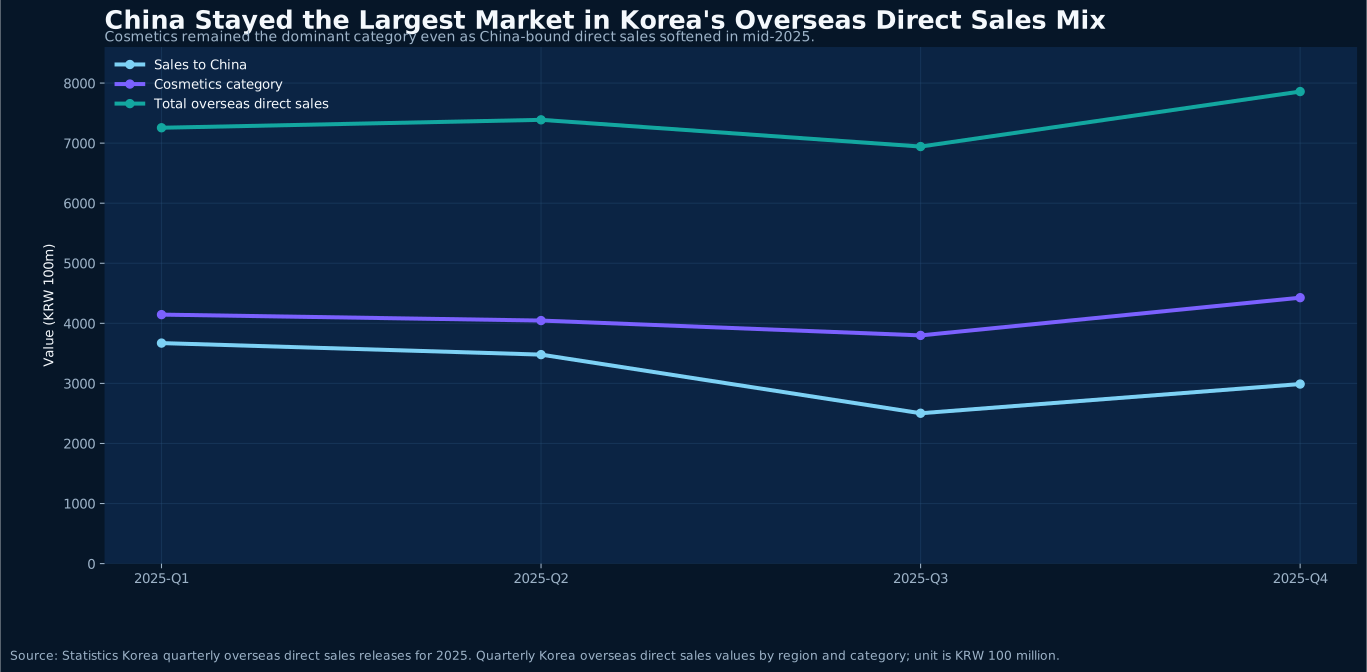
Statistics Korea shows Korea's overseas direct sales rose to KRW 785.9 billion in Q4 2025, yet sales to China fell to KRW 298.9 billion, clearly below the level seen earlier in the year. Cosmetics remained the largest category, but the real shift is that traffic and fulfillment are moving away from one-market dependence toward a lighter multi-market channel structure.
Read Article
Retail Insight · 2026-04-08
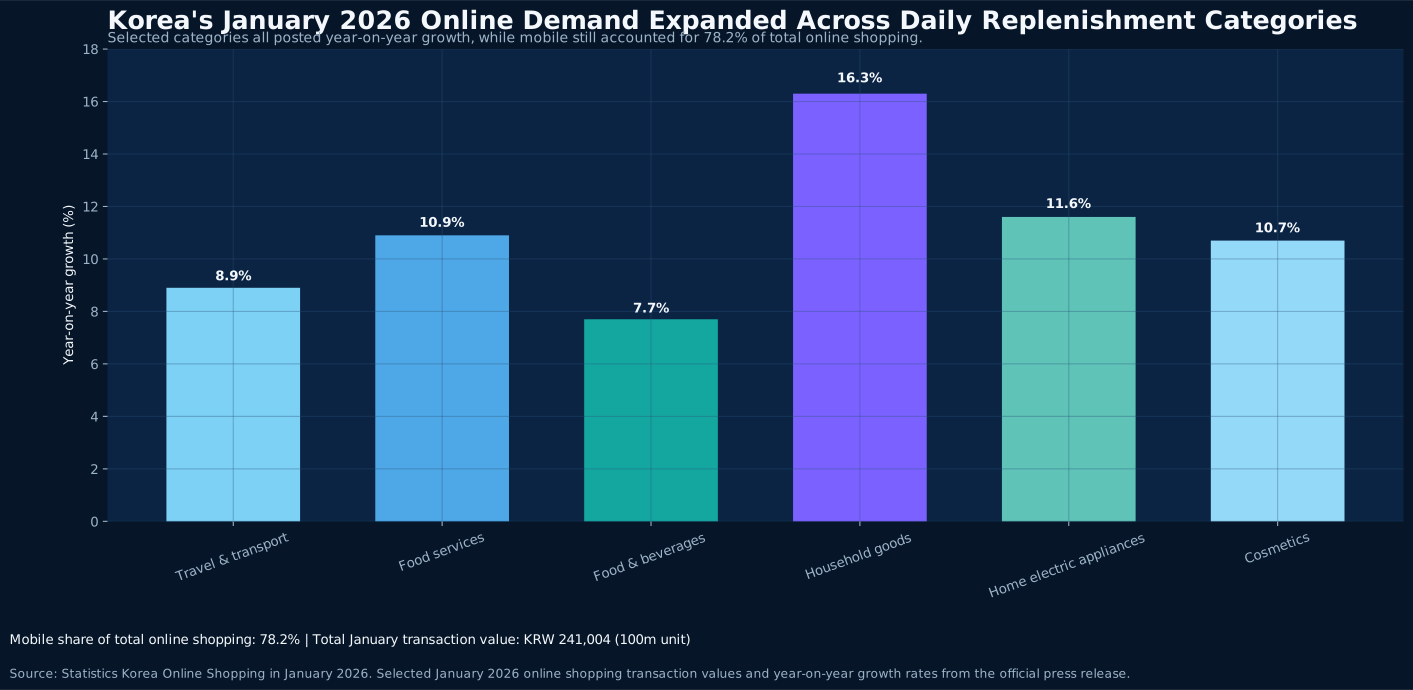
Statistics Korea's January 2026 online-shopping release shows household goods grew 16.3% year on year and home electric appliances rose 11.6%, both outpacing the broader market. Combined with KRW 200.1 billion in Q4 overseas direct purchases of home-and-auto goods, the signal is clear: Korean consumption is shifting from bulk promotion buying to higher-frequency, more fragmented home replenishment, pulling China's home-living supply chain back into the spotlight.
Read Article
Cross-Border E-Commerce · 2026-04-07
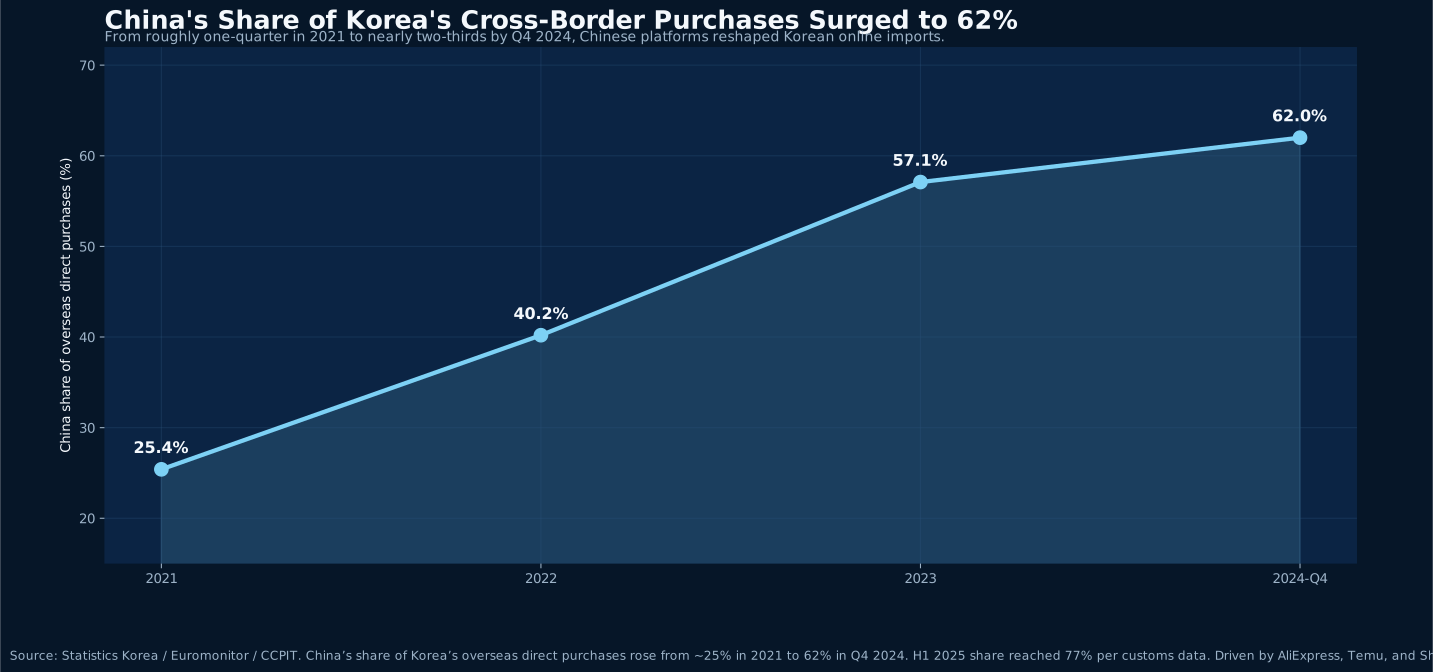
China’s share of Korea’s overseas direct purchases surged from 25% in 2021 to 62% in Q4 2024, reaching 77% in H1 2025. Temu’s global cross-border share jumped from 1% to 24% in three years, matching Amazon. We analyze the structural rise and its supply-chain implications.
Read Article
Logistics Insight · 2026-04-06
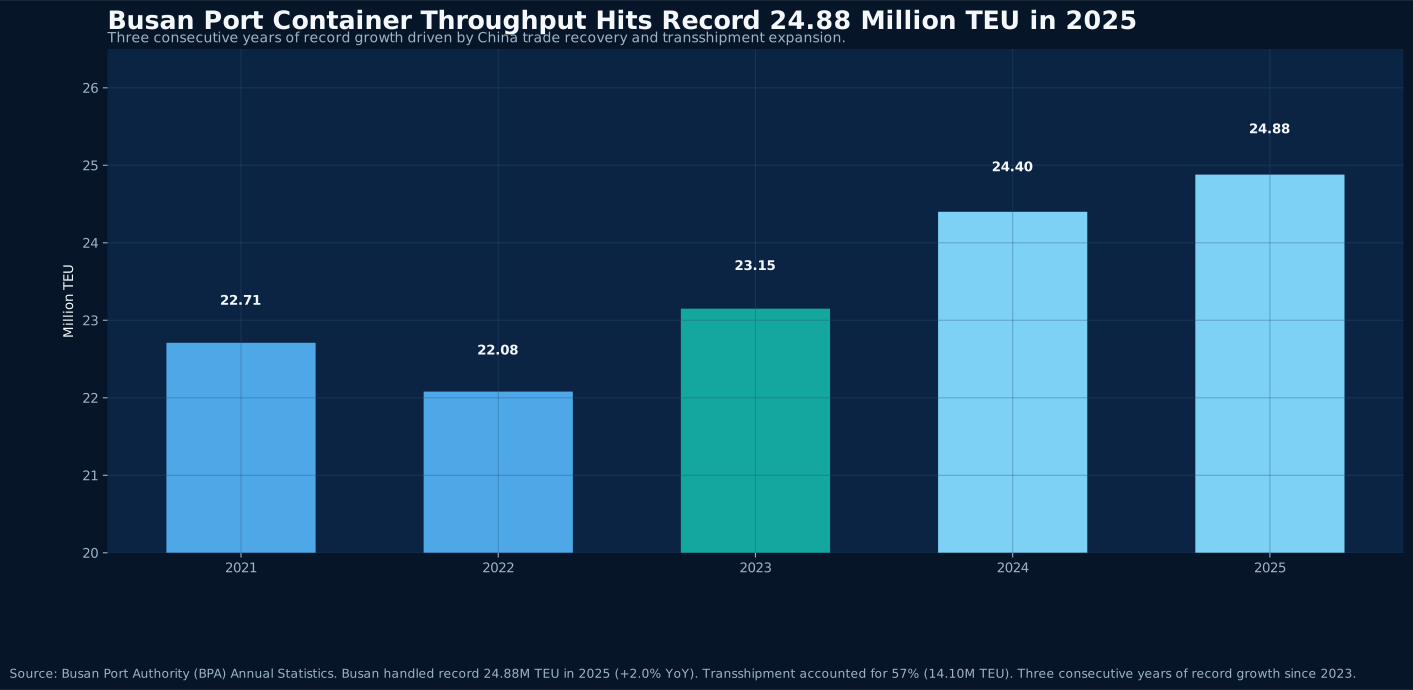
Busan Port handled 24.88 million TEU in 2025, setting a record for the third consecutive year. Yet behind this figure lies a deeper story of transshipment growth, freight rate normalization, and an e-commerce-driven logistics transformation.
Read Article
Certification & Compliance · 2026-04-06
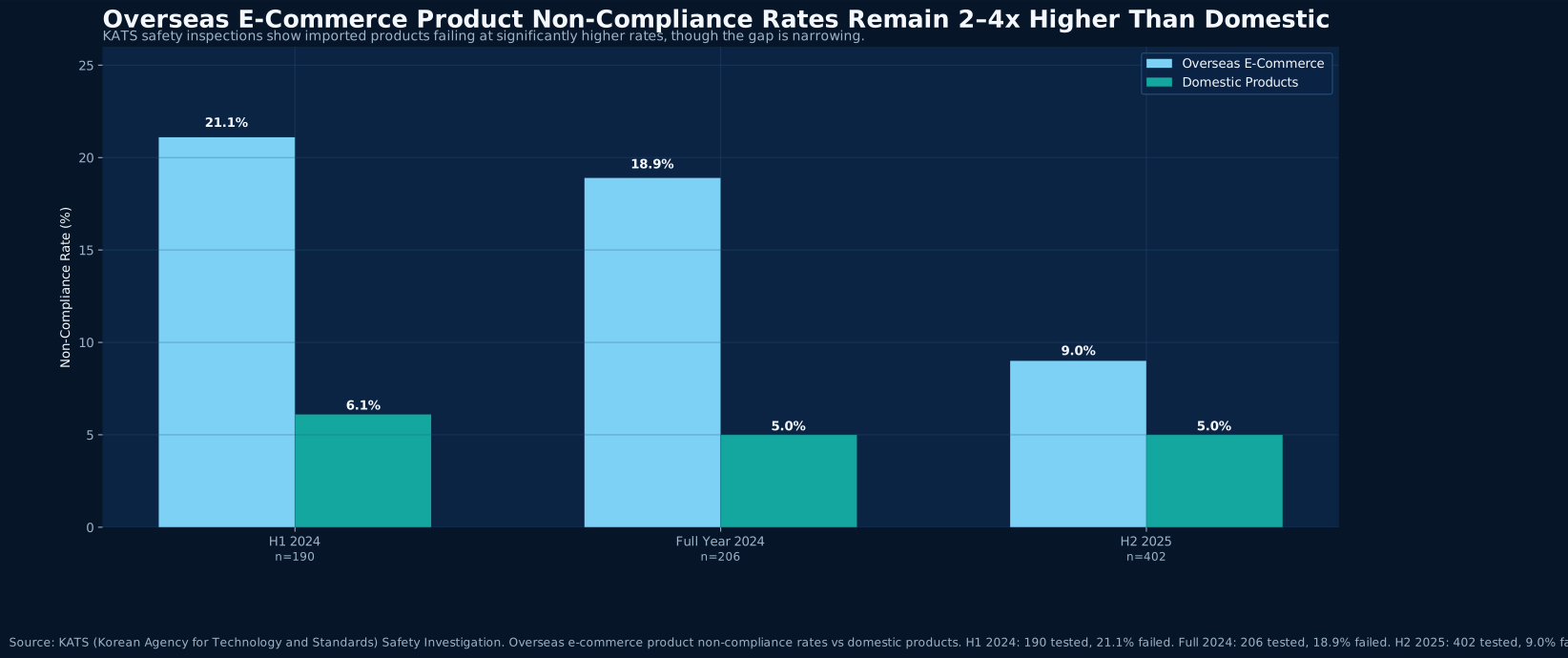
With overseas e-commerce product non-compliance rates 3-4x higher than domestic products and 2,537 total recalls in 2024, Korea is extending KC certification enforcement to online platforms. For Chinese exporters, this is both a challenge and an opportunity.
Read Article
Food & Agriculture · 2026-04-06
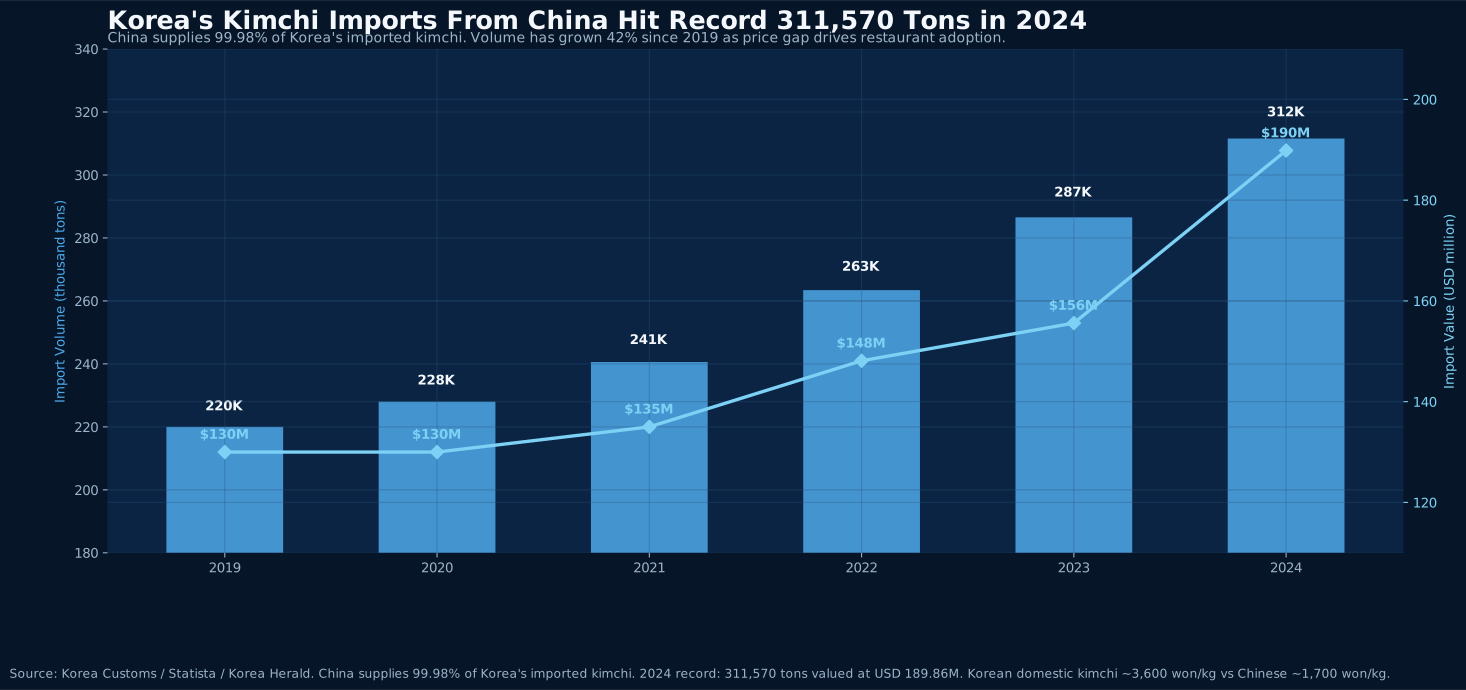
China supplies 99.98% of Korea's imported kimchi and ranks first in total food import volume. Yet 42.4% of 2024's 1,454 import food non-compliance cases involved Chinese products. Between a growing market and tightening regulations, understanding both structure and risk is essential.
Read Article
Cross-Border Ecommerce Insight · 2026-04-05
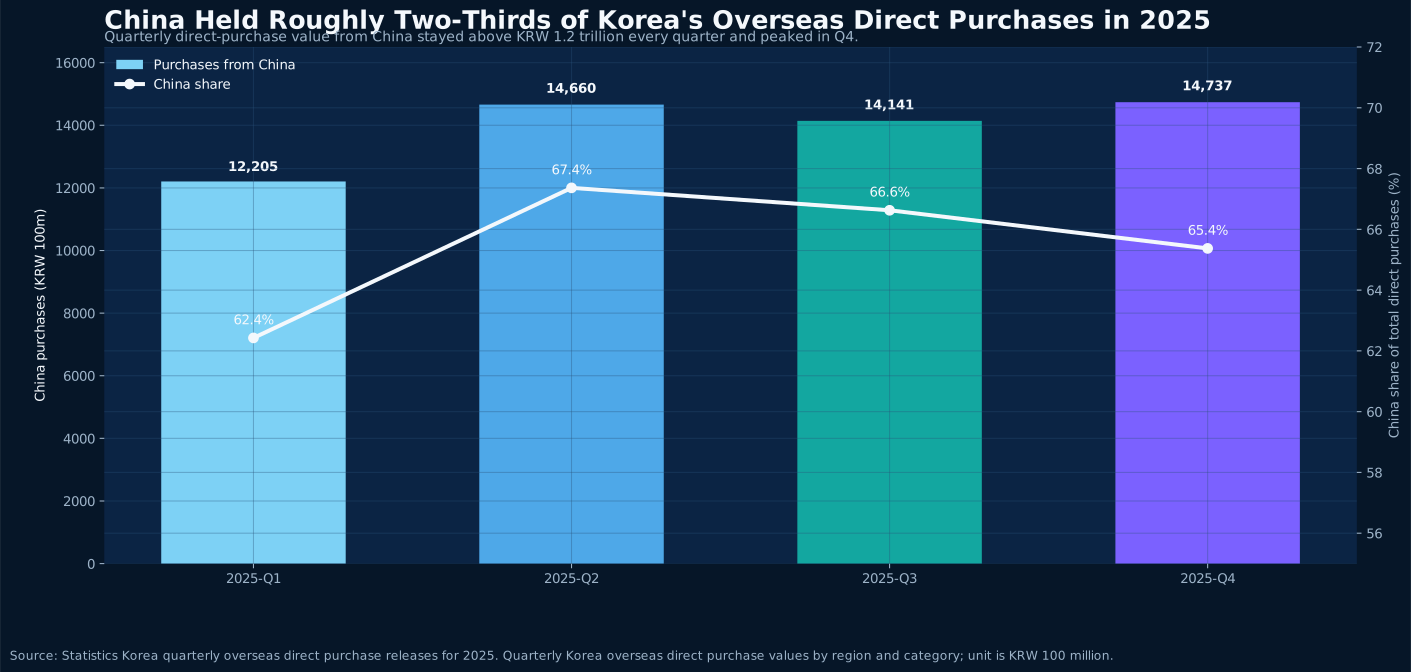
Across all four quarters of 2025, Statistics Korea shows China remaining Korea's largest source of overseas direct purchases, climbing from KRW 1.2205 trillion in Q1 to KRW 1.4737 trillion in Q4. The more important signal is the stability of China's supply position across fashion, food, and daily-use categories.
Read Article
Beauty Export Insight · 2026-04-05
Statistics Korea's 2025 overseas direct-sales data kept China in the No.1 position across all four quarters, while Korean authorities simultaneously rolled out ecommerce HS-code support and new K-beauty export initiatives. For packaging, filling, warehousing, and brand-service operators, the real shift is that channel speed and compliance are now moving forward together.
Read Article
Exhibition & Channel Insight · 2026-04-05
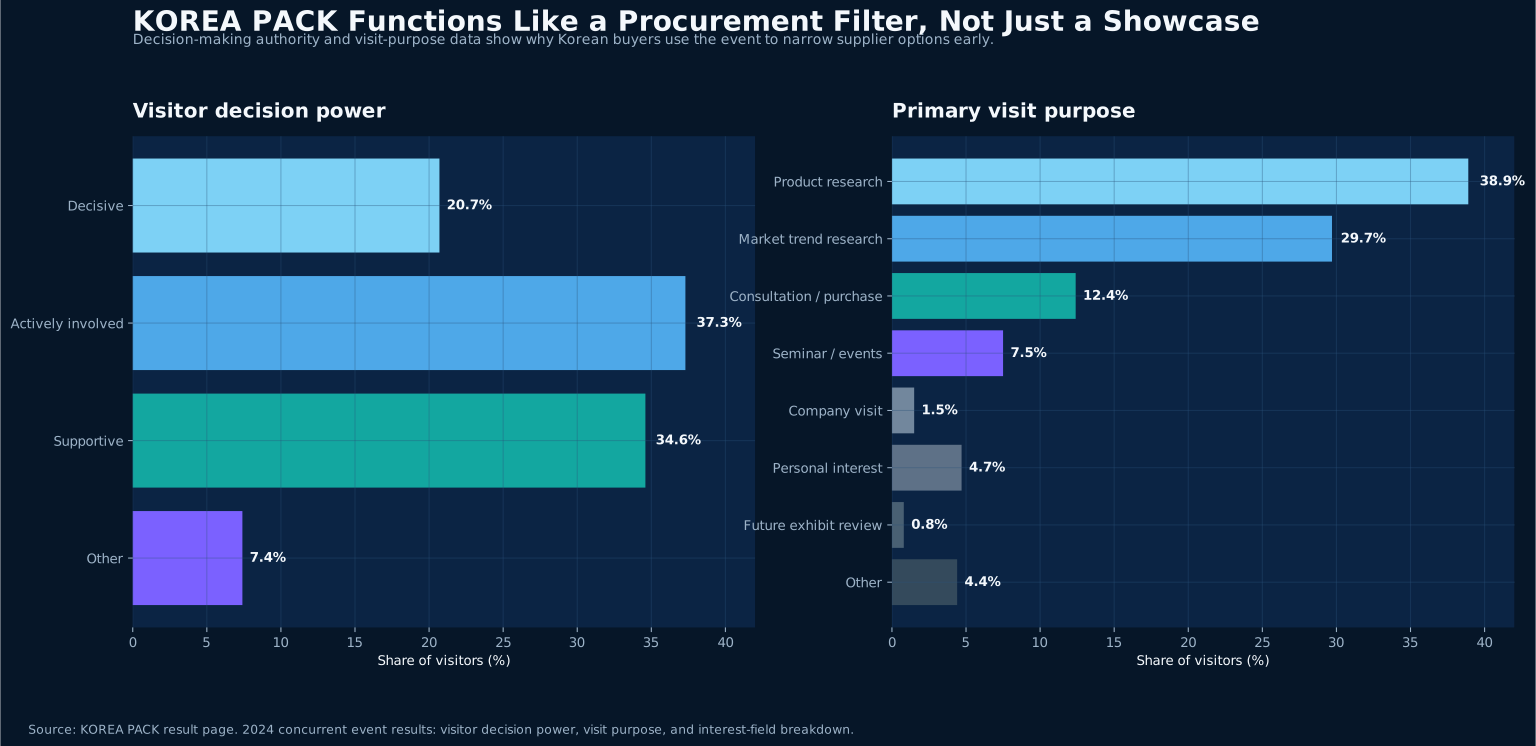
Many suppliers still treat major Korean packaging exhibitions as ordinary places to meet contacts, hand out brochures, and look at trends. The structure in KOREA PACK’s official results says something stronger. A combined 58.0% of visitors were decisive or actively involved in purchasing decisions, while 68.6% came primarily for product research or market-trend scanning. This makes the show less of a branding exercise and more of a concentrated window where Korean buyers screen the next round of supplier relationships.
Read Article
Retail & E-commerce Insight · 2026-04-05
The signal in Statistics Korea’s January 2026 online shopping release is not a single breakout category. It is the simultaneous expansion of multiple high-frequency daily-use and service categories. Travel, food service, beverages, household goods, appliances, and cosmetics all moved higher year on year, while mobile still accounted for 78.2% of transactions. That suggests Korean platform demand is leaning less on isolated campaign spikes and more on faster, fragmented, replenishment-driven consumption.
Read Article
Glass Insight · 2026-04-04
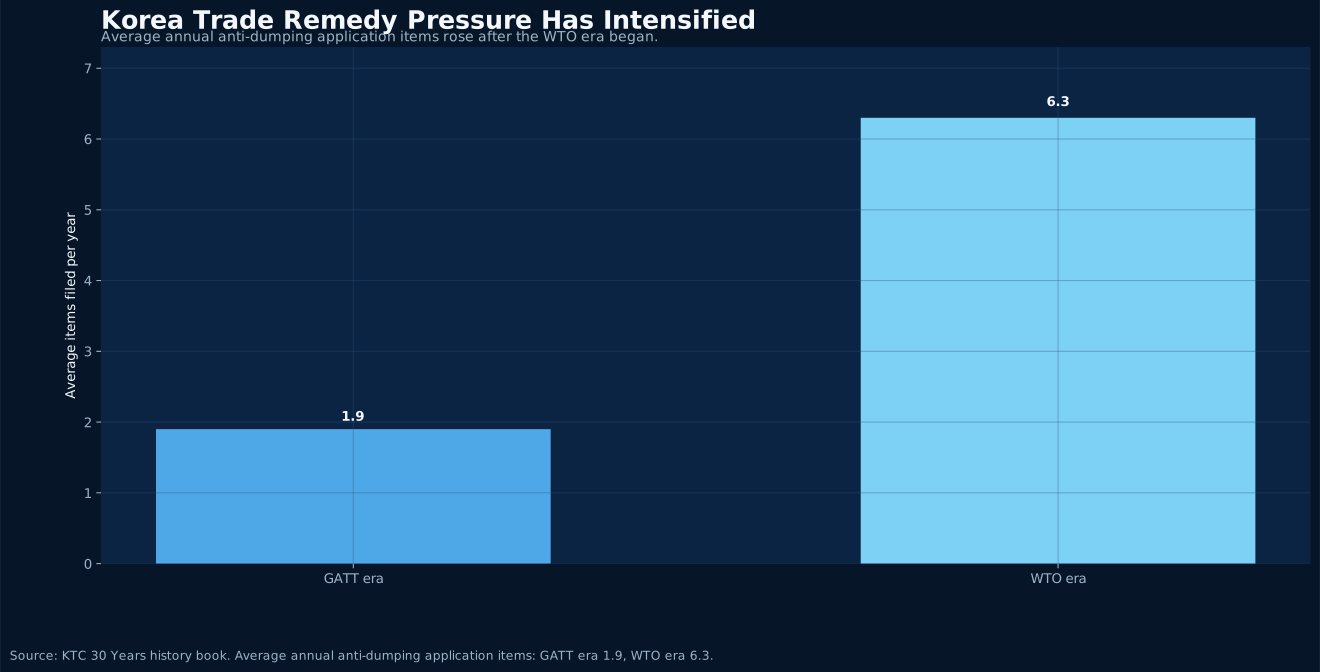
Trade pressure on standard float glass from China has not erased Korean demand. What is changing is the buying mix, with tempered, Low-E, insulated, and other processed categories becoming more important.
Read Article
Beauty Packaging Insight · 2026-04-04
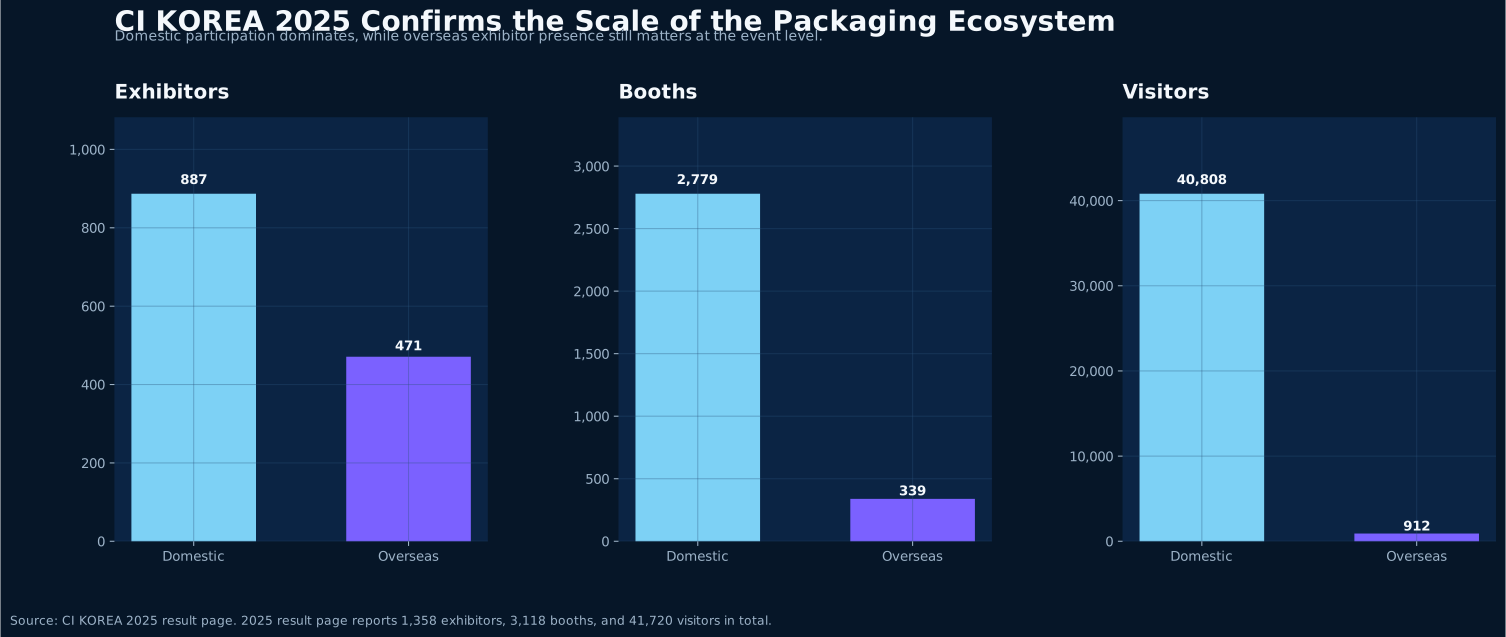
K-beauty opportunity no longer belongs only to large-batch standard packaging. As channels such as Olive Young and Musinsa expand, launch cycles accelerate, product mixes fragment, and packaging trials become more frequent, pushing suppliers from simple fulfillment toward launch coordination.
Read Article