1. Korea's start-of-year online signal matters more than headline promotion events
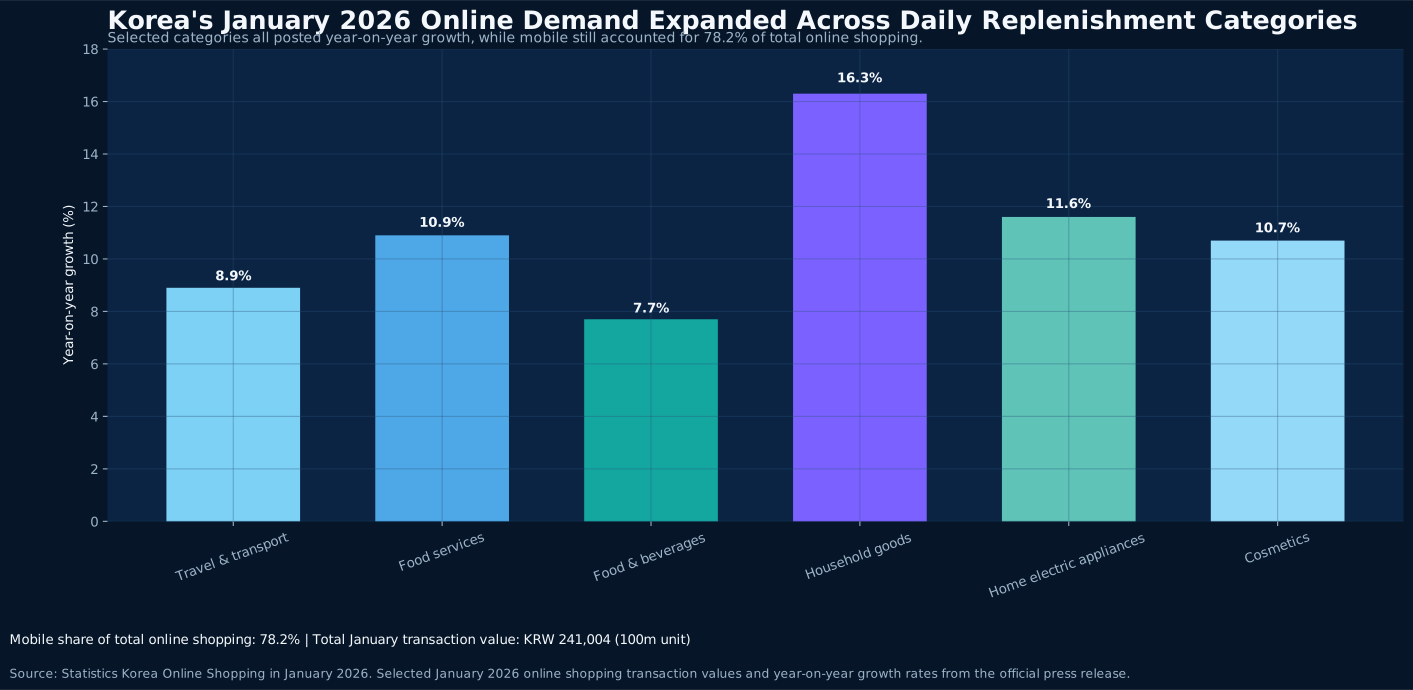
Many people watch Korean retail through the lens of major promotion events, but the months that reveal true consumption habits are often quiet periods at the start of the year. Statistics Korea's January 2026 online-shopping release shows household goods grew 16.3% year on year and home electric appliances rose 11.6%, both above what many would expect in a cautious spending environment. Korean households are not freezing purchases. They are maintaining regular updates in practical home-use categories.
This matters to Chinese supply chains because household goods and small appliances are not impulse categories. They are linked to storage efficiency, cleaning experience, kitchen routines, and the overall functioning of the home. Once these needs form, purchasing behavior tends to shift away from one-off bulk orders and toward regular small-batch replenishment, which raises more detailed expectations for lead time, assortment, and packaging.
2. Home-and-auto goods in cross-border purchases show Chinese supply has not retreated
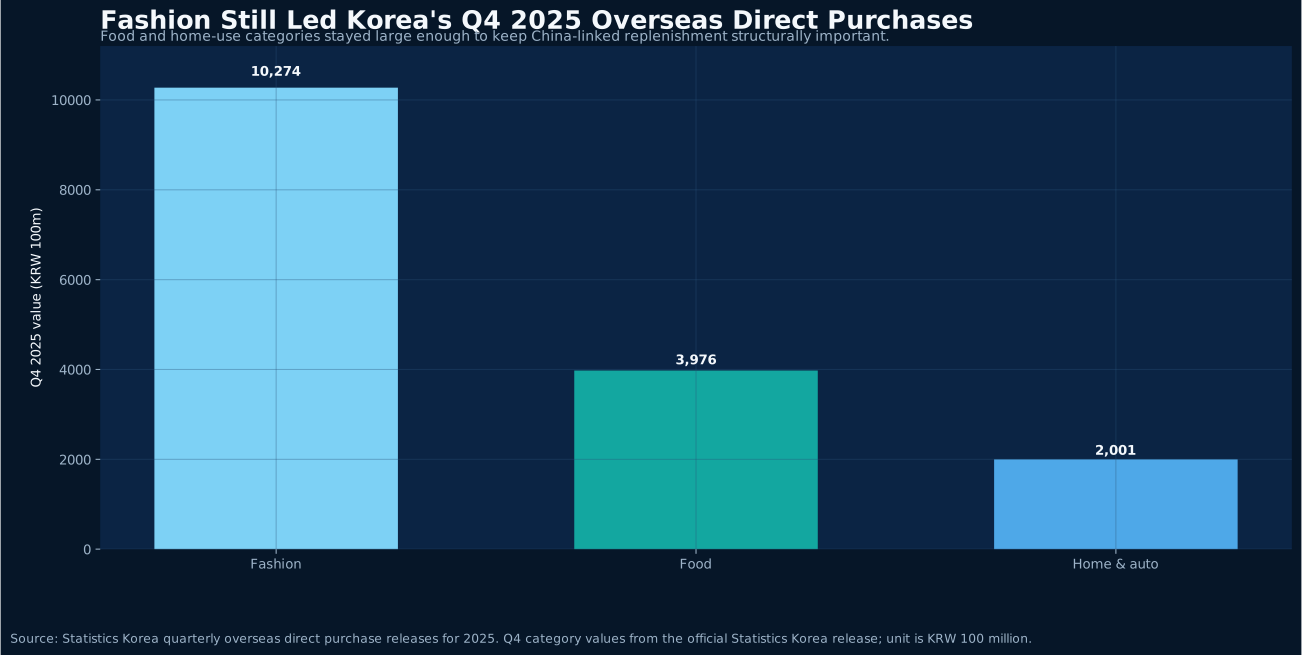
The signal becomes clearer when domestic online spending is read together with overseas direct purchases. In Q4 2025, Korea's overseas direct purchases of home-and-auto goods reached KRW 200.1 billion. That is smaller than fashion, but far too large to ignore. More importantly, China still dominates Korea's overseas direct-purchase structure, meaning many home-use needs are ultimately matched, priced, and shipped through Chinese supply chains.
That is why shifts in Korean home retail cannot be explained only by local retailer inventories or brand promotions. Cross-border supply chains are increasingly carrying the role of rapid replenishment. Once a platform sees traction in a storage item, kitchen tool, or cleaning device, it returns to China for ready capacity, ready tooling, and ready assortment plans. The suppliers that sample faster, revise faster, and present clearer carton logic are the ones most likely to win the next replenishment round.
3. In small appliances and home goods, price is no longer the only battleground
Korean consumers may appear price-sensitive in household goods and small appliances, but when platforms actually filter suppliers, they increasingly care about review stability, return-loss rates, packaging efficiency, and whether content converts well on mobile. Statistics Korea also reported that mobile still represented 78.2% of Korea's online shopping in January 2026. Many home-use goods now have to be understood on a phone screen first and executed efficiently in logistics second.
For Chinese factories, this means manufacturing capability alone is no longer enough. Product presentation for the Korean market, bundle logic, and packaging experience have to be designed together. A storage item may need single-pack, multi-pack, and gifting versions at the same time. A kitchen appliance may have to balance online visuals, plug standards, spare parts, and return repacking cost. The suppliers that solve these details upfront are more likely to move from price vendor to long-term partner.
4. The real opportunity sits in light, fast-turn replenishment rather than heavy inventory bets
When outside suppliers hear 'home category,' they often think first of large furniture or long-cycle renovation goods. But the real online replenishment opportunity in Korea is usually in lighter, faster, higher-frequency items. These products are easier to test on platforms, easier to convert on mobile, and easier to ship cross-border. Once Korean households develop repeat behavior in these categories, the supply-chain advantage no longer depends on how much can be shipped once, but on how reliably it can keep restocking.
So the China-side task is not simply chasing a single hit SKU. It is building a light, fast-turn system that matches Korean platform rhythms: faster sampling, more packaging versions, lower replenishment thresholds, and more flexible assortment changes. With those four pieces in place, even SKUs that are not spectacularly large can build a steadier order structure over a longer cycle.
5. The suppliers that read Korea's replenishment rhythm best will capture the next growth cycle
From a China-Korea trade perspective, the online growth in Korean household goods and small appliances looks less like a temporary promotion spike and more like a return to practical consumption. Consumers are shifting budget toward products that improve daily efficiency, while platforms are steering resources toward supply that can replenish steadily, keep return losses low, and convert into high review scores. This environment favors the Chinese factories that genuinely understand Korean platform rhythm.
What matters next is not just whether one platform posts a sales spike, but whether household goods, home appliances, and home-use categories in cross-border purchases can sustain growth for several consecutive quarters. If they can, then the opportunity for China's home-living supply chain in Korea will not be a sprint. It will be an endurance game defined by responsiveness and operating coordination.