1. BYD has proven it can sell cars. Korea's harder test is whether it can keep servicing them
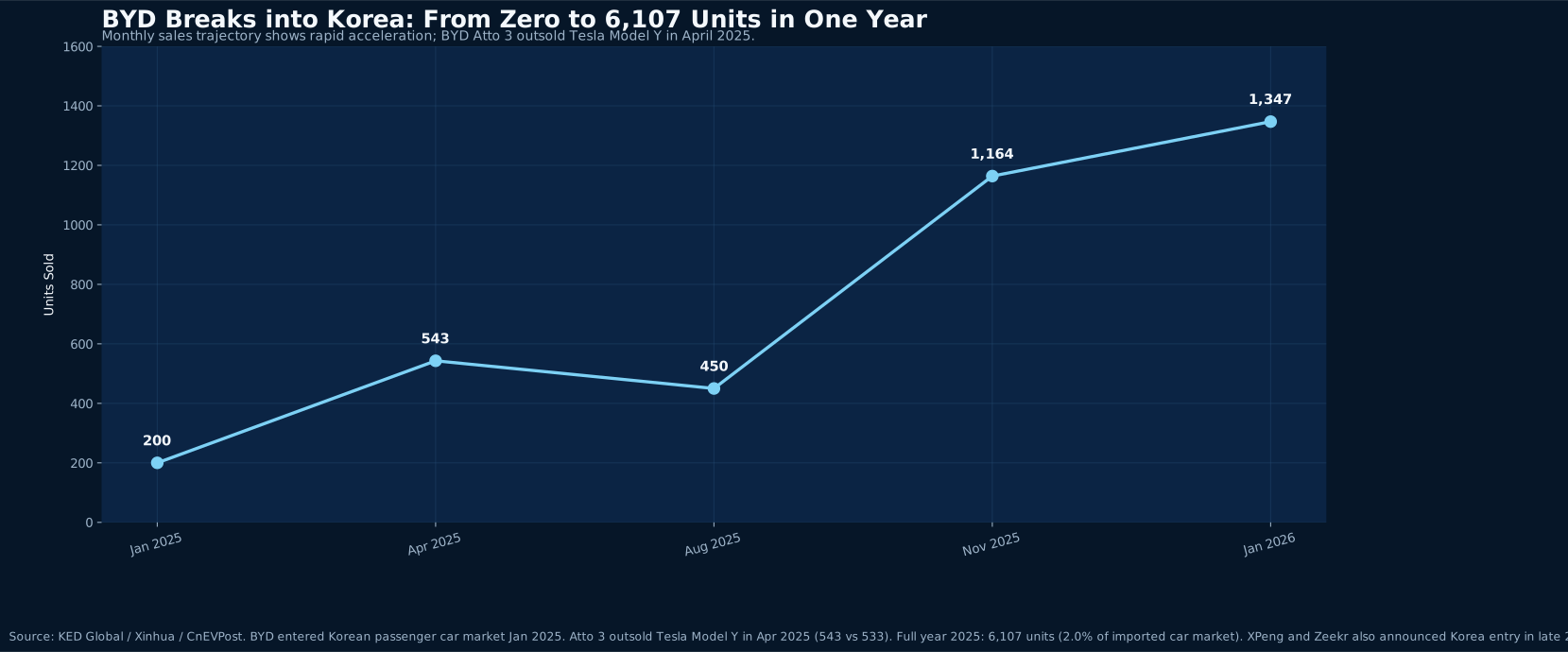
After entering Korea's passenger-car market in January 2025, BYD moved quickly from media curiosity to actual sales. Public data shows 6,107 units sold in 2025, around 2.0% of Korea's imported-car market, with January 2026 alone rising to 1,347 units. These figures show Korean consumers do not treat Chinese EVs as untouchable newcomers. Price, specification, and novelty are already enough to pull part of the market across the first threshold.
But the hard part in Korea is never only the first batch of sales. It is whether the aftersales system can stand up. For any new brand, repair waits, parts supply, accident replacements, software updates, charging compatibility, and residual-value expectations all become amplified in the second purchase cycle. The real test for Chinese brands in Korea is only now shifting from the selling side to the service side.
2. Korea's auto industry is only set for modest growth, so new competition flows quickly into channel pressure
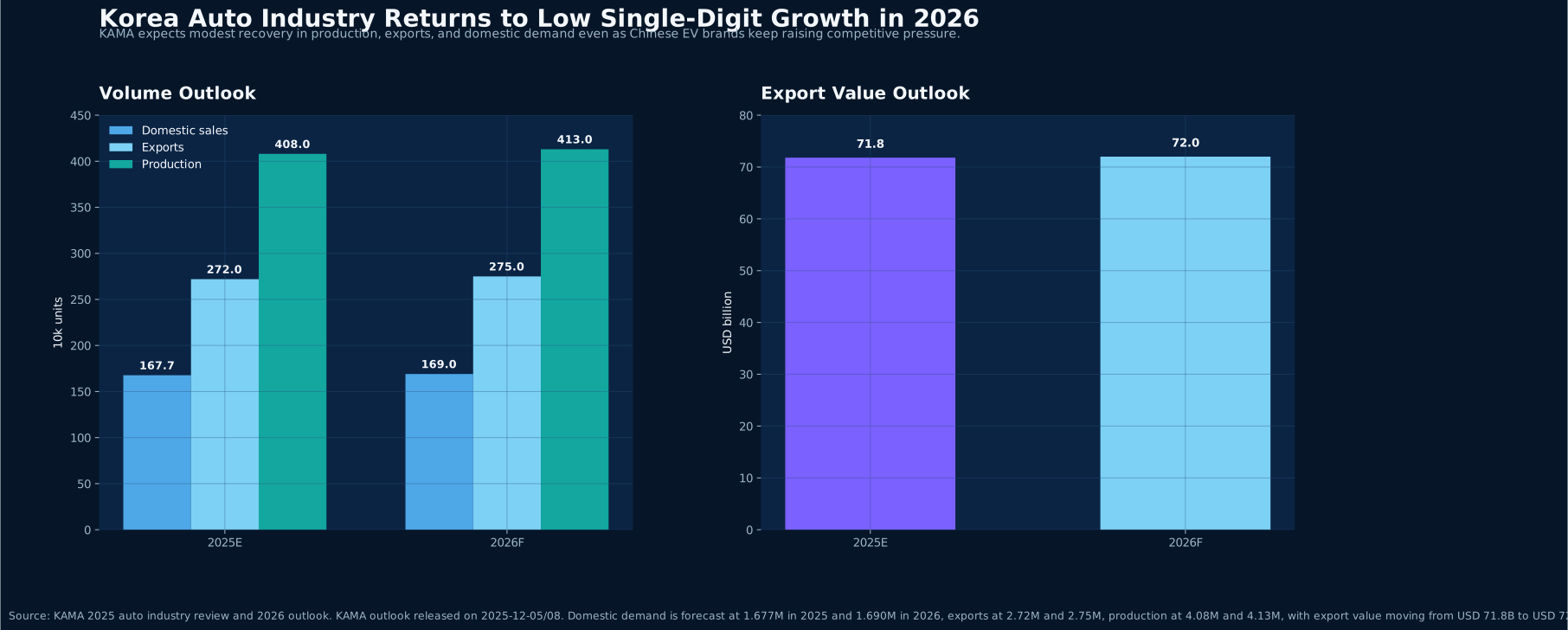
KAMA's official 2026 outlook deserves close attention. The association expects Korean domestic sales to move from about 1.677 million vehicles in 2025 to 1.690 million in 2026, exports from 2.72 million to 2.75 million, and production from 4.08 million to 4.13 million. In other words, Korea's auto industry is not entering a high-growth phase that can easily absorb new entrants. It is merely recovering slowly from earlier pressure. In such a market, any new brand reaches the limits of channel and service resources much faster.
That is why Chinese EV entry into Korea should not be read as a vehicle-trade story alone. It is closer to a new chain being inserted into Korea's existing automotive circulation system, forcing dealerships, repair networks, finance, insurance, and used-car valuation to recalculate together. For the supply chain, the players that complete the service chain earlier than the vehicle sales curve itself are the ones most likely to convert short-term volume into long-term presence.
3. The next opportunity is not the first batch of vehicles, but the second batch of parts and support items
Once Chinese brands enter the real-sales phase in Korea, the first network that gets reorganized is often not manufacturing but repair parts and support components. Front bumpers, lamps, glass, charging-port assemblies, interior parts, fast-wear components, inspection equipment, and diagnostic tools all become foundational to the next stage. Whether Korean users buy again will depend not only on upfront value for money, but also on repair time after accidents, waiting time for parts, and service convenience.
This is also the most practical lesson for China's supply chain. Sustainable profit may not come first from finished vehicles. It may emerge earlier from standard parts, aftersales components, and the surrounding systems that keep shipping continuously. The suppliers that offer more stable spare-parts lists, clearer compliance information, faster replenishment rhythms, and packaging that fits Korean repair networks best are the ones more likely to enter this new demand cycle.
4. Charging, software, and channel training will move competition from hardware into operations
Whether new-energy vehicles can truly scale in Korea also depends on many invisible operating details: public-charging compatibility, coordination of home-charger installation, winter-range expectation management, software-update rhythm, customer-service responsiveness, and how familiar dealer and repair staff are with the brand system. If these pieces lag, the goodwill created by vehicle sales can quickly be offset by the service experience.
That is why the second phase of Chinese-brand entry into Korea is, at heart, an operating-capability contest. For cross-border suppliers, the next opportunity is not only supplying the vehicle maker, but supporting training materials, localized parts instructions, service packaging, charging accessories, and workshop turnover at the same time. This layer looks less glamorous than the vehicle itself, yet it is far more likely to become a durable partnership moat.
5. The next phase of China-Korea auto trade will look more like system export than simple vehicle export
Over a longer horizon, the importance of Chinese EV entry into Korea is not simply how many units sell this year. It is whether a full set of parts, charging support, repair capability, software service, and channel coordination can enter with the vehicle. Only when those layers mature will sales move from experimental penetration into stable share. That makes the next phase of China-Korea auto trade look more like system export than mere vehicle export.
For Chinese companies trying to enter this lane, the contest is no longer just about cost and speed. It is about who can assemble repair credibility, channel trust, and service support for the Korean market first. The companies that do so earliest are the ones most likely to secure value that lasts longer than vehicle sales alone.