Korea's Construction Sector Enters Deep Adjustment: Three Years of Subdued Permits
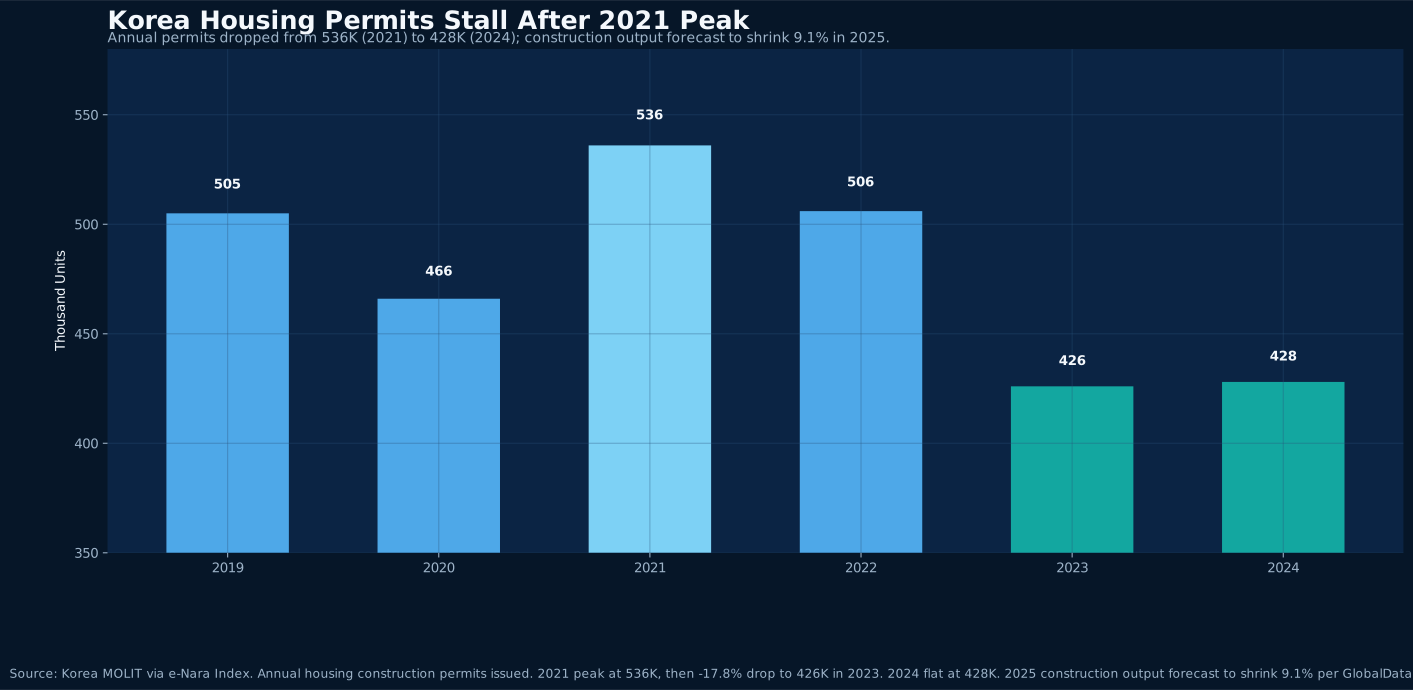
Data from Korea's Ministry of Land, Infrastructure and Transport shows that 2024 housing permits totaled 428,000 units, essentially flat versus 2023's 426,000 but down 20.1% from the 2021 peak of 536,000. This marks a structural contraction cycle in Korean residential construction, not a mere short-term fluctuation.
GlobalData forecasts Korea's construction output will shrink a further 9.1% in 2025, pressured by political instability (Yoon impeachment), high household debt, and a sluggish property market. However, the government has announced a 1.35M housing supply target and a KRW 50 trillion industry fund, pointing to an AAGR of 2.8% recovery during 2026-2029.
Ceramic Tiles: China Commands 61% of Korea's Import Market
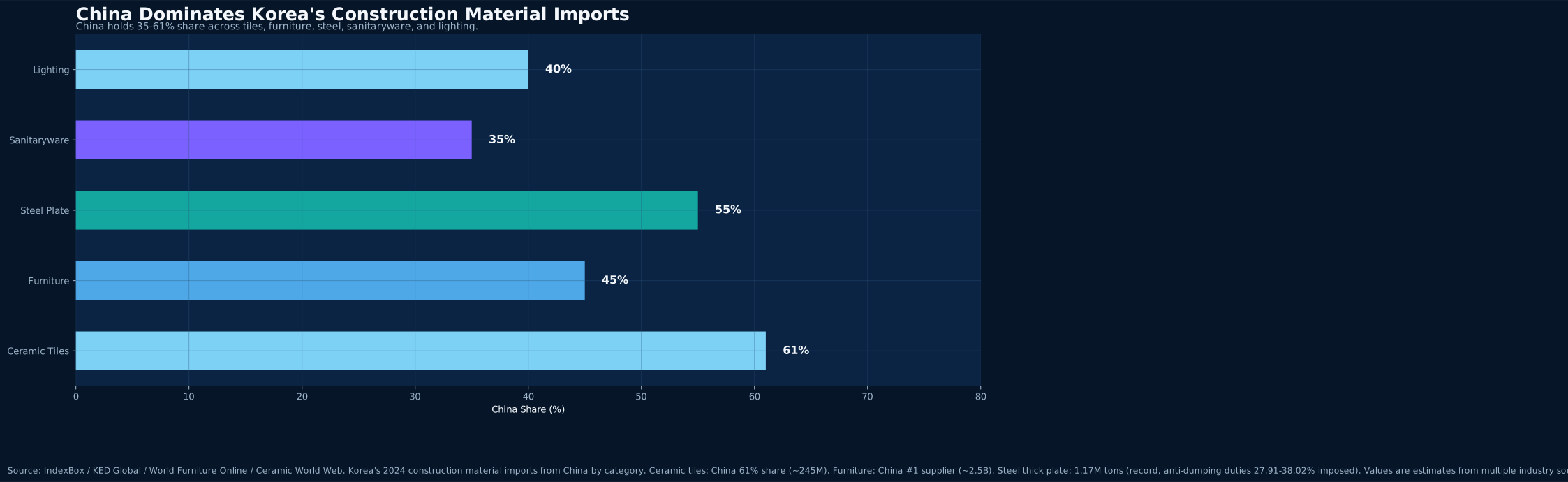
According to IndexBox and Ceramic World Web, Korea imported approximately USD 245 million in ceramic tiles from China in 2024, with China holding 61% of Korea's total tile imports by value. Korea ranks among the top three global destinations for Chinese tile exports alongside the Philippines and Malaysia. Despite a 1.6% global decline in Chinese tile exports in 2024, volumes to Korea remained stable.
China's dominance in Korea's tile market rests on two structural advantages: price competitiveness (Chinese tiles average 40-50% the cost of European competitors from Italy and Spain) and comprehensive product range covering everything from basic wall tiles to large-format slabs and stone-look porcelain. For cost-pressured Korean developers, Chinese tiles remain virtually irreplaceable.
Steel Plate: Anti-Dumping Duties Can't Stop the 1.17M-Ton Supply Momentum
KED Global reports that Korea's thick steel plate imports from China reached a record 1.17 million tons in 2024, a 3.7x surge from 320,000 tons in 2021. Korea has imposed anti-dumping duties of 27.91-38.02% on Chinese hot-rolled thick plates, yet import growth continues because China's chronic overcapacity keeps prices competitive even after tariffs.
For Korea's construction industry, steel is the third-largest cost after land and labor. With construction output expected to shrink, developers are even more price-sensitive, reinforcing dependence on low-cost Chinese steel. The Korea Iron & Steel Association is pushing to expand anti-dumping duties to more product categories, but China's price advantage will persist in the near term.
Furniture & Sanitaryware: China's Supply Chain Permeates All Korean Home Categories
World Furniture Online data shows China and Vietnam are the #1 and #2 furniture suppliers to Korea. Korea imported approximately USD 2.5 billion in furniture from China in 2024, spanning panel furniture, office furniture, and custom cabinetry. Korea's per capita plastic sanitaryware consumption reached 542 units per 1,000 persons (2024), among the world's highest, with China as the dominant Asia-Pacific supply base.
Notably, Korea's K-REACH Chemical Control Act underwent major revisions effective August 7, 2025, redefining toxic substance categories and requiring MSDS template updates by June 30, 2026. This directly impacts compliance costs for construction coatings, adhesives, and waterproofing materials. Chinese construction material exporters must monitor these regulatory changes and prepare compliance strategies proactively.
Outlook: Structural Opportunities Within the Contraction Cycle
Despite Korea's weak near-term construction outlook, several structural trends create opportunities for Chinese building material exporters. First, the government's 1.35M housing supply target implies a construction recovery after 2026. Second, semiconductor fab and transport infrastructure investments will drive industrial material demand. Third, the expanding Zero Energy Building (ZEB) certification scheme will significantly boost demand for high-performance materials like Low-E glass and advanced insulation.
For Chinese building material companies, the core strategy is to complement price competitiveness with proactive K-REACH compliance and KC certification adaptation, while positioning ZEB-related high-value product lines. Korea's building material market entry barrier is shifting from 'price' to 'price plus compliance' -- only suppliers with both will be well-positioned in the next construction cycle.