97% Dependency: Korea's China Materials Dilemma in Battery Manufacturing
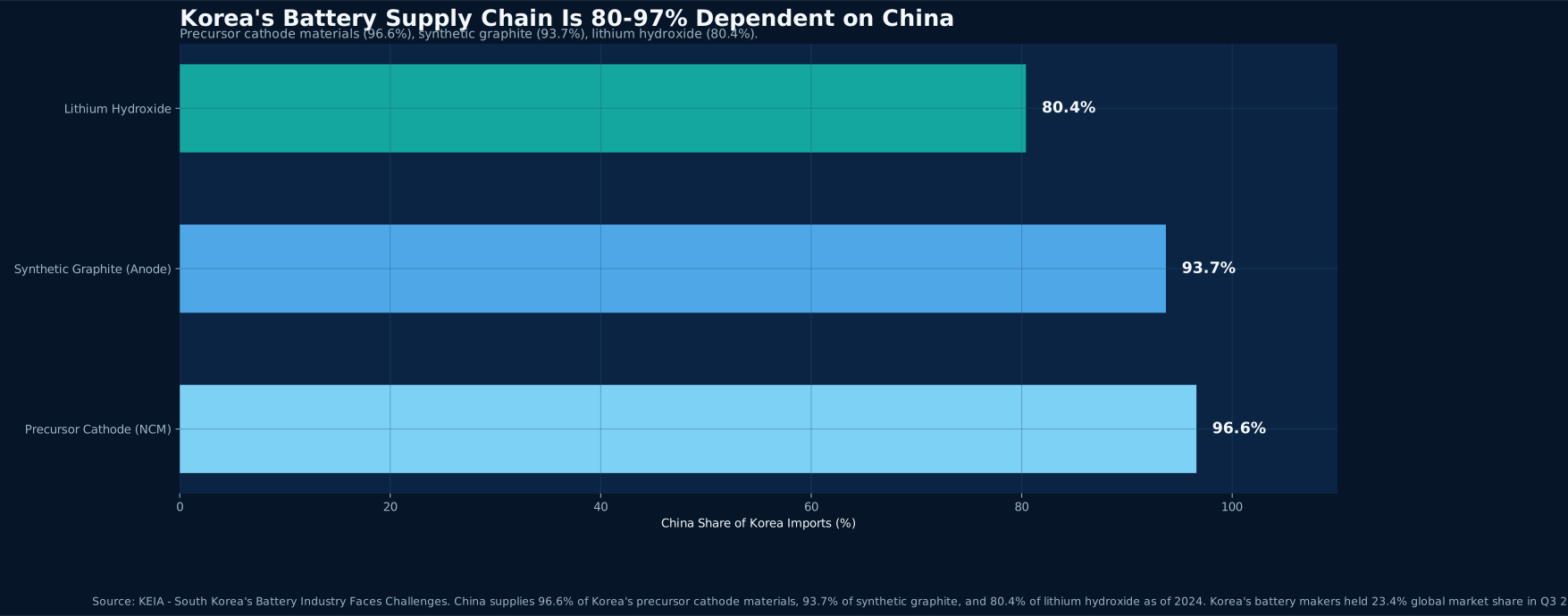
According to KEIA data, 96.6% of Korea's precursor cathode materials (NCM hydroxide) come from China, along with 93.7% of synthetic graphite (anode material) and 80.4% of lithium hydroxide. This means Korea's big three battery makers -- LG Energy Solution, SK On, and Samsung SDI -- hold 23.4% of the global battery market (Q3 2024) but are almost entirely dependent on China for raw materials.
More concerning, Korea's battery export value fell from USD 9.99 billion (2022) to approximately USD 8.4 billion (2024, down 12.1%), while its European market share dropped from 78% (2022) to 61% (2024) as China's share rose from 22% to 38%. Only in the US, protected by the IRA, does Korea maintain a 49% dominant position.
Export Controls and Suspension: China's Supply Chain Leverage
In October 2025, China announced export controls on high-performance lithium-ion batteries, cathode materials and precursors, and graphite-based anode materials, effective November 8. Korea received priority approval treatment thanks to trade relations, while US and India applications faced 2-3 month delays. However, following APEC trade talks, China suspended the controls for one year from November 7, 2025 to November 10, 2026.
This episode starkly revealed China's leverage in the battery supply chain. Even if the controls are not reinstated after the suspension, the signaling effect has already reshaped Korean battery industry strategy. Korea announced approximately USD 15 billion in investments in rechargeable batteries through 2030, and is actively developing alternative supply sources in Indonesia (nickel refining), Canada (lithium and cobalt), and Africa (critical minerals dialogue). Lotte also announced LFP mass production in Korea, a segment previously dominated almost entirely by Chinese suppliers.
BYD Breaks Through: China's EV Debut Year in Korea
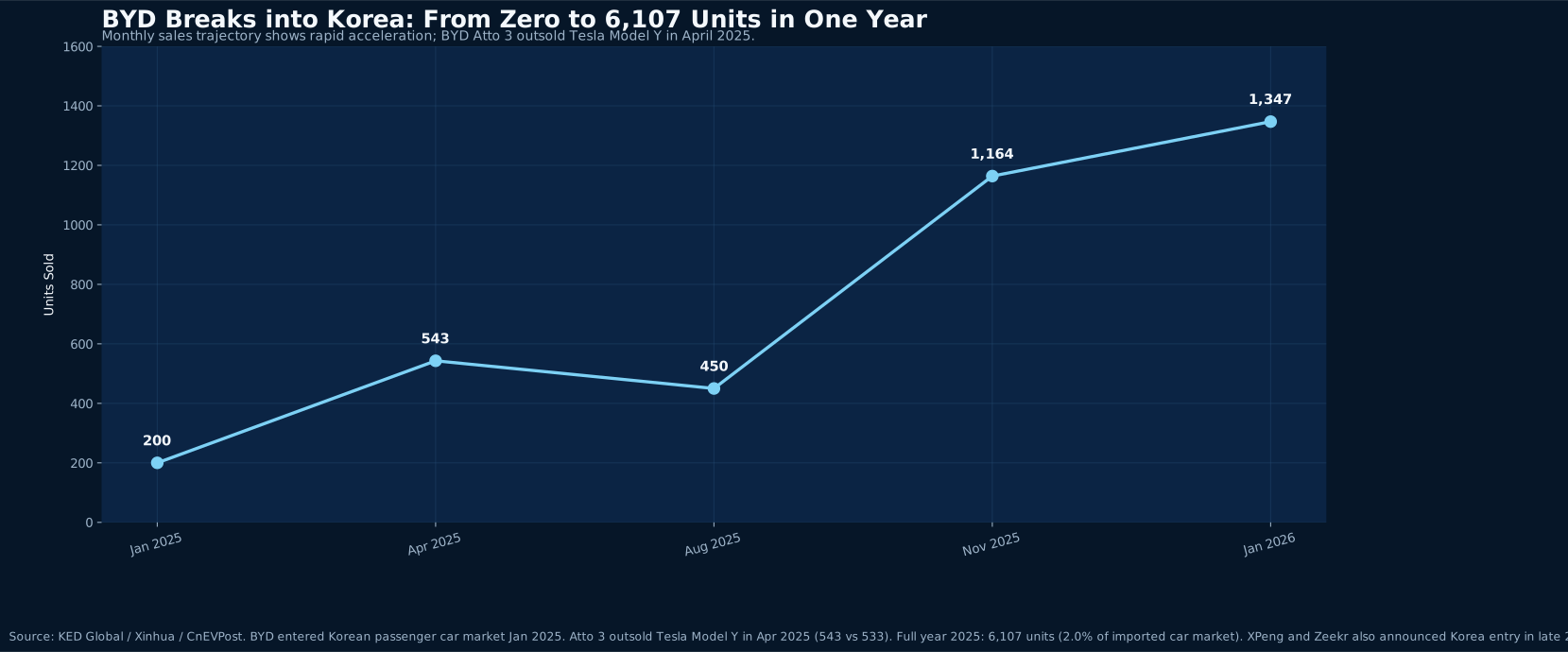
In January 2025, BYD officially entered Korea's passenger car market as the first Chinese passenger vehicle brand. By April, the BYD Atto 3 sold 543 units in a single month, surpassing the Tesla Model Y (533) for the first time. Full-year sales reached 6,107 units, capturing 2.0% of Korea's imported car market. By November 2025, BYD hit 1,164 monthly units to enter Korea's top five imported brands, climbing further to 1,347 in January 2026.
Following BYD, Zeekr (announced Korea entry September 2025) and XPeng (same period) have confirmed Korean market plans. BYD's 2026 target is 10,000 units in Korea, transitioning from a “tester” to a “regular competitor.” Korea's EV penetration hit a record 18.4% in August 2025, with BEV sales up 86% YoY. Chinese brands are reshaping Korea's EV market pricing and competitive landscape.
Supply Chain Restructuring: Korea's De-China Efforts vs. Reality
Korea is pursuing battery supply chain diversification on multiple fronts: investing in nickel refining capacity in Indonesia, signing lithium and cobalt supply agreements with Canada, launching the Korea-Africa Critical Minerals Dialogue at the inaugural Korea-Africa Summit (2024), and Lotte announcing domestic LFP production. The government has committed approximately USD 15 billion in rechargeable battery investments through 2030.
But the reality gap remains vast. China's dominance in battery material processing was built over 20 years of sustained investment, and Korea cannot replicate alternative capacity quickly despite increased spending. More critically, while China's export controls are suspended, the expectation that they “can resume anytime” hangs as a sword of Damocles over Korea's battery industry. For Chinese battery material exporters, Korea remains one of the most important overseas customers, and maintaining this trade relationship serves both sides' interests.