Behind the $10.2B Milestone: The Truth About China Exports Being Halved in Three Years
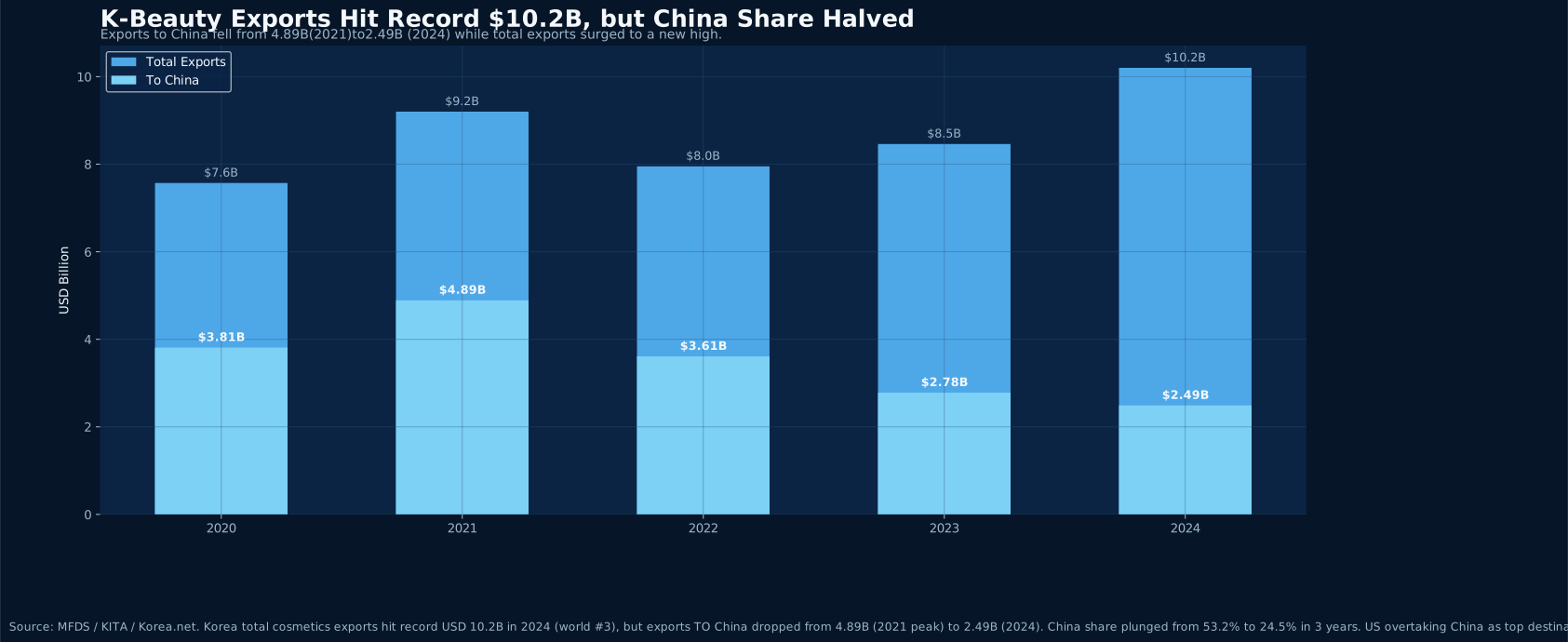
Korea's 2024 cosmetics exports reached USD 10.2 billion, making it the world's third-largest cosmetics exporter. But this historic milestone masks a critical structural shift: exports to China fell continuously from USD 4.89 billion (2021) to USD 2.49 billion (2024), halving in three years. China's share of Korean cosmetics exports plunged from 53.2% to 24.5%.
The decline in China exports is driven by: the rise of Chinese domestic brands (Perfect Diary, Florasis) squeezing K-Beauty's space; weakening demand for premium imports amid China's consumption downgrade; and tightening NMPA regulations increasing registration and compliance costs. In their place, the US is rapidly becoming Korea's #1 cosmetics export destination, with the gap narrowing to within 5 percentage points.
Market Diversification: From China-Dependent to Global Portfolio
Korea's cosmetics industry is undergoing a profound export structure transformation. Growth in the US, Japan, Southeast Asia, and Middle East is compensating for China's decline. The US market in particular is benefiting from K-Culture's sustained influence and social media platforms like TikTok, driving continuous penetration of Korean beauty brands among young American consumers.
According to Korea's MOTIR, over 500 K-Beauty brands now export to 150 countries via D2C platforms. This shift from over-dependence on China to a globally diversified portfolio, while causing sharp short-term decline in China exports, represents a positive structural adjustment from an industry resilience perspective.
Functional Cosmetics: The Upgrade Engine of Korea's Beauty Industry
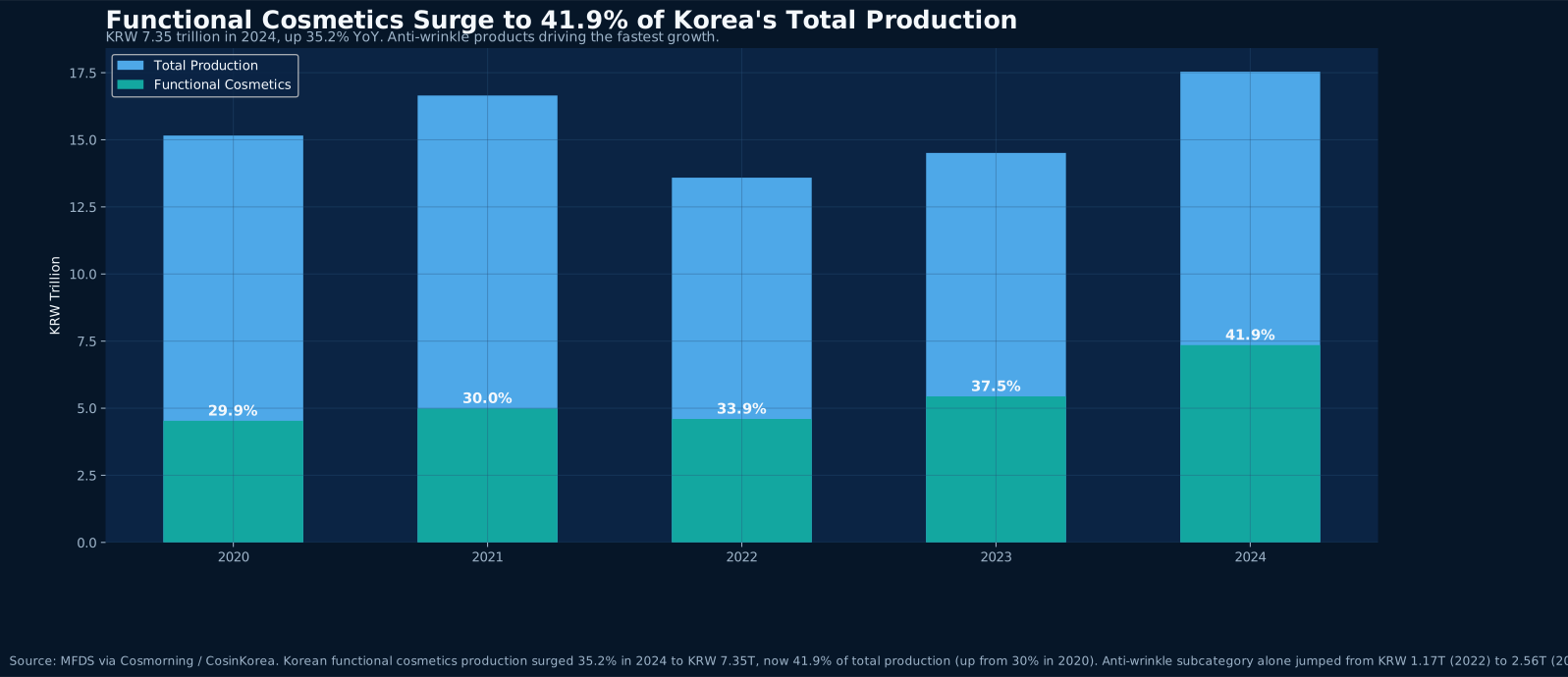
MFDS data shows Korea's functional cosmetics production reached KRW 7.35 trillion in 2024, up 35.2% YoY and accounting for 41.9% of total cosmetics production. Compare this to just 30% in 2020. The fastest-growing segment is anti-wrinkle products, surging from KRW 1.17 trillion (2022) to KRW 2.56 trillion (2024), more than doubling in two years.
Functional cosmetics have a strict legal definition in Korea (gi-neung-seong hwa-jang-pum) and require MFDS approval. This regulatory barrier has become a differentiation advantage in global markets: MFDS-certified functional efficacy is more persuasive than generic cosmetics claims. The sustained growth of whitening, UV protection, and anti-wrinkle categories reflects Korea's beauty industry upgrading from fast-fashion cosmetics to efficacy-driven beauty.
NMPA Reform: New Pathways for K-Beauty's China Re-Entry
In November 2025, China's NMPA issued cosmetics regulatory reform guidelines containing two changes highly significant for K-Beauty: elimination of the requirement for overseas brands to prove prior overseas sales records, and introduction of an immediate-review-upon-submission fast track for innovative efficacy cosmetics, replacing the previous multi-stage pre-review process.
This reform provides Korean cosmetics companies with easier pathways back into the Chinese market. Korea's functional cosmetics strengths (anti-wrinkle, whitening) align well with NMPA's new innovative efficacy fast track. However, Korea lags in NMPA new ingredient registrations (only 3 to date) compared to more active Chinese domestic companies. For Chinese cosmetics ingredient exporters, the rapid growth of Korea's functional cosmetics market means expanding demand for high-quality plant extracts and active ingredients.
Implications for Chinese Suppliers: Following K-Beauty's Globalization Path
Structural changes in Korea's cosmetics industry create multiple opportunities for Chinese companies. First, the explosive growth of functional cosmetics production (35.2% annually) drives demand for premium ingredients. As the world's largest exporter of plant extracts, China stands to benefit. Chinese ingredient suppliers were already prominent exhibitors at in-cosmetics Korea 2025.
Second, K-Beauty's global expansion (150 countries, 500+ brands) means Korean cosmetics packaging and ingredient procurement volumes are still growing -- only the export direction has changed. Korea's total cosmetics production reached KRW 17.54 trillion (~USD 13B) in 2024, up 29% from 2022. Chinese packaging and ingredient suppliers can share in this growth by becoming part of K-Beauty's global supply chain, rather than focusing solely on the China export dimension.