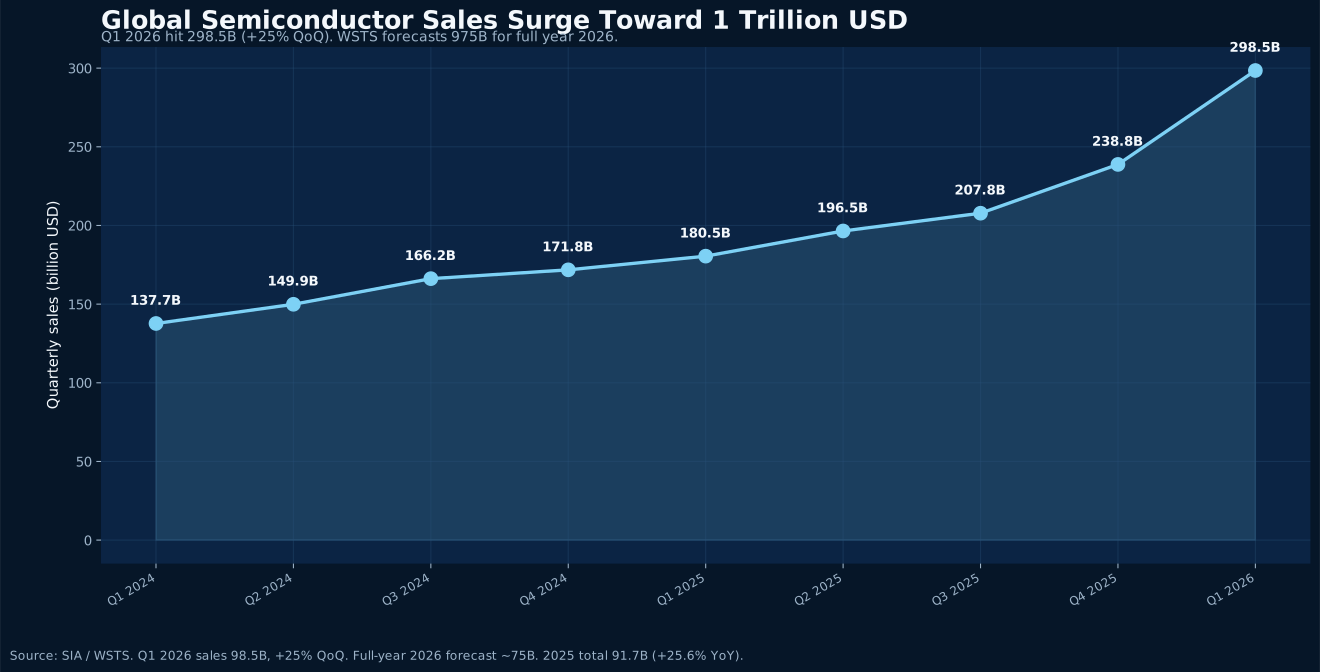
The Arrival of the Trillion-Dollar Semiconductor Market
In Q1 2026, global semiconductor sales reached $298.5 billion, up 25% from the previous quarter and over 50% year-on-year. Published jointly by the Semiconductor Industry Association (SIA) and the World Semiconductor Trade Statistics (WSTS), this figure marks the chip industry’s entry into a historic supercycle. WSTS forecasts full-year 2026 revenue at $975 billion, just short of the trillion-dollar milestone.
Regionally, March sales surged 108.5% year-on-year in Asia-Pacific, 83.1% in the Americas, 74.8% in China, 46.5% in Europe, and 7.4% in Japan. Memory and logic chips are forecast to lead growth with over 30% annual increases. The acceleration of AI data center construction is the core driver, with demand for high-bandwidth memory (HBM) and advanced-node logic chips far outpacing capacity expansion.
Korea’s Chip Exports Set Historic Records
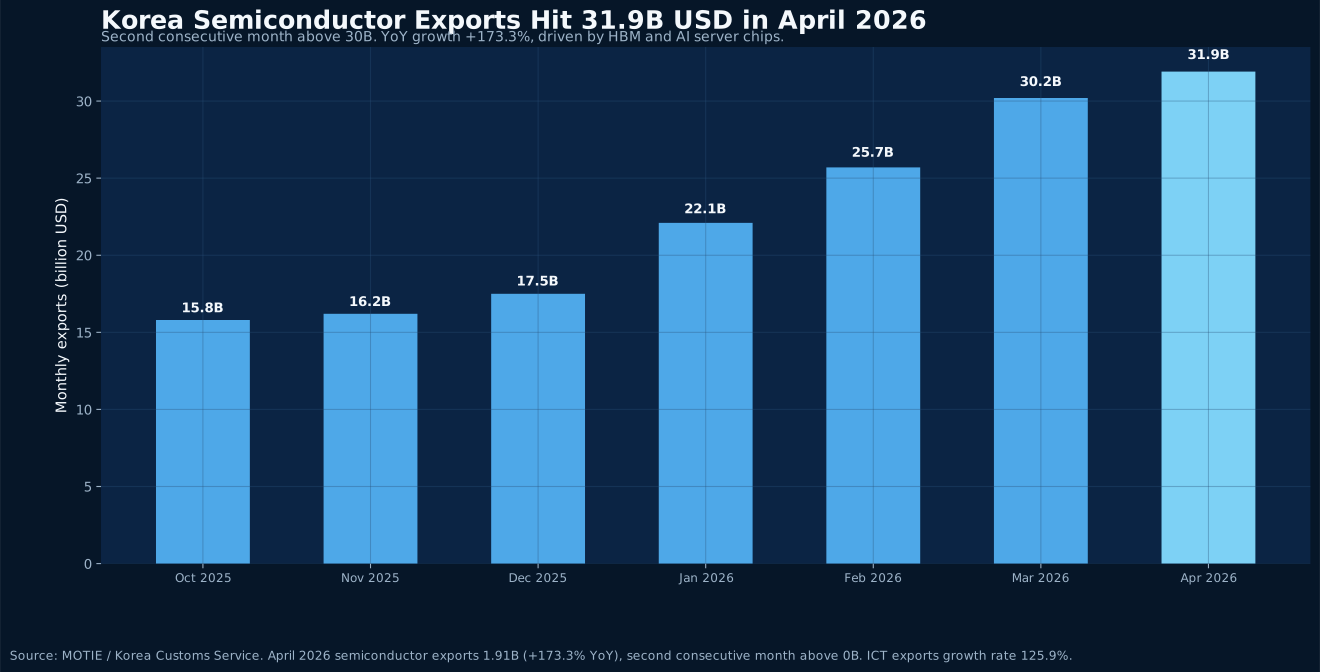
Korea’s semiconductor exports in April 2026 hit $31.91 billion, a 173.3% year-on-year surge and the highest-ever monthly figure for any single export category. It was the second consecutive month above the $30 billion threshold, driven mainly by SK Hynix’s HBM products and Samsung’s advanced DRAM for AI servers. Korea’s total ICT exports grew 125.9% in April, also a record.
SK Hynix’s HBM products are sold out through 2026 as demand continues to outpace expanded capacity. In 2025, HBM contributed roughly $20.7 billion in annual sales for SK Hynix, rising dramatically from just 3% of DRAM revenue in 2019. Korean chipmakers’ equipment investment is expected to rise 27.2% to $29.66 billion in 2026 as Samsung and SK Hynix expand high-end memory capacity for AI.
China’s Wafer Self-Sufficiency Drive and Supply Chain Shifts
China is accelerating its silicon wafer self-sufficiency strategy, targeting over 70% domestic sourcing for advanced wafers by 2026. Leading Chinese wafer maker Eswin Material Technology announced its 12-inch wafer capacity will reach 1.2 million units per month by 2026, enough to cover roughly 40% of China’s domestic demand. Samsung and SK Hynix, both operating major fabs in China, have begun qualifying Chinese wafer products.
For China-Korea trade, this trend means Korean semiconductor equipment and materials exporters face new competitive pressure. China’s domestic AI chip market share is projected to hit 50% in 2026, and four Chinese open-weights models released in a 12-day window in early May matched Western frontier models on standard benchmarks. The supply chain restructuring is extending from chip design to upstream materials, posing new strategic questions for Korean exporters.
Korea’s Role in the US-China Semiconductor Contest
The May 12 US-China trade truce talks placed semiconductor export controls, rare earth restrictions, and Chinese antitrust probes into US chip firms at the center. Preparatory sessions held in Seoul highlighted Korea’s pivotal position in the US-China tech contest. While US tariffs on China dropped from 145% to 30%, chip export controls remain a negotiation flashpoint, and the outlook for Korean chipmakers’ China operations remains uncertain.
Korea’s 2025 semiconductor exports reached $173.4 billion, setting monthly records for nine consecutive months. For 2026, chip exports are forecast to grow 9.1% to $180 billion. However, as China’s self-sufficiency rises in mature and some advanced nodes, Korea’s semiconductor industry needs to further consolidate its lead in HBM, advanced packaging, and AI-specific chips to maintain its irreplaceable position in global supply chains.
Practical Implications for Procurement
For procurement teams watching the China-Korea semiconductor supply chain, the current supercycle presents both opportunities and challenges. Strong HBM and advanced DRAM demand means longer lead times from Korean suppliers, requiring earlier supply commitments. Meanwhile, China’s rapid expansion in domestic wafer and chip capacity is creating new alternative sources, especially for mature-node products. Written by Minghao, published by Shanghai MO-TEK International Trading Co., Ltd.
Procurement teams should monitor three signals: first, the specifics of US-China chip export control negotiations, which will directly affect Korean fab capacity planning in China; second, the qualification progress of Chinese 12-inch wafers, as approved products will accelerate into Korean memory supply chains; and third, shifts in HBM capacity allocation priorities, where large cloud providers’ commitments may squeeze supply windows for smaller buyers.