CATL’s Dominance Further Consolidated
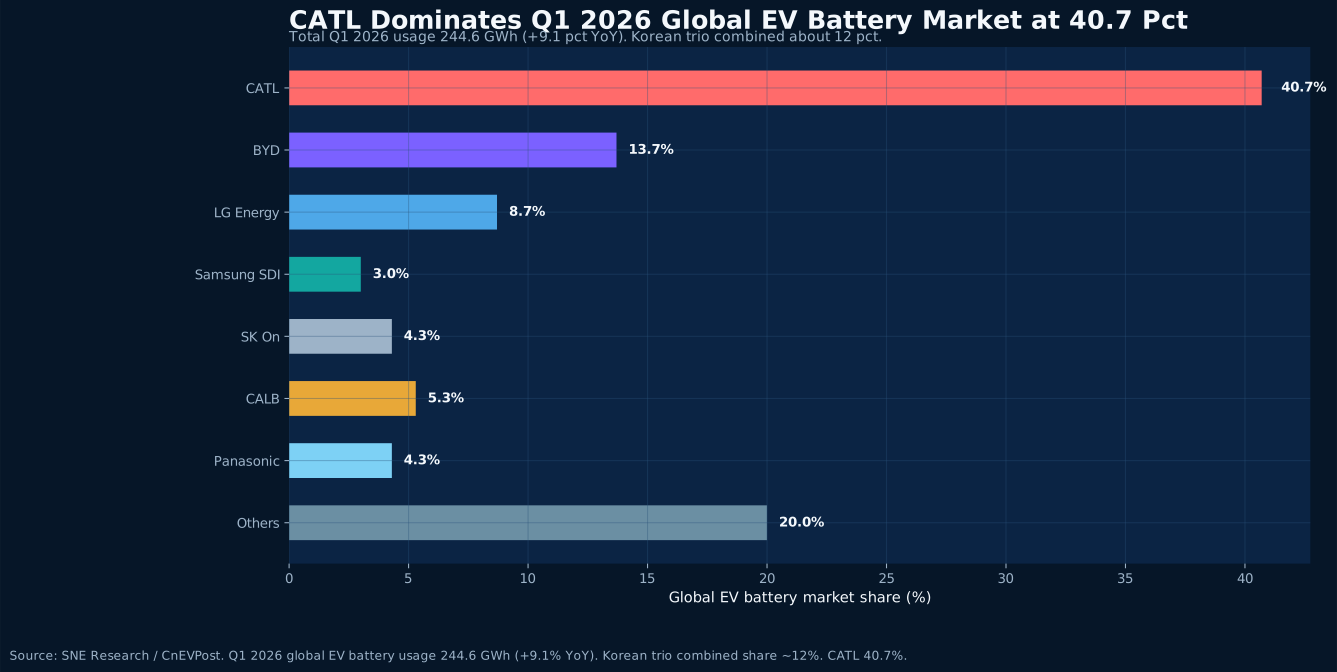
According to SNE Research, global EV battery installations in Q1 2026 reached 244.6 GWh, up 9.1% year-on-year. CATL continued to lead at 40.7% market share, expanding its advantage further. BYD ranked second at 13.7%, down from 16.2% a year earlier. Among Chinese firms, CALB emerged at 5.3%, becoming one of the fastest-growing second-tier players.
From a technology perspective, lithium iron phosphate (LFP) batteries continue to gain market share globally, rising from under 30% in 2021 to over 60% in early 2026. The core driver is cost: LFP manufacturing costs are 20-30% lower than NMC, while the energy density gap narrows rapidly. CATL’s Shenxing supercharging battery and BYD’s Blade battery have found new performance-cost balance points, winning large-scale orders from major global automakers.
The Korean Trio’s Shrinking Share
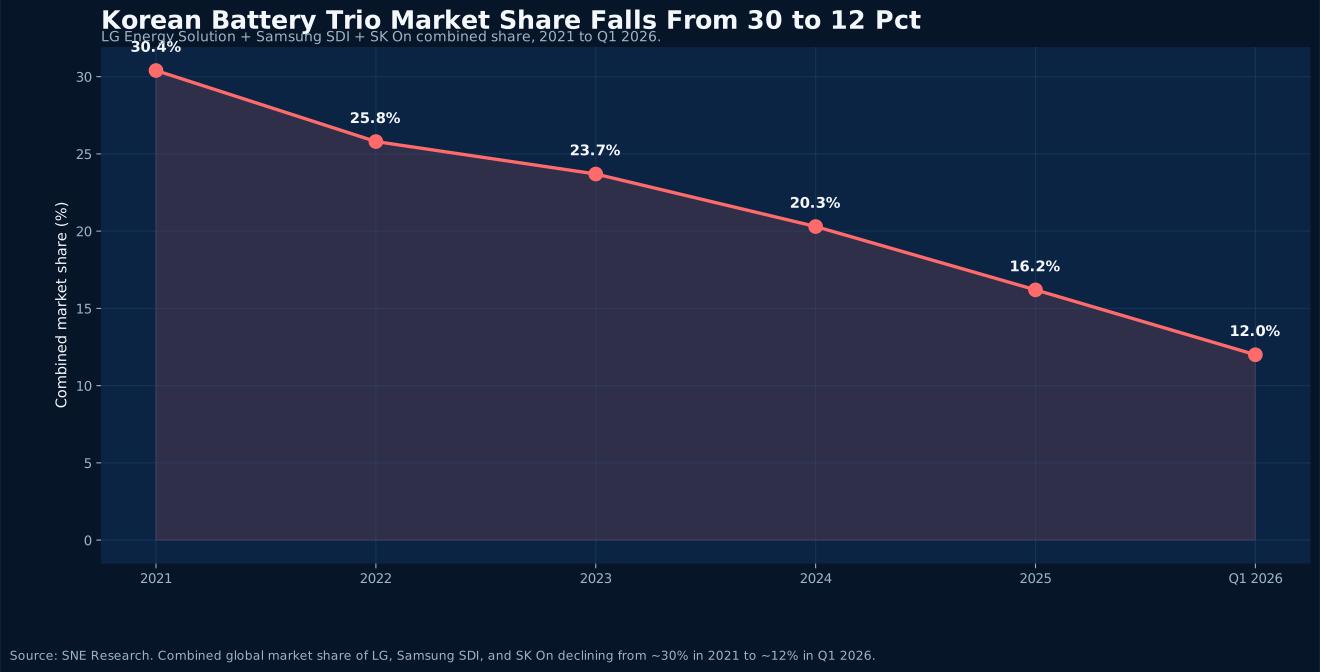
The combined global share of Korea’s three battery giants—LG Energy Solution, Samsung SDI, and SK On—fell from about 30.4% in 2021 to roughly 12% in Q1 2026. LG Energy leads among Korean firms at 8.7%, but SK On dropped to 4.3% and Samsung SDI to 3.0%. More concerning, the three operate factories at around 50% capacity while Chinese rivals CATL and BYD run near full throttle.
The root cause is a technology route mismatch. Korean firms bet heavily on high-nickel NMC batteries over the past decade—products with higher energy density but significantly higher costs. When global automakers shifted to LFP under cost pressure, the Korean portfolio advantage quickly became a disadvantage. Samsung and SK On are now accelerating LFP mass production plans targeting 2026, but building capacity and passing OEM qualification still takes time.
ESS and AI Data Centers: New Growth Vectors for Korean Firms
Facing market share losses in EV batteries, Korean firms are pivoting toward energy storage systems (ESS) and AI data center power. InterBattery in March 2026 showed the Korean battery industry’s strategic focus expanding from EV high-nickel cells to four directions: ESS, LFP, AI data centers, and battery safety. LG Energy Solution has secured multiple large ESS project orders, while Samsung SDI continues investing in solid-state battery R&D.
The explosion of AI-driven data center power demand is creating an entirely new market segment for the battery industry. Large data center operators need reliable backup power and peak-shaving capabilities—areas where Korean high-end battery products excel. The Korean government is also supporting the industry’s transformation through tax incentives and R&D subsidies for next-generation technologies like solid-state and sodium-ion batteries.
The New Competitive-Cooperative Landscape in China-Korea Battery Supply Chains
The China-Korea battery supply chain is evolving from pure competition to a more complex coopetition dynamic. Upstream, Korean battery makers remain heavily dependent on Chinese cathode, separator, and electrolyte supplies. In midstream cell manufacturing, Chinese firms’ cost advantages and scale compress Korean margins. But downstream, especially for premium EVs and ESS projects targeting Western markets, Korean firms retain competitiveness through brand recognition and geopolitical positioning. Written by Minghao, published by Shanghai MO-TEK International Trading Co., Ltd.
For procurement teams, the current landscape means the range of battery supply options is widening. Chinese suppliers offer highly competitive cost-performance in LFP, while Korean suppliers maintain advantages in high-nickel NMC and next-generation technologies. The key is making differentiated supply chain decisions based on application scenario (cost-sensitive vs. performance-oriented) and target market (affected by subsidy policies and rules of origin).
Outlook and Procurement Recommendations
Looking ahead to H2 2026, competition in the global EV battery market will intensify further. CATL and BYD are likely to keep expanding share, while whether Korean firms can rebound through LFP mass production and ESS market breakthroughs will be a key storyline. Meanwhile, EU Battery Passport regulations and US IRA localization requirements are changing the logic of global battery supply chain layout toward greater regionalization.
Procurement teams focused on China-Korea battery trade should track these trends: LFP cost curve movements, Korean firms’ new factory commissioning timelines, and battery subsidy policy adjustments in major markets. Together, these factors will determine the optimal supplier mix and price ranges for battery procurement over the next one to two years.