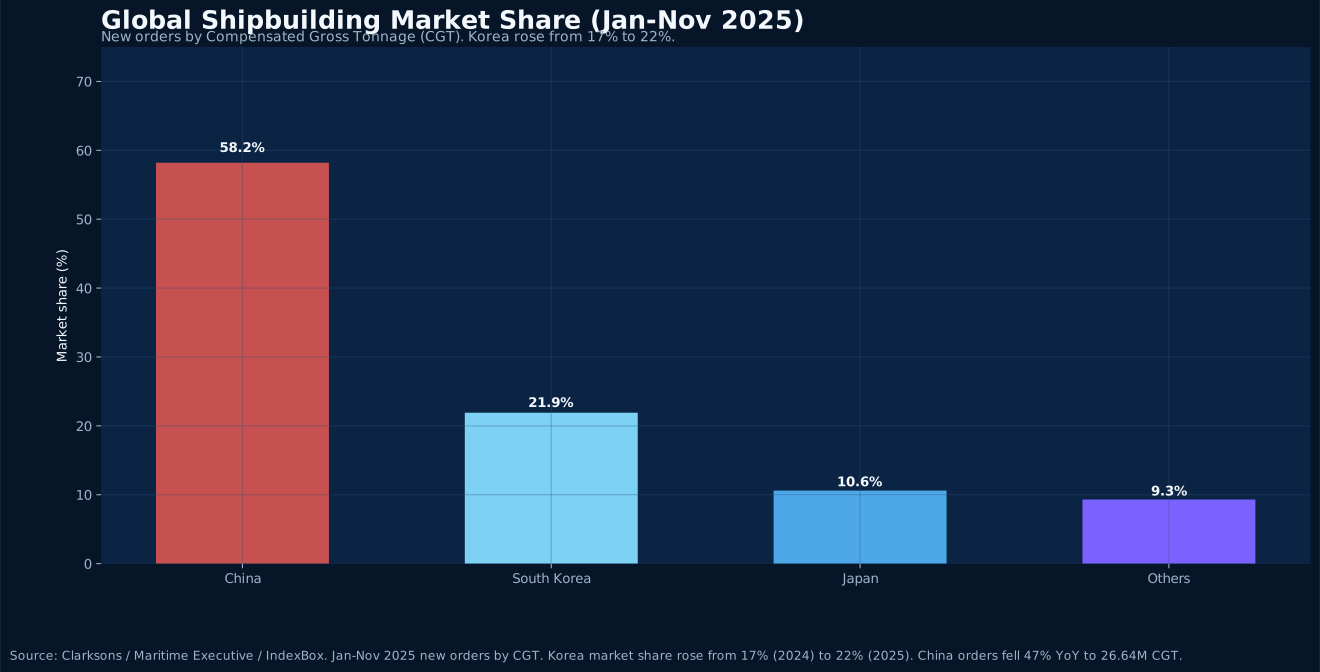
1. Market Share Rebound: Korea Jumps from 17% to 22%
From January to November 2025, Korea’s shipbuilding industry received new orders totaling 10.03 million CGT, pushing its global market share from 17% in 2024 to 22%. While China’s absolute order volume still far exceeded Korea’s at 26.64 million CGT, it fell 47% year-over-year. This means the global orderbook is contracting, yet Korea expanded its share within a shrinking market.
The core driver of Korea’s share recovery is vessel type differentiation. Chinese yards primarily take bulk carriers, container ships, and mid-size tankers—standardized vessels where price advantage prevails. Korean yards focus on LNG carriers, VLCCs, shuttle tankers, and offshore platforms—high-barrier vessel types where per-unit value prevails.
2. LNG Carriers: Korea’s 88% Monopoly vs. China’s 0%
From January to August 2025, 16 LNG carriers were ordered globally, of which 14 went to Korean yards—88%. China secured zero orders in this segment. Each LNG carrier is priced at roughly 250 million USD, making it one of the most technically complex and profitable vessel types.
The core technical barriers for LNG carriers lie in the membrane cargo containment systems (Mark III/NO96) and reliquefaction units, both licensed by France’s GTT. Korea’s Big 3 yards have decades of accumulated delivery track records. While Chinese yards are actively developing LNG carrier technology, they still lack sufficient reliability and delivery history.
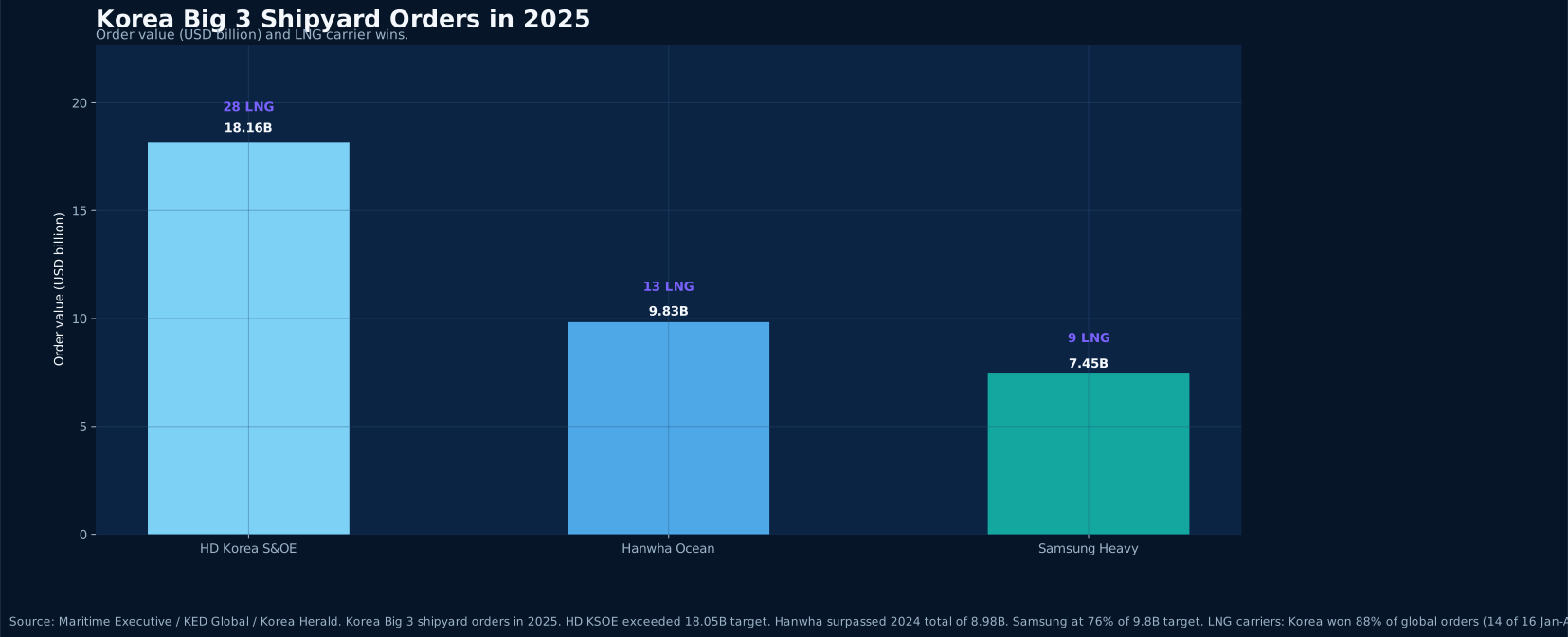
3. Korea’s Big 3: The Coopetition Behind 35.4B USD in Orders
HD Korea Shipbuilding & Offshore Engineering (HD KSOE) is the undisputed leader of Korean shipbuilding. Its 2025 orders reached 18.16 billion USD, surpassing the full-year target of 18.05 billion USD. Subsidiaries Hyundai Heavy Industries and Hyundai Mipo together secured 28 LNG carrier orders.
Hanwha Ocean delivered equally impressive results with 9.83 billion USD in 2025 orders, surpassing its 2024 total of 8.98 billion USD, including 20 VLCCs and 13 LNG carriers. Samsung Heavy Industries, centered on LNG carriers and shuttle tankers, reached 7.45 billion USD—76% of its 9.8-billion-USD annual target.
4. China’s Counter-Move: Volume, Price, and the Upgrade Path
Despite Korea’s overwhelming advantage in high-end vessels, China’s global position remains strong. Even with orders down 47% YoY, China still commanded 58.2% of the global market at 26.64 million CGT. Chinese yards’ core advantages lie in price competitiveness and rapid delivery capability.
China is also actively pushing into high-end vessels. CSSC has built multiple large LNG carriers, and Hudong-Zhonghua and Jiangnan Shipyard are expanding LNG capacity. Korean industry observers widely believe China’s breakthrough in LNG carriers is only a matter of time, and Korea’s competitive window may be just 5–8 years.
5. Implications for Chinese Marine Equipment Suppliers
Korea’s strong orderbook also creates opportunities for Chinese marine equipment suppliers. Korean yards building high-end vessels rely on Chinese components and steel plates for certain parts—especially thick plates, which Korean shipbuilders purchase heavily from China to reduce costs, as thick plates account for roughly 20% of a vessel’s construction cost.
However, Korea has imposed anti-dumping duties of 27.91–38.02% on Chinese thick plates, directly impacting Chinese steel exports. Chinese suppliers should monitor trade remedy changes while expanding into non-tariff-sensitive areas such as marine electrical equipment, coatings, and pipe fittings.