$173.4B: The AI-Driven Record for Korea's Semiconductor Exports
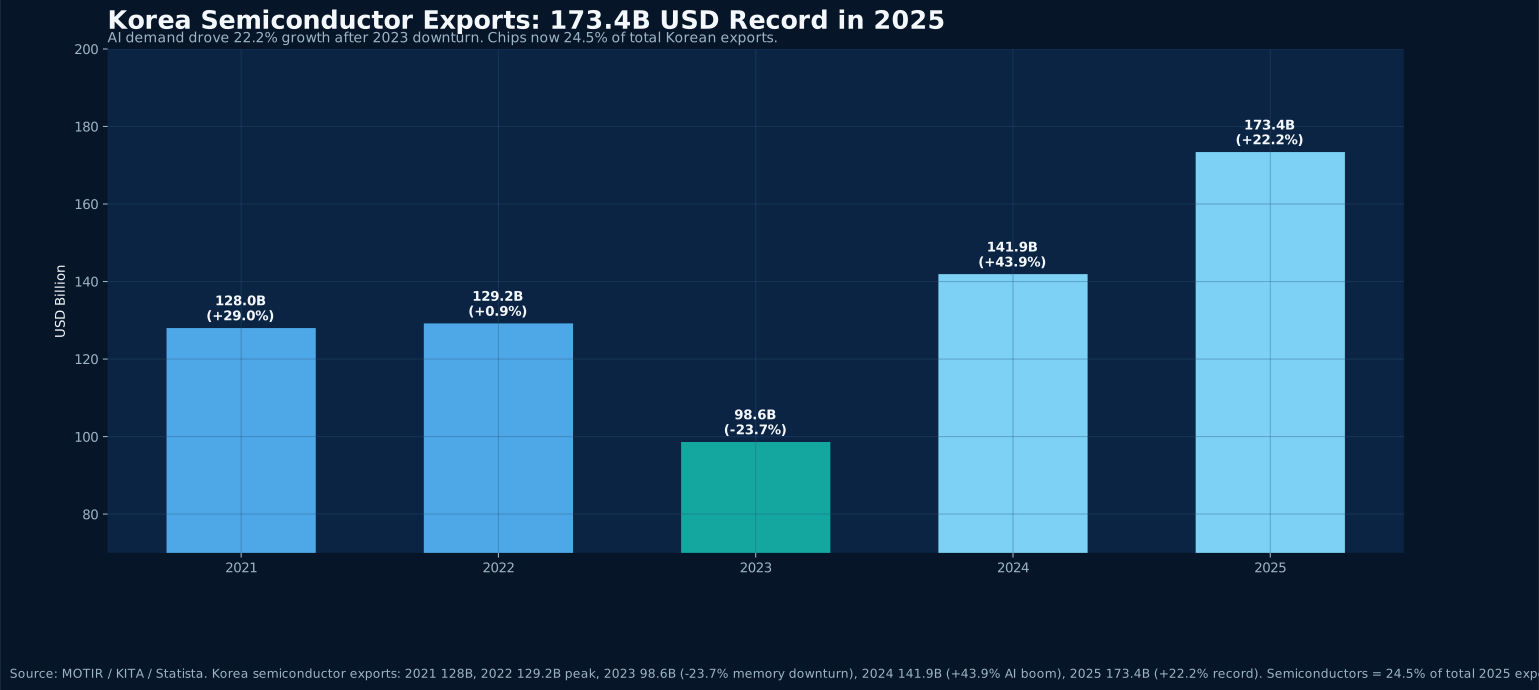
Korea's 2025 semiconductor exports reached $173.4 billion, up 22.2% from 2024 and a massive 75.9% rebound from the 2023 trough of $98.6 billion. Semiconductors accounted for 24.5% of Korea's total 2025 exports ($709.7 billion) -- nearly one in every four export dollars came from chips. Quarterly growth showed clear acceleration: Q1 +6%, Q2 +16.3%, Q3 +26.5%, Q4 surging to +36%.
The core driver was the global AI infrastructure buildout. Massive capital expenditures by hyperscalers (AWS, Microsoft Azure, Google Cloud) and AI companies (NVIDIA, OpenAI) fueled demand for High Bandwidth Memory (HBM) and advanced logic chips. Samsung Electronics and SK hynix, the two dominant players in the global HBM market, directly benefited from this trend. From April 2025 onward, Korean semiconductor exports set new monthly records for nine consecutive months.
Lessons from the 2023 Trough: Memory Cycles and Structural Resilience
Korea's 2023 semiconductor exports plunged to $98.6 billion (-23.7% YoY), the lowest since 2019. The primary cause was a collapse in global memory chip prices -- DRAM and NAND Flash contract prices fell 40-60% from late 2022 through 2023. As the dominant force in global memory (approximately 70% DRAM share, 50% NAND Flash share), Korea is highly sensitive to price cycles.
But the 2024 V-shaped rebound (+43.9% to $141.9B) and continued 2025 growth proved Korea's semiconductor industry's structural resilience. This resilience stems from three factors: increasing share of high-value products like HBM that reduce dependence on commodity memory pricing; expansion of system semiconductor (foundry) business; and the sustained nature of AI demand orders, unlike the pulsed demand patterns of consumer electronics cycles.
China: The Biggest Customer and the Biggest Variable
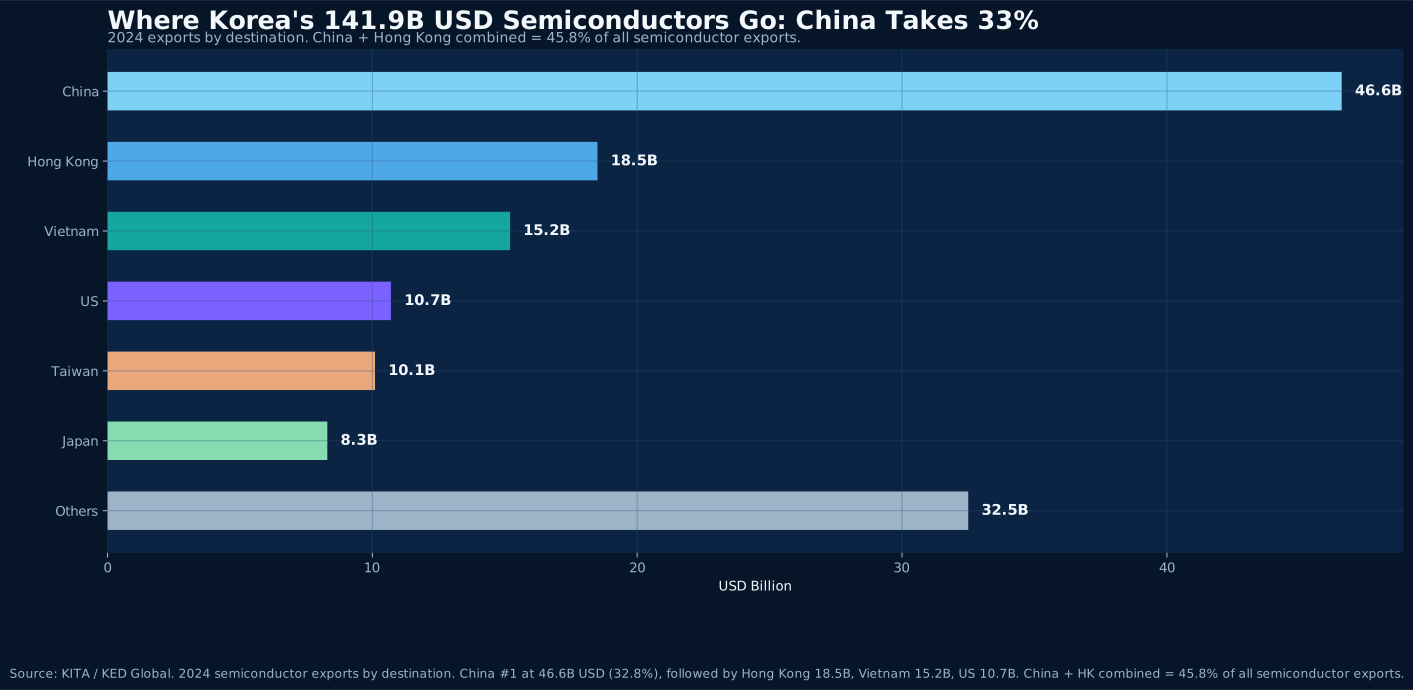
Korea's 2024 semiconductor exports to China totaled $46.6 billion (32.8% share), keeping China as the #1 chip export market. Adding Hong Kong ($18.5 billion, 13.0%), mainland China + HK combined account for 45.8% of Korea's semiconductor exports. By comparison, the US took only 7.5% ($10.7 billion), Vietnam 10.7%, and Taiwan 7.1%.
However, US semiconductor export controls on China are gradually reshaping this landscape. Two rounds of restrictions in October 2022 and October 2023, plus further tightening on advanced AI chips and manufacturing equipment in late 2024, are forcing Korean companies to balance their China operations against US market access. Samsung and SK hynix received US waivers for their memory chip fabs in China, but long-term uncertainty persists. Malaysia and Taiwan are growing faster as alternative destinations, reflecting supply chain diversification trends.
Implications for China's Semiconductor Supply Chain
Korea's explosive semiconductor export growth has multiple implications for China's supply chain. First, as the world's largest chip consumption market (approximately 35% of global demand), China's dependence on Korean memory chips is difficult to replace in the short term. While YMTC and CXMT are catching up, significant gaps remain in high-end segments like HBM.
Second, Chinese semiconductor equipment and material suppliers are benefiting from Korean chipmakers' capacity expansion. Korea's sustained semiconductor investment means growing demand for photoresist, specialty gases, and silicon polishing materials. While Japanese and US companies still dominate high-end equipment, Chinese suppliers are rapidly penetrating Korean supply chains in mid-to-low-end materials and components.