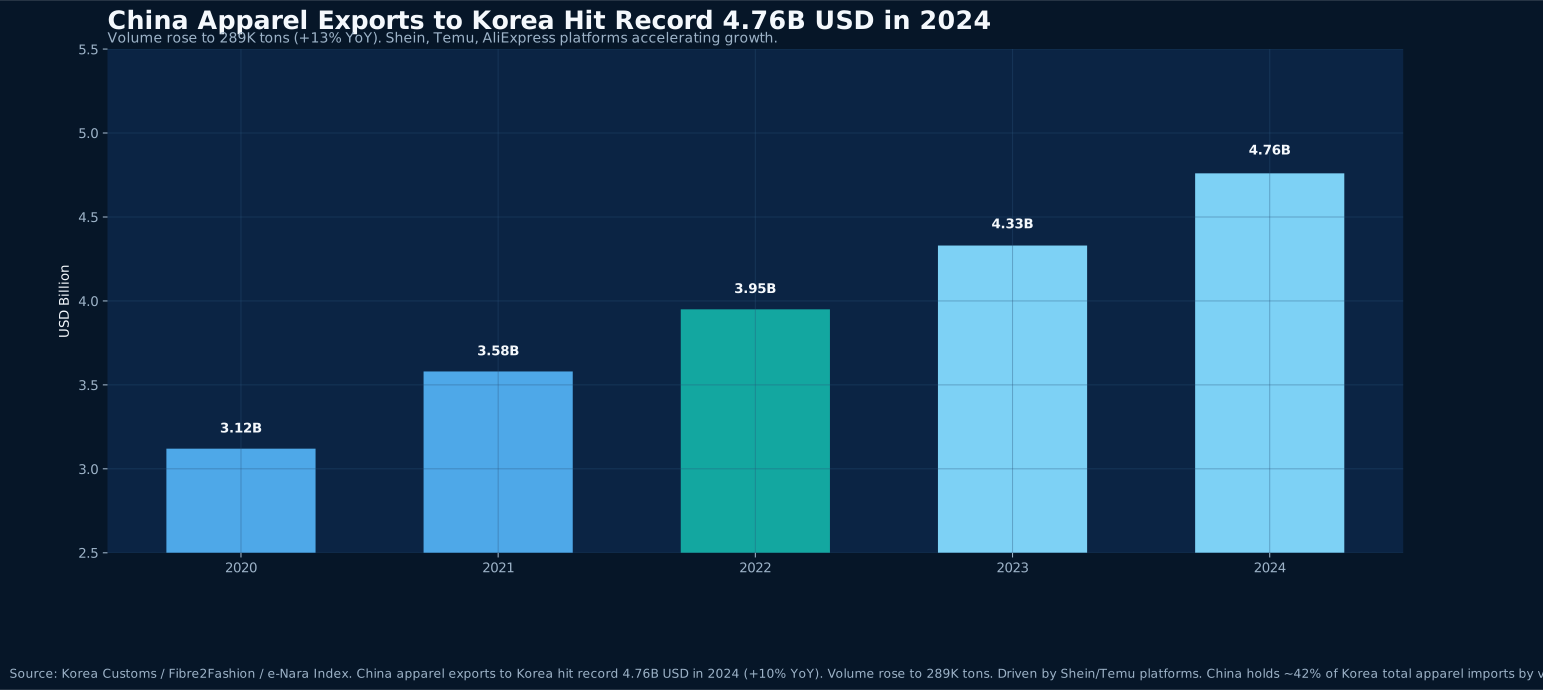
$4.76B Record: China's Apparel Exports to Korea Rise for Five Consecutive Years
Korea Customs and Fibre2Fashion data show China's 2024 apparel exports to Korea reached $4.76 billion, up 10% from $4.33 billion in 2023, marking five consecutive years of record highs. Volume reached 289,000 tons (+13% YoY). China accounts for approximately 42% of Korea's total apparel imports, firmly holding the #1 supplier position. Vietnam and Bangladesh rank second and third, but the gap with China remains substantial.
The core driver is the explosive expansion of Chinese cross-border e-commerce platforms. Temu's MAU in Korea surged from 340,000 (August 2023) to 4.6 million (May 2024), reaching 7.21 million by end-2024 to become Korea's #4 e-commerce app. Shein formally opened its Korea-dedicated website in April 2025, signing Korean actress Kim Yoo-jung as a sub-brand ambassador.
Ultra-Low-Price Disruption: Korean Consumer Behavior Is Changing
Temu and Shein's core competitiveness lies in extreme value for money. Through direct factory connections (C2M model) and duty-free small parcel shipping, these platforms sell apparel at 30-50% of comparable Korean product prices. Korea's 2024 apparel market totaled approximately $33.7 billion (IMARC data), with online channels expanding continuously. Chinese platforms are accelerating the shift to online while squeezing survival space for Korean mid-to-low-end apparel brands.
Chinese platforms are not without controversy, however. Korea's Consumer Agency and Customs have repeatedly flagged cross-border products for safety standard non-compliance, missing labeling, and difficult returns. Temu's formal office establishment in Korea (January 2025) signals a shift from pure cross-border to localized operations, meaning Chinese platforms will integrate more deeply into Korea's retail ecosystem rather than existing merely as import channels.
Korea's Textile Industry: Structural Contraction
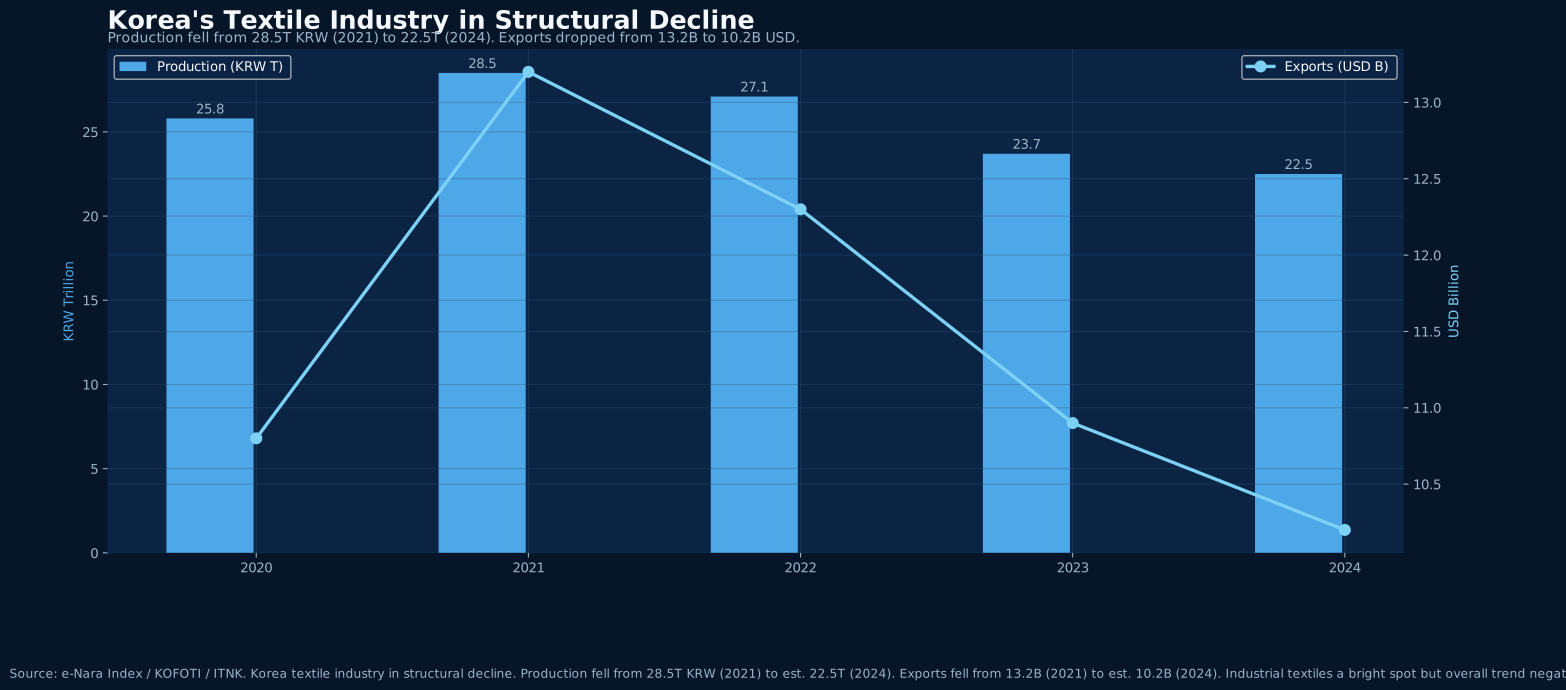
In stark contrast to the rapid growth of Chinese apparel imports, Korea's domestic textile industry continues to contract. According to e-Nara Index data, Korea's textile production fell from 28.5 trillion KRW (2021) to approximately 22.5 trillion KRW (2024), a 21% decline over three years. Exports also weakened, dropping from $13.2 billion (2021) to approximately $10.2 billion (2024).
The bright spot in Korea's textile industry is technical textiles, including automotive interior materials, carbon fiber composites, and medical textiles. Traditional garment manufacturing has largely relocated to lower-cost countries like Vietnam, Bangladesh, and Indonesia. Korea's textile sector is undergoing a difficult transformation from manufacturing-export to technology-materials and brand-design. For Chinese textile exporters, Korea's structural shift means demand for basic fabrics and garments remains strong, but competition will increasingly center on speed, flexible supply chains, and platform channel capabilities.
Outlook: A New Equilibrium in China-Korea Textile Trade
China-Korea textile trade is moving toward a new equilibrium. China's dominance in garment exports will strengthen further, especially through platform advantages of Temu and Shein. But Korea retains competitiveness in premium design, brand operations, and technical textiles. The future model may be: China provides large-scale, fast-response production capacity while Korea provides brand premium and design capability, with cross-border e-commerce platforms enabling efficient integration.
For Chinese textile exporters, several key trends in the Korean market warrant attention: first, platform-based entry is irreversible -- Temu and Shein have dramatically lowered the barrier to entering Korea; second, while Korean consumers are price-sensitive, they maintain high quality and design expectations, making ultra-low price plus acceptable quality the winning formula; third, Korea is tightening cross-border e-commerce regulations (safety standards, labeling), making compliance capability a critical long-term competitive barrier.