1. China’s Capacity Tsunami: The Structural Shock Facing Korea’s Petrochemical Industry
China’s petrochemical capacity has surged over the past five years, with annual ethylene capacity growing from roughly 27 million tons in 2019 to over 55 million tons by 2025. C2 and C3 capacity now stands at 121% and 179% of domestic demand respectively. This massive expansion has transformed China from Korea’s largest petrochemical buyer into its fiercest competitor, undermining the foundation of Korea’s exports to China.
In bulk petrochemicals such as polypropylene (PP), polyethylene (PE), paraxylene (PX), and ethylene glycol (EG), China is rapidly approaching or has already achieved full self-sufficiency. ICIS projects China’s self-sufficiency in these categories will reach 85–100% by 2030, meaning the traditional export markets on which Korean petrochemical firms depend are systematically shrinking.
2. Four Consecutive Years of Export Decline: From 14.2M to 10.2M Tons
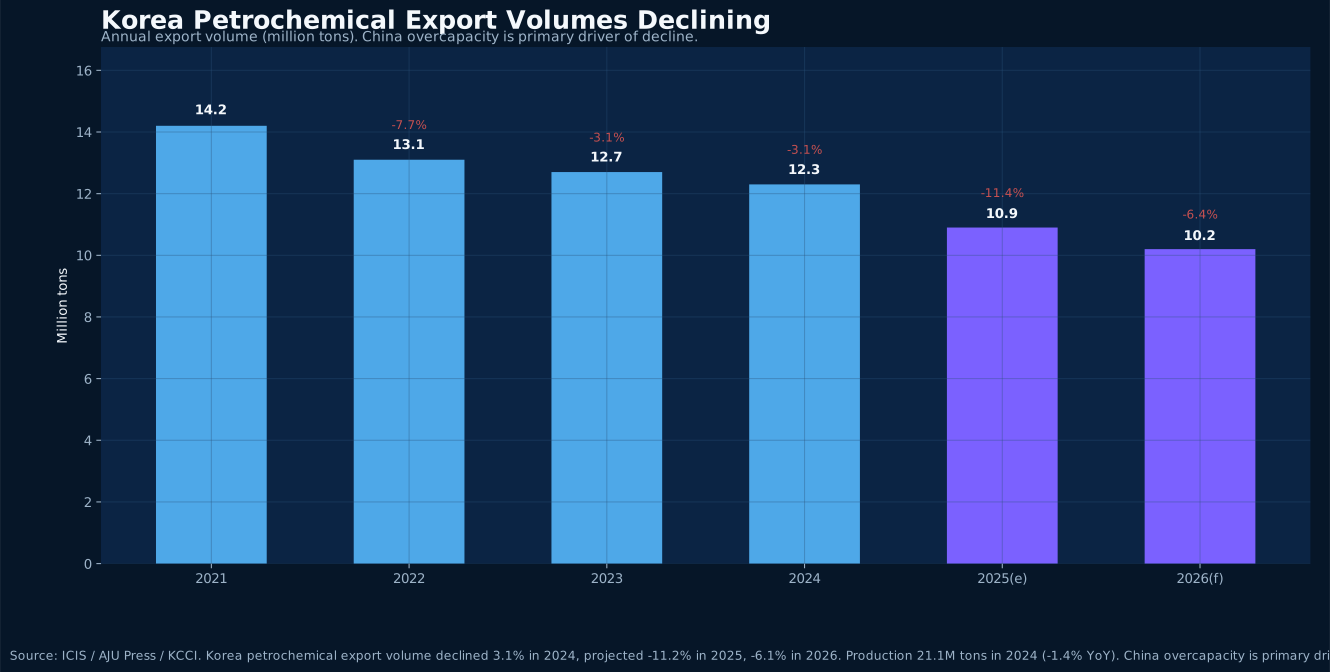
Korea’s petrochemical export volumes have been on a steady decline since peaking at 14.2 million tons in 2021. Volumes fell to 13.1M tons in 2022, then to 12.7M tons in 2023 (−3.1% YoY), and further to 12.3M tons in 2024. More alarmingly, a sharp 11.2% drop to 10.9M tons is projected for 2025, with a further 6.1% decline to roughly 10.2M tons expected in 2026.
Korea’s petrochemical production totaled 21.1 million tons in 2024, down 1.4% YoY. However, the export decline significantly exceeded the production drop, indicating that the domestic market is also under pressure from low-priced Chinese products. Analysis by the Korea Chamber of Commerce and Industry (KCCI) shows the export contraction is not primarily driven by weak global demand, but by new Chinese capacity—backed by cheap Middle Eastern feedstock—systematically displacing Korea’s market share.
3. The 3.66M-Ton Ethylene Capacity Cut: Joint Restructuring Across Three Complexes
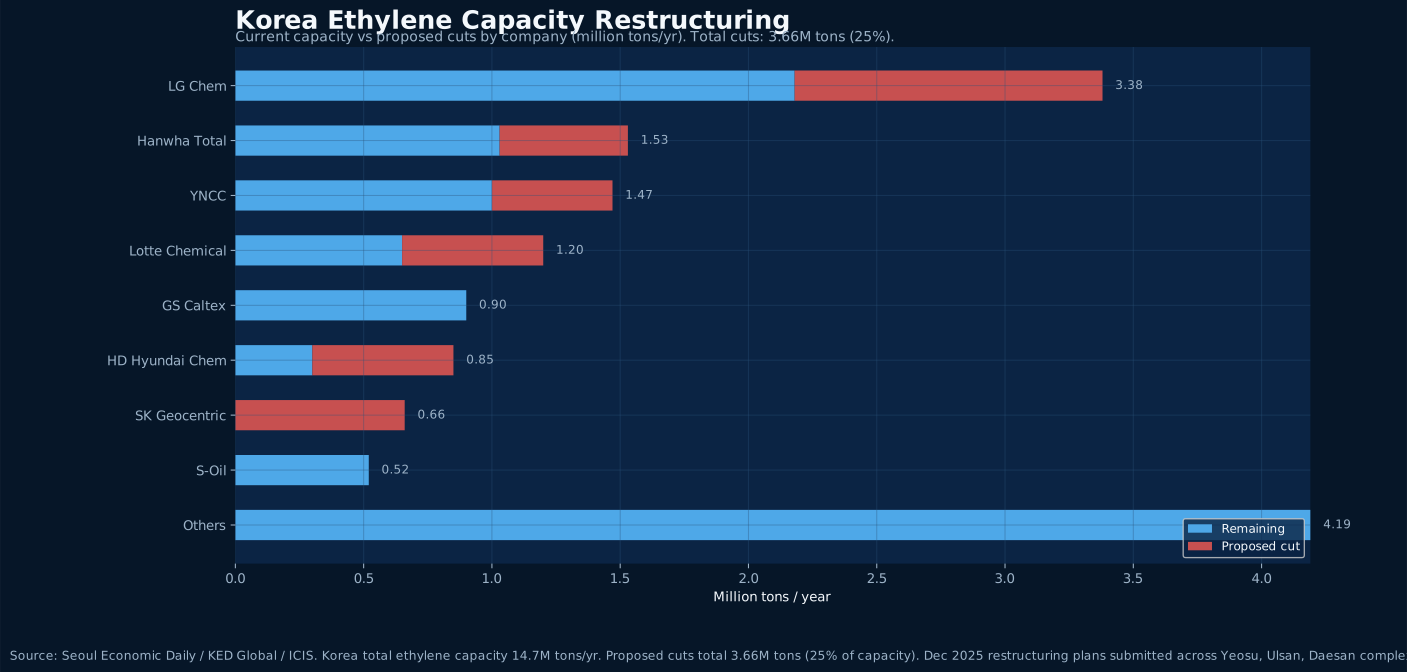
Facing severe market conditions, the Korean government and ten leading petrochemical firms reached a consensus in late 2025 to launch an ethylene capacity reduction plan. The target was to cut 2.7–3.7 million tons from the existing 14.7M-ton annual capacity. The final submitted plans totaled 3.66 million tons—at the upper end of the target range—with all three major complexes participating.
At Yeosu, YNCC’s third ethylene unit (470,000 tons/yr) will be permanently shut down, while LG Chem and GS Caltex will merge Yeosu operations and close a 1.2M-ton legacy facility. At Ulsan, SK Geocentric’s 660,000-ton NCC is slated for closure, with Daehan Oil and S-Oil also reaching framework agreements. At Daesan, Hanwha TotalEnergies and Lotte Chemical are working with HD Hyundai Chemical to reduce up to 1.1M tons of capacity.
4. The Pivot: From Commodity Chemicals to High-Value Specialty Materials
Capacity cuts are not the endpoint but the starting point of Korea’s petrochemical pivot toward higher value. LG Chem has committed to focusing resources on battery materials, engineering plastics, and biodegradable materials. SK Innovation under the SK Group is accelerating chemical recycling of waste plastics and green hydrogen. Lotte Chemical is targeting high-purity chemicals and electronic materials for semiconductors.
For Chinese supply chain players, this restructuring presents both challenges and opportunities. Korea’s import demand for commodity petrochemicals may actually increase as domestic capacity is cut, but the strategic direction has shifted toward high-end segments where Korea aims to differentiate from China. Understanding this restructuring logic helps Chinese exporters precisely target the mid-to-low-end capacity space that Korea is voluntarily ceding.
5. Strategic Window and Risk Alerts for Chinese Exporters
Korea’s petrochemical capacity cuts will be implemented gradually through 2026–2027, during which Korea’s import demand for basic chemical feedstocks and intermediates may temporarily rise. China holds significant price and capacity advantages in PP, PE, and EG, positioning it to fill the gaps left by Korea’s production cuts. However, the Korean government has signaled it will strengthen quality and environmental compliance oversight on imported chemical products.
At the same time, Middle Eastern players (Saudi Aramco, SABIC, etc.) are also aggressively expanding exports to Korea, creating direct competition with China. Chinese exporters should closely monitor the shutdown timelines at each Korean complex and any changes in import tariff policies, seizing this structural market reallocation window within the compliance framework.