1. China Takes the Crown: Overtaking Russia as Korea’s Top Seafood Supplier
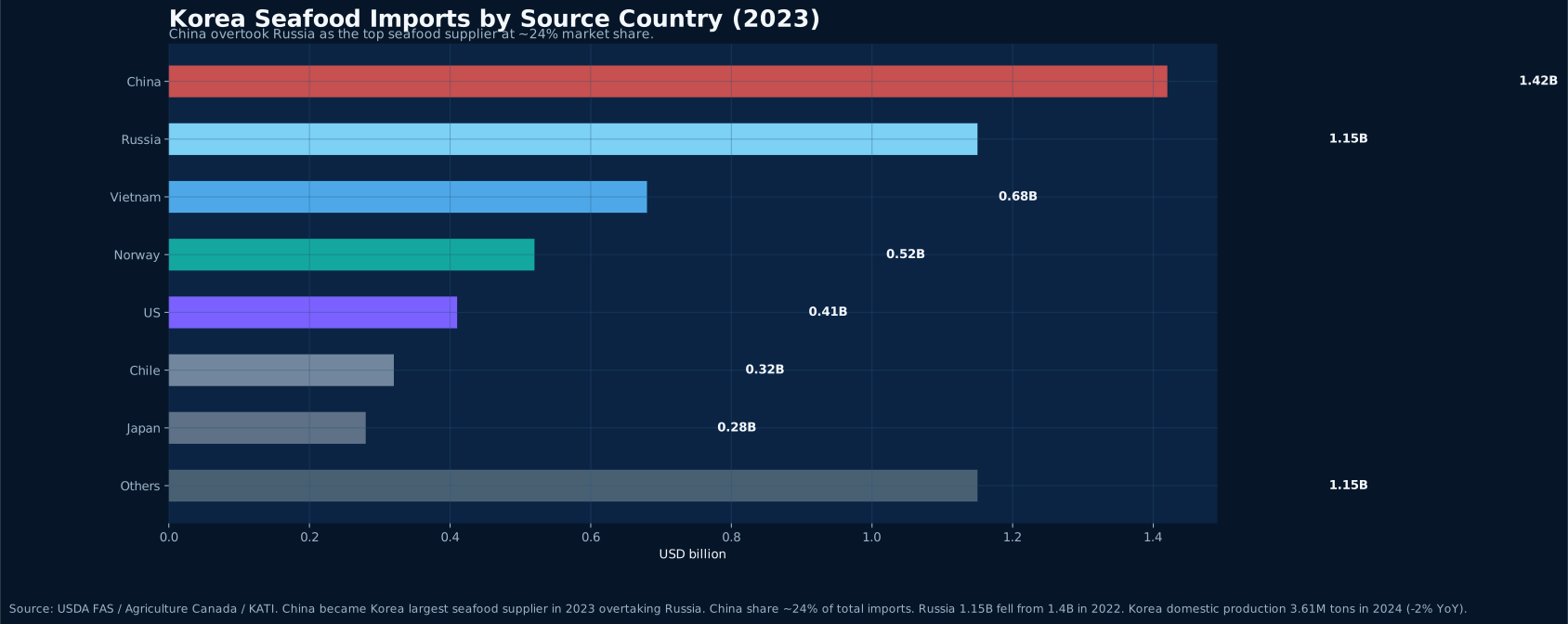
In 2023, China officially overtook Russia to become Korea’s largest seafood import source. According to USDA FAS data, China’s seafood exports to Korea reached 1.42 billion USD, up 3.8% year-over-year, accounting for approximately 24% of Korea’s total 5.93-billion-USD seafood imports. Russia’s exports to Korea fell to 1.15 billion USD, down significantly from 1.4 billion USD in 2022.
This shift reflects multiple factors. Russia’s declining exports are partly linked to geopolitical dynamics following the Ukraine conflict, while China’s price competitiveness, product diversity, and stable supply chains have driven its expanding share in the Korean market. China holds a clear cost advantage particularly in frozen fish fillets, processed seafood, and seaweed products.
2. Korea’s Seafood Import Scale: Stable Above 6 Billion USD
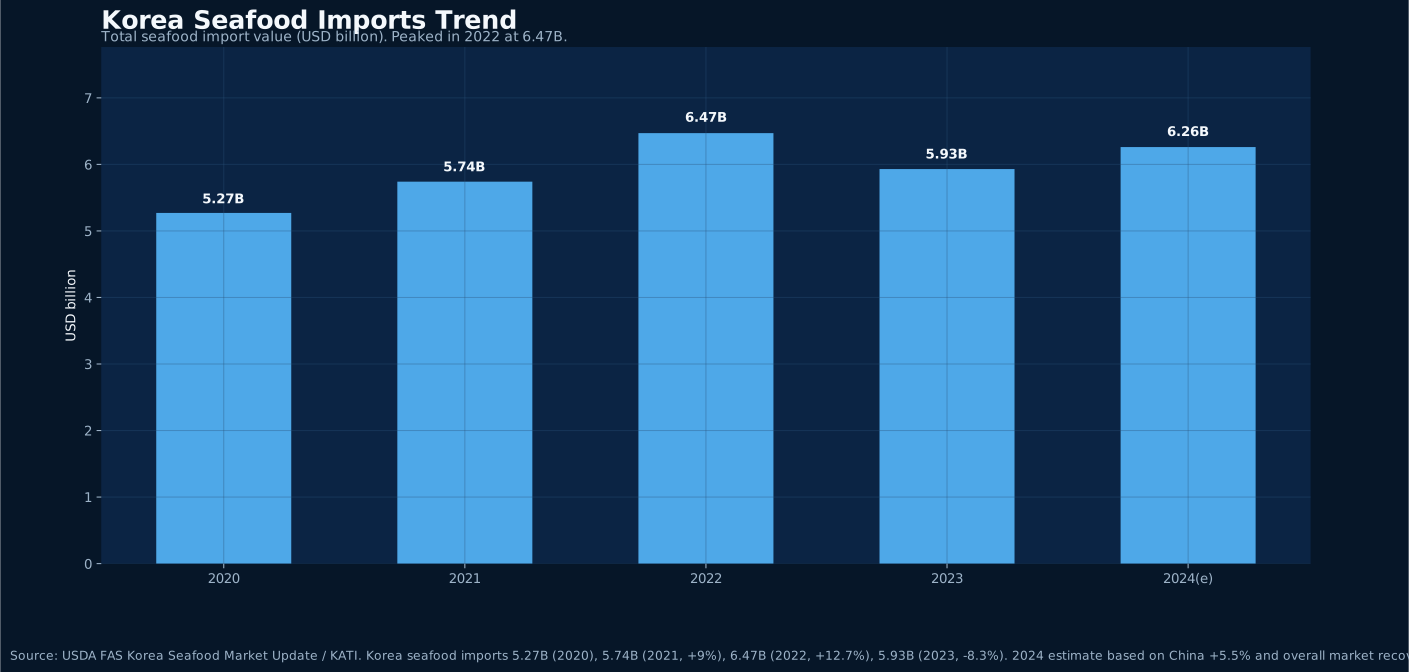
Korea’s seafood imports have shown a steady growth trend over the past five years. Imports stood at 5.27 billion USD in 2020, grew 9% to 5.74 billion USD in 2021, and peaked at 6.47 billion USD in 2022 (+12.7% YoY). Although 2023 saw a pullback to 5.93 billion USD (−8.3%) amid a global seafood trade downturn, imports remained at relatively elevated levels.
Preliminary 2024 data indicates imports have recovered to approximately 6.26 billion USD. China’s seafood exports to Korea grew 5.5% YoY, further consolidating its position as the top supplier. Vietnam, Norway, Chile, and Japan also remain important seafood import sources for Korea.
3. Korea’s Declining Domestic Production and Aquaculture Transformation
Korea’s domestic seafood production has been in continuous decline over the past decade. Total production fell to 3.61 million tons in 2024, down 2% YoY. Nearshore fishery resource depletion and an aging fisherman population are the primary causes of declining catches. Meanwhile, aquaculture’s share of total production has risen from 47% in 2014 to over 62% in 2024.
Declining domestic output has directly increased Korea’s dependence on imported seafood. Particularly in mass consumer segments such as frozen fillets, dried small fish, flavored seaweed, and ready-to-eat seafood products, imported goods dominate Korean retail thanks to their price advantage.
4. China’s Competitive Categories: Shrimp, Tilapia, Seaweed, and Deep Processing
China’s advantage in Korea’s seafood import market centers on several core categories. Frozen whiteleg shrimp is one of China’s largest single-item exports to Korea, with large-scale factory farming in Jiangsu, Guangdong, and Hainan keeping prices well below Korean domestic products. Tilapia is another key export, primarily used in Korean school and institutional catering.
Seaweed is another critical category. Korea is one of the world’s largest seaweed consumers, and China holds a clear cost advantage in bulk-packaged raw seaweed and cut kelp products. In deep-processed seafood, Chinese ready-to-eat fish cakes, fish balls, and seasoned frozen seafood are rapidly gaining shelf space in Korean convenience stores and online supermarkets.
5. Compliance Red Lines and Market Entry Strategy
Korea’s compliance requirements for imported seafood are extremely strict. The Ministry of Food and Drug Safety (MFDS) tests every batch for heavy metals, parasites, antibiotic residues, and microbial indicators. Chinese exporters must ensure they hold HACCP or equivalent certification, and product packaging must comply with Korean food labeling regulations.
For Chinese seafood exporters, the core competitive strategy for the Korean market should include: first, focusing on aquaculture categories where China has scale advantages (shrimp, tilapia, seaweed); second, developing deep-processed ready-to-eat product lines that leverage Korea’s single-person meal and convenience store culture trends; and third, establishing stable Korean importer partnerships to ensure smooth compliance channels.