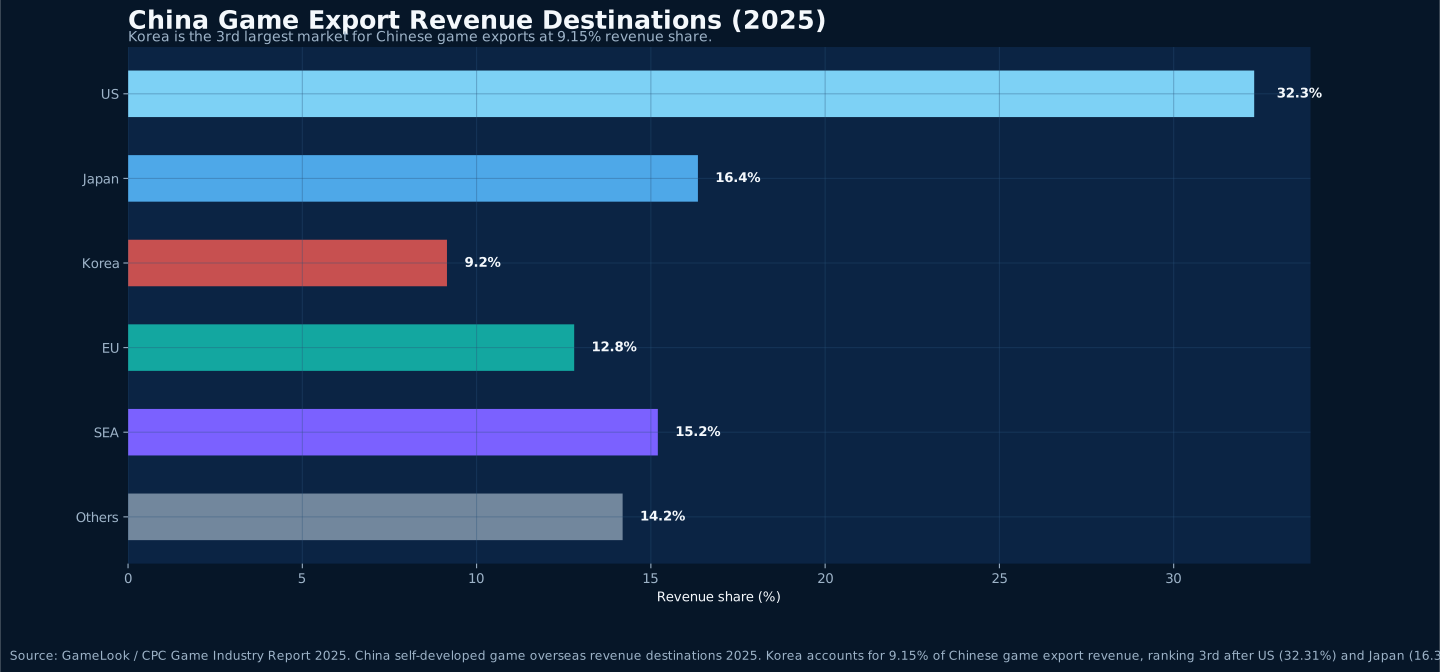
1. Why Korea remains a market Chinese game exporters cannot ignore
On raw size alone, Korea is not the largest overseas gaming market nor the biggest destination by population. But its value to Chinese publishers has never depended only on absolute user numbers. In 2025, Korea accounted for 9.15% of revenue destinations for Chinese self-developed games, ranking third. That places Korea firmly inside the core overseas revenue map for Chinese studios. It is not a peripheral market to test if time allows. It is a region that can materially affect annual revenue mix, product iteration speed, and brand reputation.
More importantly, Korean players generate fast feedback, dense community discussion, and mature spending behavior. That makes Korea a market that can both monetize and test operational capability. Many Chinese teams care not only about the revenue itself, but about how Korea amplifies quality expectations, live-ops discipline, and public response. Holding ground in Korea often signals that a title is ready for other high-standard markets as well.
2. Korea's game market is still growing, so higher entry cost does not mean less opportunity
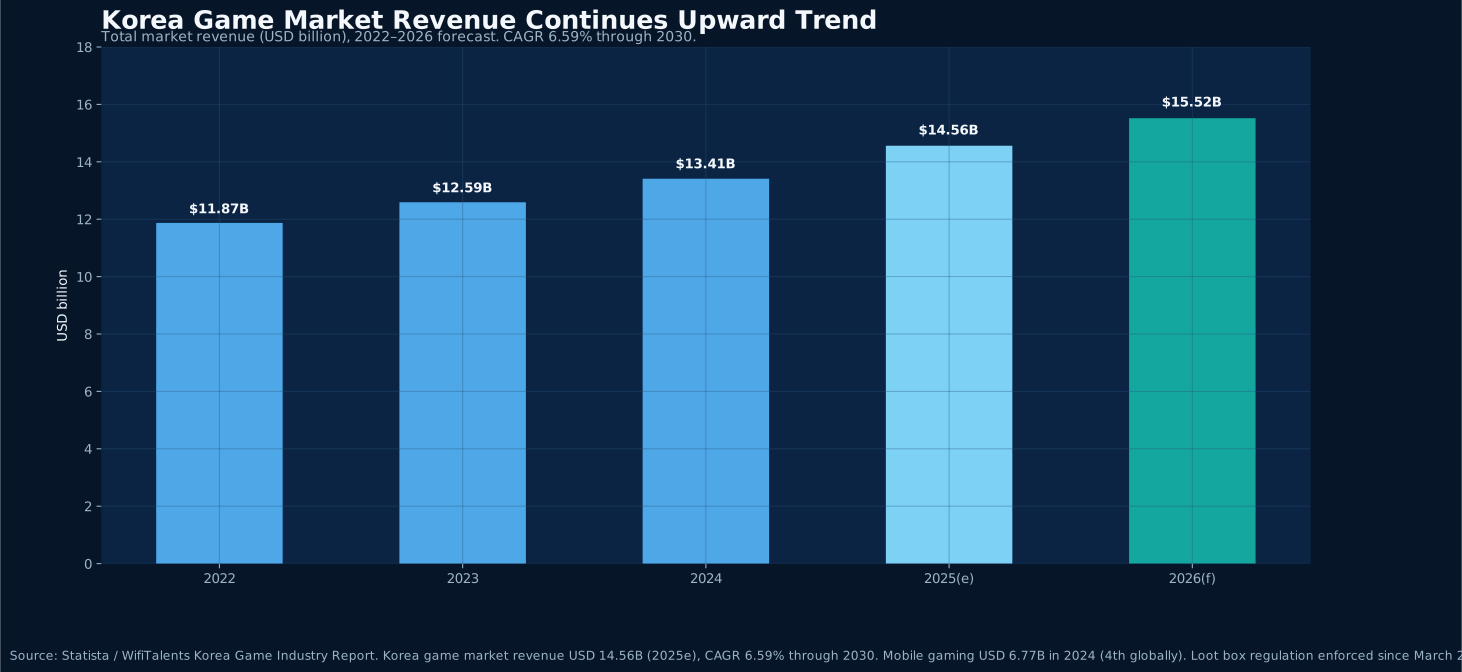
Public market estimates suggest the Korean game market will reach USD 15.52 billion in 2026, with mobile rising to 52.3% of the total. That means Korea is not a static market defined only by zero-sum competition. It is still expanding, but the expansion is increasingly driven by content refresh, sustained operations, and deep monetization in mobile use cases. Chinese publishers are not strangers to this environment, because many leading Chinese teams already specialize in long-term live operations and event cadence management.
Korea therefore looks more like a mature lane with high return potential and high execution requirements. It is not a place where cheap user acquisition alone can easily create a hit, unlike some emerging markets. Yet precisely because user standards are higher and market signals are clearer, strong products can build a steadier reputation and cash flow. For Chinese teams that want brand-level overseas growth rather than one-off wins, that is an attractive setup rather than a drawback.
3. After loot-box rules, what Korea really raised is the bar for operational detail
Since Korea's loot-box disclosure regime took effect in March 2024, many teams have reacted by saying the market simply became harder. A better reading is that Korea did not shut the door; it made long-term operating capability far more visible. The rules require clearer probability disclosure, more careful event design, and steadier customer-service and reputation management. That filters out teams that want quick monetization without investing in localized governance.
For Chinese publishers, that is not purely bad news. Leading Chinese game companies already have deep experience in event systems, monetization design, user segmentation, and community operations. The real challenge is not whether the capability exists, but whether the team is willing to translate it into Korean-friendly disclosure formats, customer-service language, and community context. Without that translation layer, even strong products can lose points on operating detail.
4. Korean users are buying not only content, but also respect and stability
What makes Korea distinct is how sharply players perceive localization quality. Whether the language sounds natural, notices arrive on time, compensation is clearly explained, probability tables are easy to understand, and community feedback is visibly monitored, all of these details are quickly magnified. A title that can pass in another market through content strength and acquisition spend alone may run into trouble in Korea if localization feels careless, because that discomfort can quickly turn into public criticism and lower retention.
That is also why Korea puts product completeness and operating completeness on the table at the same time. For Chinese teams, Korea is no longer only a question of finding a publishing partner. It is a question of designing Korean copy, customer-service SOPs, legal review, community tone, and event timing together from the beginning. The earlier a team brings these elements forward, the more likely it is to turn Korea's high standards into a durable moat.
5. What matters next is how Korea's channels and service chain deepen around Chinese games
If Korea keeps its place as the third-largest overseas market for Chinese games, the gains will not stop at publishing revenue. They will also spread through translation, local CS, legal review, marketing-asset production, KOL cooperation, esports events, payment risk control, and data analysis. Game export between China and Korea is therefore not a single-point trade story. It is a compound route that keeps generating high-frequency service demand. That makes it especially relevant for anyone tracking bilateral digital trade.
For Chinese publishers, the next round of competition will not be decided only by who moves faster on approval or launches with louder marketing. It will depend on who can sustain Korean-language user experience, compliance disclosure, and long-term content updates. As long as the Korean market keeps expanding and mobile keeps growing, this feature of 'operations decide outcomes' will become even more obvious. Korea matters not only because it is the third-largest market, but because it exposes the true quality of overseas operating capability.