24.88 Million TEU at Busan: The Structural Shifts Behind the Record
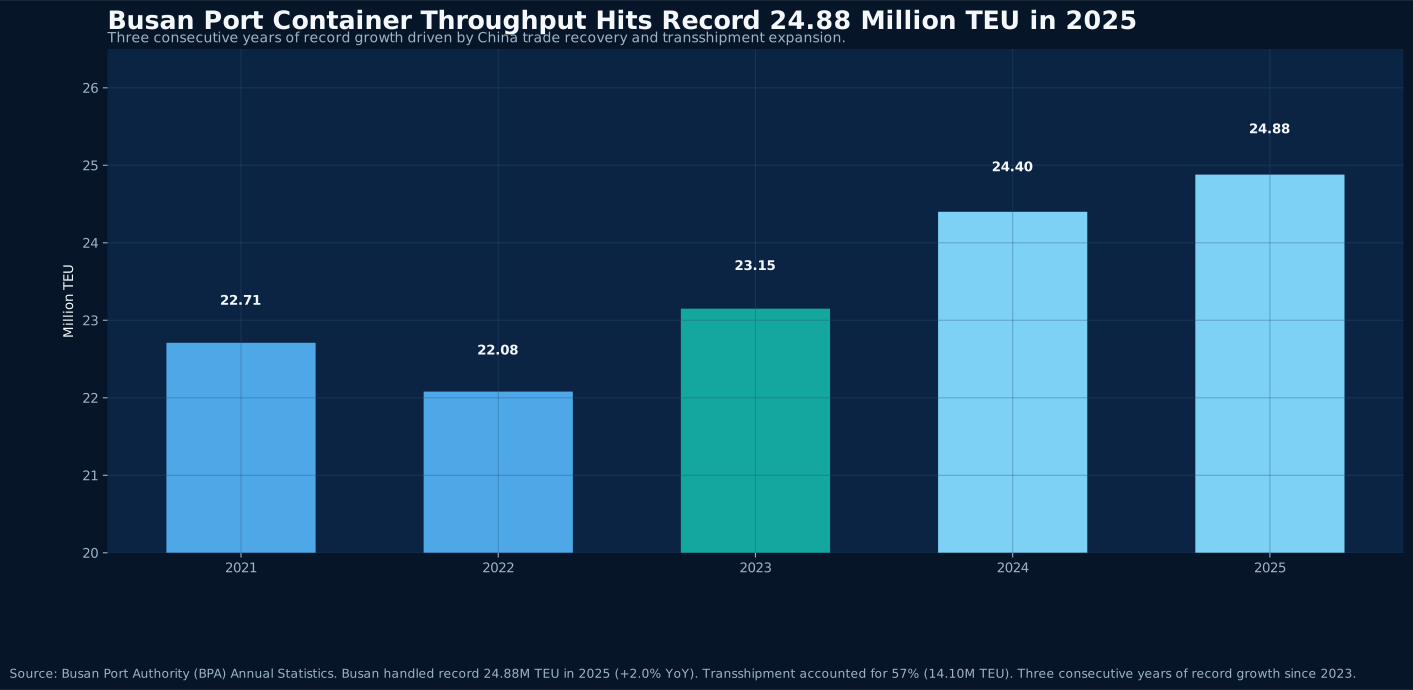
In 2025, Busan Port's container throughput reached 24.88 million TEU, up 2.0% from 24.40 million TEU in 2024, marking the third consecutive annual record according to Busan Port Authority (BPA) statistics. Notably, the growth was uneven: transshipment volumes hit 14.10 million TEU (+4.4% year-on-year), accounting for 57% of total volume and serving as the primary growth engine, while import-export throughput grew by only about 1.5%.
This structure reflects a long-term trend: Busan's positioning as a Northeast Asian hub is strengthening, with a growing share of Chinese export cargo transshipping through Busan en route to Southeast Asia, Japan, and even North America. According to Korea's Ministry of Oceans and Fisheries (MOF), total national port container throughput in 2024 reached 31.73 million TEU — also an all-time high. Incheon Port also set its own record at 3.56 million TEU.
Freight Rate Normalization: The Correction After Red Sea
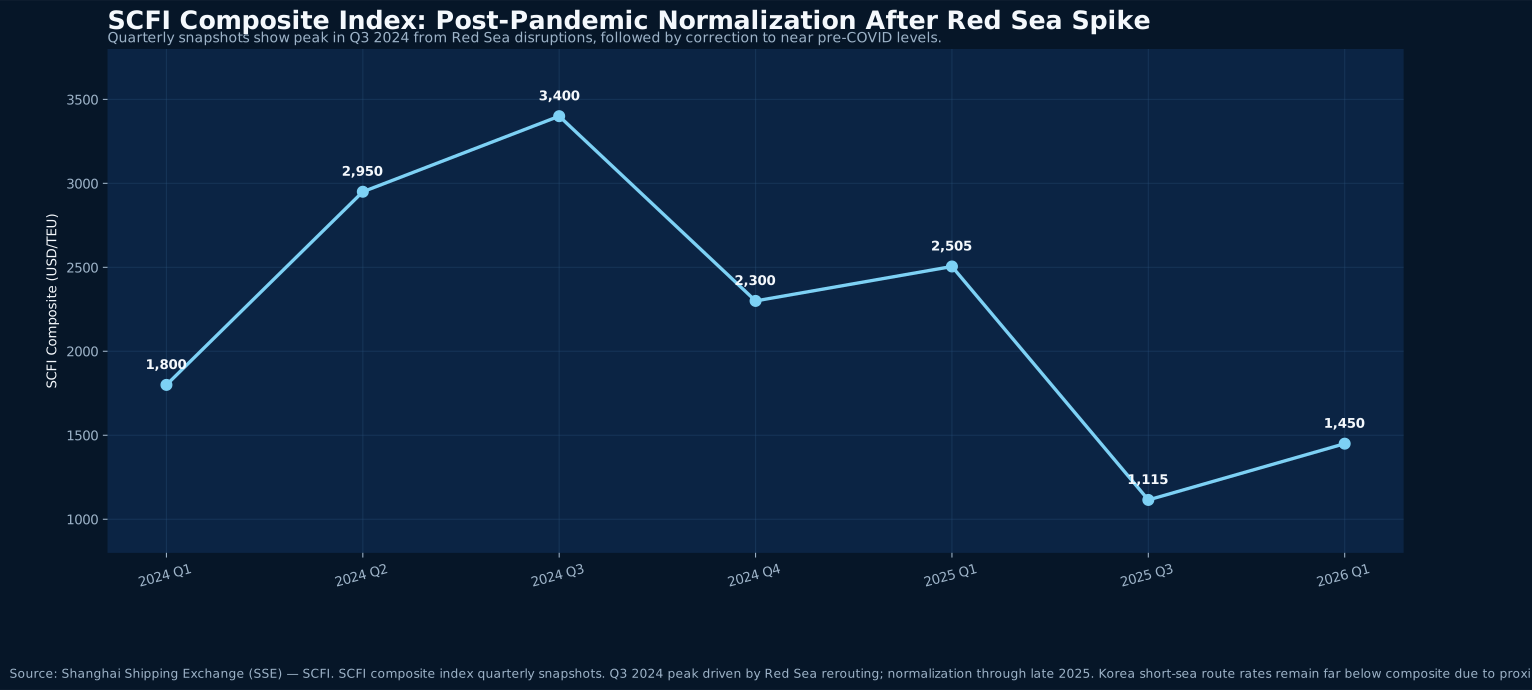
The Shanghai Containerized Freight Index (SCFI) composite surged to approximately 3,400 in Q3 2024, driven by route diversions caused by Houthi attacks in the Red Sea. Vessels were forced to reroute around the Cape of Good Hope, inflating capacity costs on deep-sea routes. However, the China-Korea corridor — a short-sea route with Shanghai-to-Busan transits of just 2–3 days — was only indirectly affected. By H2 2025, the SCFI composite had retreated to a periodic low near 1,115, recovering to around 1,450 by early 2026, broadly in line with pre-pandemic levels.
On the China-Korea corridor specifically, freight rates have long oscillated within a $130–210/TEU range — far below the SCFI composite's global weighted average. This reflects smaller vessel sizes, shorter voyages, ample capacity, and fierce competition on the route. HMM (Korea's largest carrier), COSCO Shipping, Sinokor Merchant Marine, and numerous regional operators all deploy frequent liner services on this corridor.
Cross-Border E-Commerce: The New Variable Reshaping China-Korea Logistics
In 2024, Korean shoppers spent approximately $3.1 billion on Chinese cross-border e-commerce platforms — an 84% year-on-year surge. AliExpress, Temu, and Pinduoduo's cross-border operations drove this momentum. Statistics Korea data shows China now accounts for 62% of Korean overseas direct purchases (Q4 2024). This growth is reshaping the logistics demand pattern from China to Korea.
Traditionally, China-Korea trade was dominated by bulk raw materials and industrial goods, with full container loads (FCL) at its core. But the e-commerce explosion has introduced two new logistics layers: first, a surge in direct-mail parcels — Korea Customs Service data indicates annual cross-border parcel processing now exceeds 100 million pieces; second, after major platforms like Coupang opened to Chinese sellers, large volumes of Chinese goods require pre-positioning in Korean fulfillment centers, driving both less-than-container-load (LCL) and FCL demand for warehouse replenishment. The simultaneous growth of both channels is injecting new structural demand into the China-Korea shipping market.
Port Infrastructure and Smart Ports: Korea's Long-Term Positioning
Facing sustained throughput growth, Korea is increasing port infrastructure investment. Busan New Port launched Korea's first fully automated terminal in April 2023 and continues to advance Phase 2–4 expansions targeting annual capacity above 30 million TEU. Incheon New Port Phase 2 construction is also progressing, with completion expected in 2025–2026. Korea's Ministry of Oceans and Fisheries (MOF) is simultaneously investing in AI-driven port operations and automated guided vehicles (AGVs) to improve handling efficiency and safety.
In addition, the green shipping transition is influencing the China-Korea corridor. The International Maritime Organization's (IMO) Carbon Intensity Indicator (CII) rating system is now in effect, affecting vessel deployment across all routes. The Korean government has launched its 'Green Ship-K' initiative, subsidizing LNG dual-fuel and ammonia-ready vessels. HMM is ordering next-generation LNG dual-fuel container ships, and Busan Port is expanding shore power facilities. These changes signal that fleet configuration and operational cost structures on the China-Korea corridor will undergo adjustment.
Competitive Landscape and Outlook for the China-Korea Corridor
The China-Korea corridor is among the world's most competitive short-sea routes. Korean and Chinese carriers including HMM, COSCO Shipping, Sinokor Merchant Marine, and Koryo Shipping, together with global giants Maersk, MSC, ONE, and Evergreen, all deploy significant capacity here. Dozens of weekly sailings keep bargaining power limited and freight rates structurally low. For shippers and buyers, this means China-Korea maritime logistics costs are highly competitive on a global scale.
Looking ahead, China-Korea shipping logistics faces several key variables: first, global trade policy uncertainty — including US tariff adjustments — could alter cargo flows transshipping through Busan; second, continued e-commerce channel growth may demand more flexible LCL services and faster customs clearance; third, green shipping regulations will increase certain operational costs but may also create differentiated competitive advantages. For Chinese exporters and Korean buyers, understanding these structural shifts matters more than simply tracking freight rate movements.