1. The Logic Behind a $1.71B Market: Low Birth Rates, Solo Living, and Emotional Spending
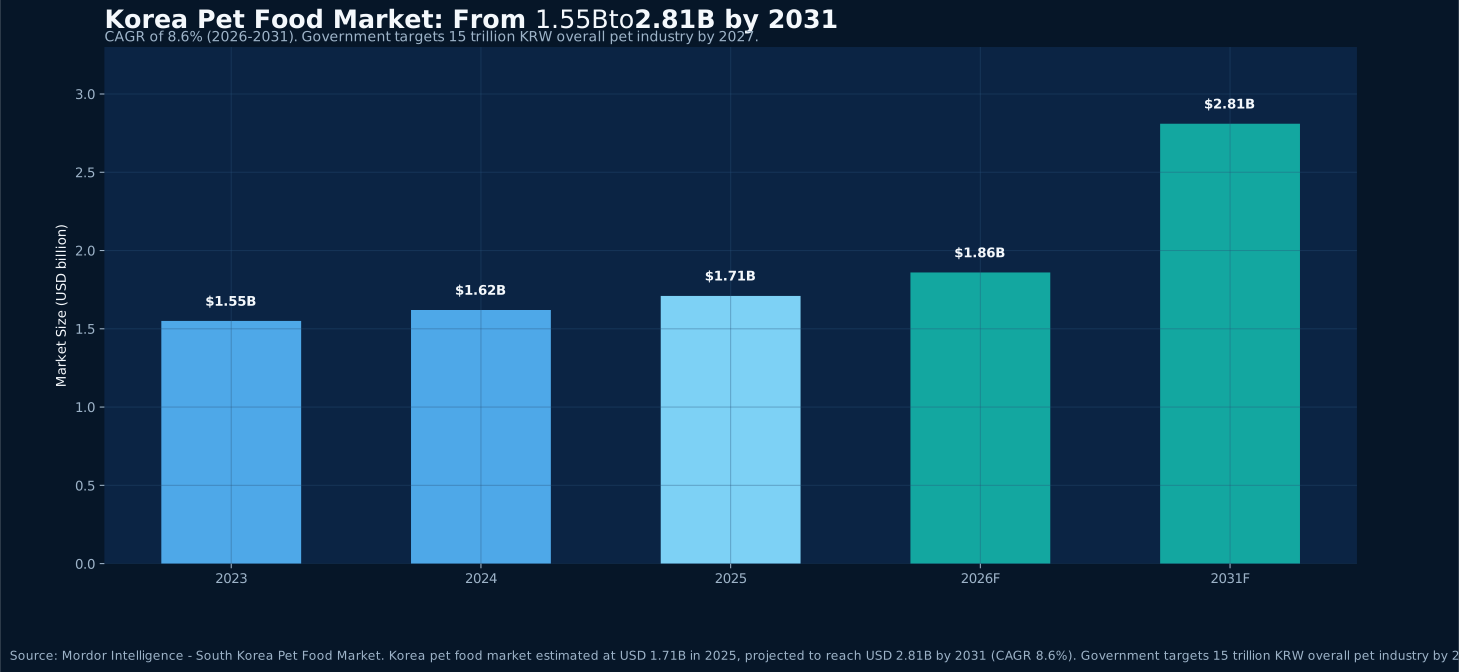
Korea’s pet food market reached $1.71 billion in 2025, and this figure is no accident. It reflects the convergence of deep structural changes in Korean society. Korea has one of the world’s lowest birth rates, single-person households now exceed 40%, and pet ownership rates keep rising. As more young people choose pets over children, pet spending naturally gains higher emotional value and willingness to pay. The Korean government has explicitly included the pet industry in strategic planning, targeting 15 trillion KRW (roughly RMB 80 billion) in total pet industry size by 2027.
In terms of growth trajectory, Mordor Intelligence projects the Korean pet food market will expand at an 8.6% CAGR from 2026 to 2031, reaching $2.81 billion. This growth rate significantly exceeds Korea’s overall economic growth, indicating that pet spending in Korea is counter-cyclical. Even during economic slowdowns, Korean households are unlikely to significantly cut spending on pet food and care—because pets are no longer “hobbies” but “family members.”
2. How China Became Korea’s No.1 Pet Food Supplier
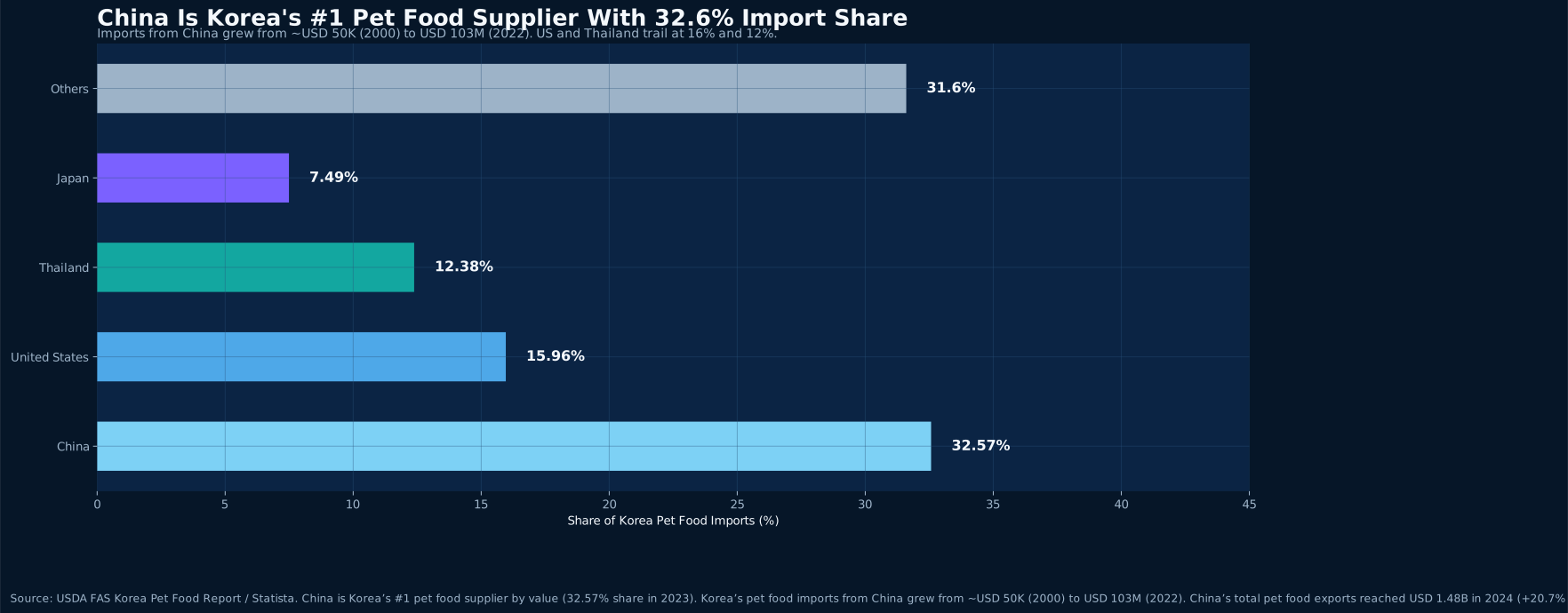
According to the USDA’s Korea Pet Food Report, China holds the No.1 position in Korean pet food imports by value at 32.57%, ahead of the United States (15.96%), Thailand (12.38%), and Japan (7.49%). This position was not built overnight—Korea’s pet food imports from China grew from roughly $50,000 in 2000 to approximately $103 million in 2022, an increase of over 2,000 times. Behind this growth lies the comprehensive maturation of China’s pet food industry chain: raw material sourcing, formula R&D, automated production, and export compliance capabilities have all improved systematically.
Meanwhile, China’s overall pet food exports are growing rapidly. China’s retail-packaged dog and cat food exports increased from $1.221 billion in 2021 to $1.480 billion in 2024, a 20.7% year-on-year increase. Among export destinations, Germany leads at 15.41%, followed by the US at 12.88%, UK at 8.40%, Japan at 8.04%, and Korea at 7.49%. As China’s fifth-largest pet food export destination, Korea’s importance continues to rise.
3. The Trend Shift: From Price Competition to Functionality and Customization
Korea’s pet food market is undergoing a structural shift. In the past, imported brands dominated, but 2023 saw the first decline in imports in over a decade. This does not mean the market is shrinking—rather, Korean local brands and demand for customized products are rising. Korean pet owners increasingly care about ingredient transparency, functional formulations (such as joint care, gut health, weight management), and whether products meet Korean domestic quality standards and certification requirements.
This shift presents both challenge and opportunity for Chinese suppliers. The challenge is that pure price competition is narrowing—Korean buyers increasingly demand ingredient traceability, production process standards, and certification credentials. The opportunity lies in the fact that Chinese pet food companies have made significant advances in R&D and smart manufacturing in recent years. Several leading companies have begun establishing overseas production capacity to reduce costs and avoid trade barriers, while leveraging domestic R&D advantages to push customized pet food and smart devices globally.
4. Compliance Thresholds: Core Requirements for Pet Food Imports into Korea
Korea’s regulatory framework for pet food imports is relatively stringent. Importers must report to the Ministry of Agriculture, Food and Rural Affairs (MAFRA) and the Animal and Plant Quarantine Agency (APQA). Products must meet the requirements of the Act on the Management of Manufacturing and Importing Pet Food, including ingredient lists, nutritional analysis, and production facility audits. For pet food imported from China, GACC (General Administration of Customs of China) export registration requirements also apply.
For Chinese suppliers, this means the core barrier to Korea’s pet food market is not price but compliance. Providing complete ingredient traceability documentation, nutritional testing reports meeting Korean standards, and GACC-registered factory credentials will be the baseline. Suppliers who can additionally offer Korean-language packaging design, localized marketing support, and rapid sample response will hold a clear competitive edge.
5. Outlook: Who Will Own the Next Decade of the Pet Track
Growth in Korea’s pet food market will not stop at 8.6% CAGR. As Korean society ages further and solo living rates continue to rise, the pet economy will become one of the most resilient segments of Korea’s consumer market. For Chinese suppliers, 32.57% market share is a solid foundation, but it also carries significant responsibility—any quality incident could affect the entire “Made in China” reputation in Korea’s pet market.
Over the next decade, competition in Korea’s pet market will not just be about products but about brand trust, channel capability, and compliance systems. Suppliers who can build brand recognition, maintain compliance documentation, and understand Korean consumers’ emotional needs beyond price competition will earn the greatest returns in this fast-growing market. Written by Minghao, published by Shanghai MO-TEK International Trade (MO-TEK).