1. Why Korea’s health functional food market deserves a fresh look
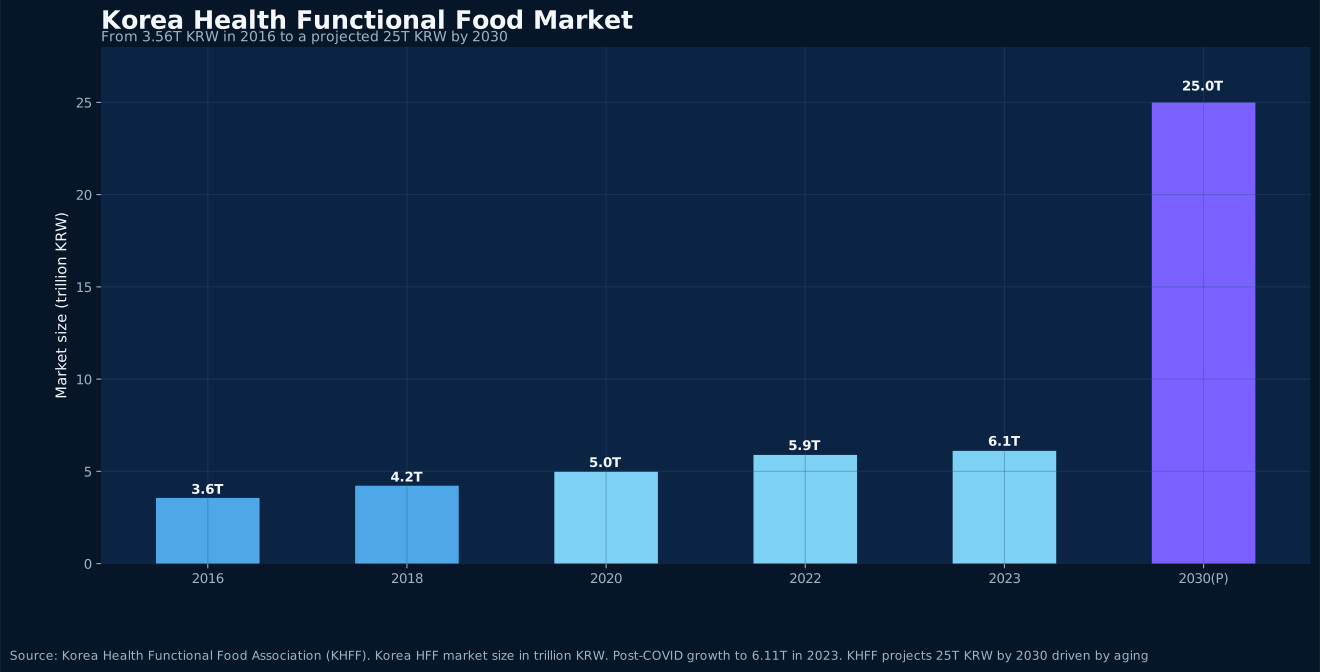
Korea’s health functional food (HFF) market has undergone a structural transformation over the past decade. From 3.56 trillion KRW in 2016 to 6.11 trillion in 2023, the market has expanded substantially, and the Korea Health Functional Food Association (KHFF) has set an ambitious long-term target of 25 trillion KRW by 2030. Behind this trajectory lies Korea’s accelerating demographic aging, rising health awareness across all age groups, and the reshaping of wellness consumption by e-commerce. Currently, online channels account for roughly 68% of HFF sales, with consumers in their 30s and 40s forming the core purchasing cohort.
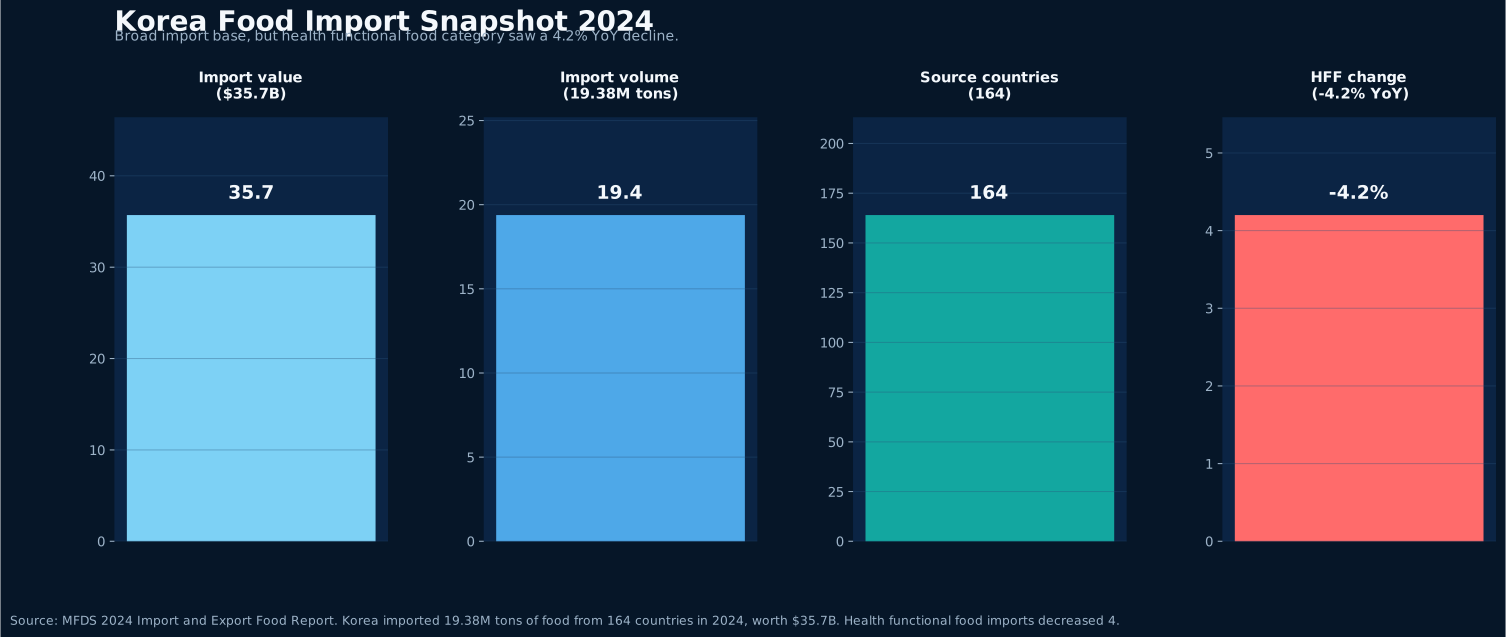
Notably, this market is not growing in a simple linear fashion. Post-pandemic consumption corrections led to a 4.2% year-on-year decline in HFF imports in 2024, signaling that Korea’s screening standards for suppliers are tightening. The era of “any product can sell” is over; buyers increasingly demand a triple qualification of functionality, safety, and regulatory compliance. For Chinese companies eyeing this market, understanding this structural shift matters more than headline market size.
2. The real position of Chinese ingredients in Korea’s HFF supply chain
Many still assume the U.S. dominates Korea’s HFF import landscape—and it does lead with a 37.7% share. But when the supply chain is disaggregated, China’s presence at the ingredient level is far more significant than headline numbers suggest. In fructo-oligosaccharides alone, Chinese suppliers command 59.2% of Korea’s imports, well ahead of India at 29.8%. In plant extracts, amino acids, and vitamin intermediates, China is equally indispensable.
This means opportunities for Chinese suppliers in Korea’s HFF market span three tiers: ingredient supply, OEM manufacturing, and branded finished products. At the ingredient level, China has already built supply advantages that are difficult to replace—a breakthrough point many SMEs overlook. Rather than entering Korea’s retail market directly with finished brands, becoming a core ingredient supplier to Korean domestic brands may be the more realistic path.
3. The MFDS regulatory framework: new variables in 2026
The Korea Ministry of Food and Drug Safety (MFDS) is visibly tightening its oversight of the HFF sector. In early 2026, MFDS announced plans to re-evaluate the safety and functionality of nine ingredients, including two “noticed” ingredients (hyaluronic acid and Rhodiola rosea extract) and seven individually recognized ingredients. This places the entire industry’s ingredient roster in a state of dynamic adjustment.
For Chinese ingredient suppliers, this represents both risk and opportunity. The risk is that components on the re-evaluation list may face short-term order volatility. The opportunity is that suppliers who prepare complete safety data packages ahead of time will gain a clear competitive edge in the next round of screening. MFDS’s regulatory logic is clear: not to close the market, but to raise the bar so that only technically capable players remain.
4. How e-commerce is reshaping Korea’s health consumption
Korea’s HFF market has an e-commerce penetration rate of 68%, among the highest globally for this category. Platforms like Coupang and Naver Shopping continue to expand their health product assortments, and the rise of subscription and scheduled delivery services is shifting consumer behavior from occasional trial to routine supplementation. This shift demands greater stability and predictability from the supply chain.
The implication for Chinese suppliers is clear: entering Korea’s HFF market doesn’t necessarily require building your own brand and channels. Becoming an OEM or ingredient supplier to Korean e-commerce brands is a viable entry point. The key is delivering stable lead times, clear ingredient traceability, and testing reports that meet MFDS requirements. In the e-commerce era, health consumption tolerates neither stockouts nor quality fluctuations.
5. Cross-border shopping and the latent growth of imported supplements
Korean consumers already show high receptivity to imported supplements. Beyond traditional American and Australian products, cross-border purchases of Chinese health products via e-commerce platforms have been trending upward. Traditional Chinese medicine ingredients such as goji berries, jujubes, and astragalus extracts are finding new positioning in Korea’s “daily wellness” wave. The narrative shift from “traditional herbal medicine” to “natural functional ingredients” is unlocking new consumption scenarios.
But this opportunity comes with compliance challenges. Korea does not fully deregulate cross-border health products—items making functional claims must meet MFDS-specific regulations. Chinese suppliers seeking to reach Korean consumers through cross-border channels must prepare thorough labeling, claim substantiation, and quality testing to avoid import rejections or platform delistings.
6. Next steps for China-Korea health product trade: from ingredients to joint R&D
Looking ahead, China-Korea cooperation in health products is evolving from straightforward ingredient transactions to deeper joint R&D partnerships. Korea excels in formulation design, clinical validation, and market positioning, while China offers irreplaceable advantages in ingredient supply scale, production costs, and its vast traditional medicine ingredient library. Facing the shared challenge of aging societies, the two countries are likely to develop more collaborative projects in niche functional areas such as cognitive health, joint care, and liver wellness.
For Chinese companies, the window of opportunity in Korea’s HFF market is not about waiting until all compliance issues are resolved before acting. It is about starting now to build relationships with Korean certification agencies, local distributors, and e-commerce platforms. In a market where “compliance equals competitiveness,” the earlier a company completes its compliance infrastructure, the stronger its position in what is shaping up to be a 25-trillion-won opportunity.