A $6.43 Billion Market: The Full Picture of China-Korea Agricultural Trade
According to the China Chamber of Commerce of Foodstuffs and Native Produce (CCCFNA), bilateral agricultural trade between China and Korea reached $6.43 billion in January–October 2024, up 2.3% year-on-year. China's exports to Korea totaled $4.94 billion (−0.2% YoY) while imports from Korea reached $1.49 billion (+11.2%), maintaining a $3.45 billion surplus. By category, seafood and products led at $1.37 billion (27.8% of agricultural exports to Korea), followed by vegetables and mushroom products at $920 million (18.6%), and grain products at $290 million (+29.8%). Notably, Shandong Province accounted for 40.3% of China's agricultural exports to Korea ($1.99 billion), reflecting geographic industrial clustering.
From Korea's perspective, total food imports in 2024 reached $35.7 billion and 19.38 million tons from 164 countries. By import volume, China ranked first at 3.615 million tons (+9.4% YoY), followed by the US and Australia, with these three countries accounting for 52.6% of total volume. By category, agricultural/forestry products comprised 46.5%, processed foods 34.3%, livestock 9.3%, and aquatic products 4.6%. China's position in Korea's food import market — particularly in vegetables, seafood, and processed foods — is irreplaceable.
The Kimchi Factor: 99.98% Import Dependence and an Irreversible Price Structure
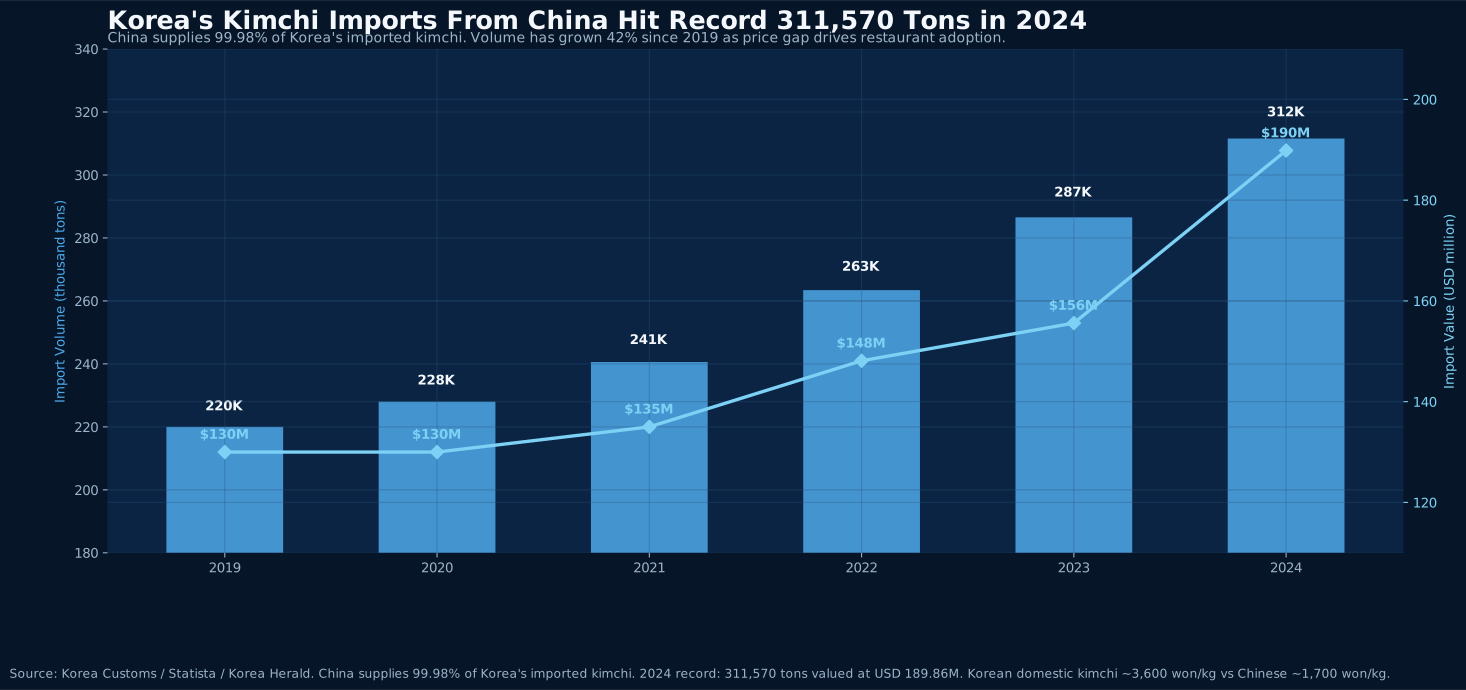
In China-Korea food trade, kimchi is the most symbolic product. China supplies 99.98% of Korea's imported kimchi. In 2024, Korean kimchi imports reached a record 311,570 tons valued at $189.86 million (+16.1% YoY) — the sixth consecutive year of growth. Meanwhile, Korean kimchi exports also hit a record $163.57 million in 2024. But Korea maintains a persistent kimchi trade deficit, exceeding $22 million in 2025.
The core driver is price differential. Chinese kimchi costs approximately 1,700 won/kg versus 3,600 won/kg for Korean-made kimchi — more than a 2x gap. A Korean government official has noted: 'When Korean cabbage prices rise, restaurants switch to Chinese kimchi, but they don't switch back when prices drop.' This 'one-way switch' effect means Chinese kimchi penetration of Korea's food service channel is structural and difficult to reverse. This dynamic also makes kimchi trade one of the most sensitive and socially prominent topics in the China-Korea food relationship.
Import Food Safety Inspections: 1,454 Non-Compliance Cases and China's 42.4%
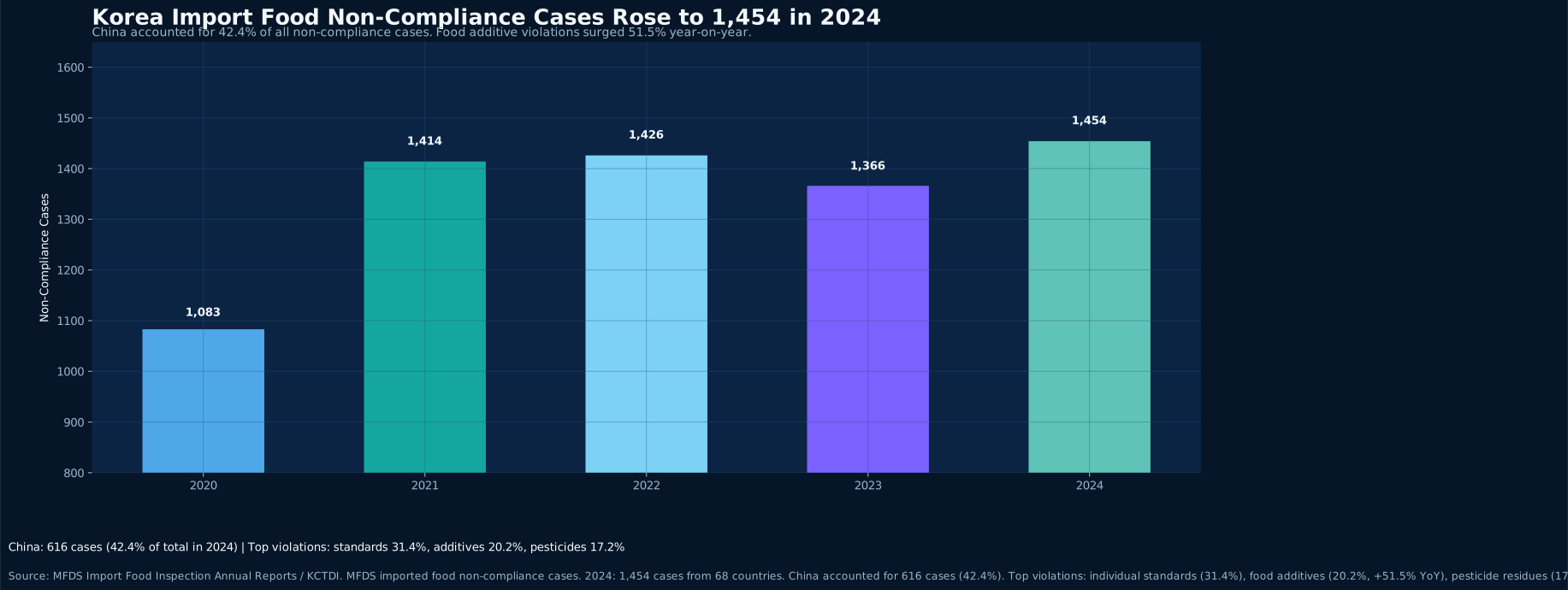
MFDS import food inspection data shows non-compliance cases rising from 1,083 in 2020 to 1,454 in 2024 — though the non-compliance rate has remained in a low range of 0.15%–0.18%. In 2024, violations involved 68 countries and 292 product items. By origin, China led with 616 cases (42.4%), far exceeding second-ranked Vietnam (113, 7.8%) and third-ranked USA (82, 5.6%).
Among violation types, individual standard breaches ranked first (456 cases, 31.4%); food additive violations came second at 294 cases (20.2%) — surging 51.5% year-on-year, the fastest-growing category; pesticide residue violations ranked third at 250 cases (17.2%, down 21.1% YoY); microbial standard violations totaled 182 (12.5%); and heavy metals 61 (4.2%). The surge in additive violations merits special attention — Korea operates a 'positive list' system permitting only 621 approved food additives, meaning even Codex-approved additives are violations if not on Korea's list. This creates a persistent compliance trap for Chinese exporters operating under different additive frameworks.
Mandatory HACCP and the 2026 Unannounced Inspection Regime
Since July 2021, all Chinese companies exporting kimchi to Korea must hold HACCP (Hazard Analysis and Critical Control Points) certification. The grace period for medium exporters (1,000–5,000 tons annually) expired in October 2023. Certification is valid for 3 years and requires on-site inspection by the Korea Agency of HACCP Accreditation and Services (KAHAS). In February 2025, Korea revised HACCP standards to introduce an unannounced inspection regime, effective January 2026. This means Chinese kimchi exporters must not only obtain certification but maintain compliance standards in daily operations, as MFDS inspectors may visit factories without prior notice.
Beyond HACCP, compliance requirements are tightening across multiple dimensions. The foreign food facility registration scheme is expanding — processed agricultural food and seasonings become mandatory from 2025. Korea's Food Additive Code uses a positive list of 621 approved additives, requiring exporters to verify every ingredient against the list. New labeling standards effective January 2024 mandate Korean-language labels covering product name, ingredients, production/expiration dates, net contents, and nutrition information. For Chinese food exporters operating under different labeling and additive frameworks, these requirements represent substantial market entry barriers — but for the same reason, companies that achieve compliance will enjoy stronger competitive moats.
FTA Dividends and Consumer Perception: The Dual Logic Behind Growth
The China-Korea FTA, effective December 2015, has produced differentiated impacts on agricultural trade. According to the Korea Herald, two years post-FTA (2017 data), Chinese processed food exports to Korea grew 21.9% to $963 million, fruits and vegetables rose 12.6% to $634 million, and chicken imports increased from 25,000 to 34,000 tons. However, grain imports declined 29.1%. Overall, China's share of Korean agricultural imports rose from 12.4% to 13%. Under the FTA framework, tariffs will be eliminated on 64% of Korean agricultural products and 91% of Chinese agricultural products within 20 years, providing institutional cost advantages for Chinese food exports while Korea retains longer transition periods on sensitive categories.
However, tariff advantages are only half the story. A 2025 study of 630 Korean consumers shows that purchase willingness for domestic-origin food consistently exceeds that for imported products, with Chinese food at a quality perception disadvantage. Price remains the primary driver of Chinese food import growth — kimchi at less than half the domestic price is nearly irresistible in food service. But in retail, consumers' country-of-origin preferences create an invisible barrier. This means Chinese food exporters face a segmented market: the food service channel is driven by price, while retail requires both brand credibility and compliance trust.