1. The shift in K-beauty packaging starts with channel structure, not a single product trend
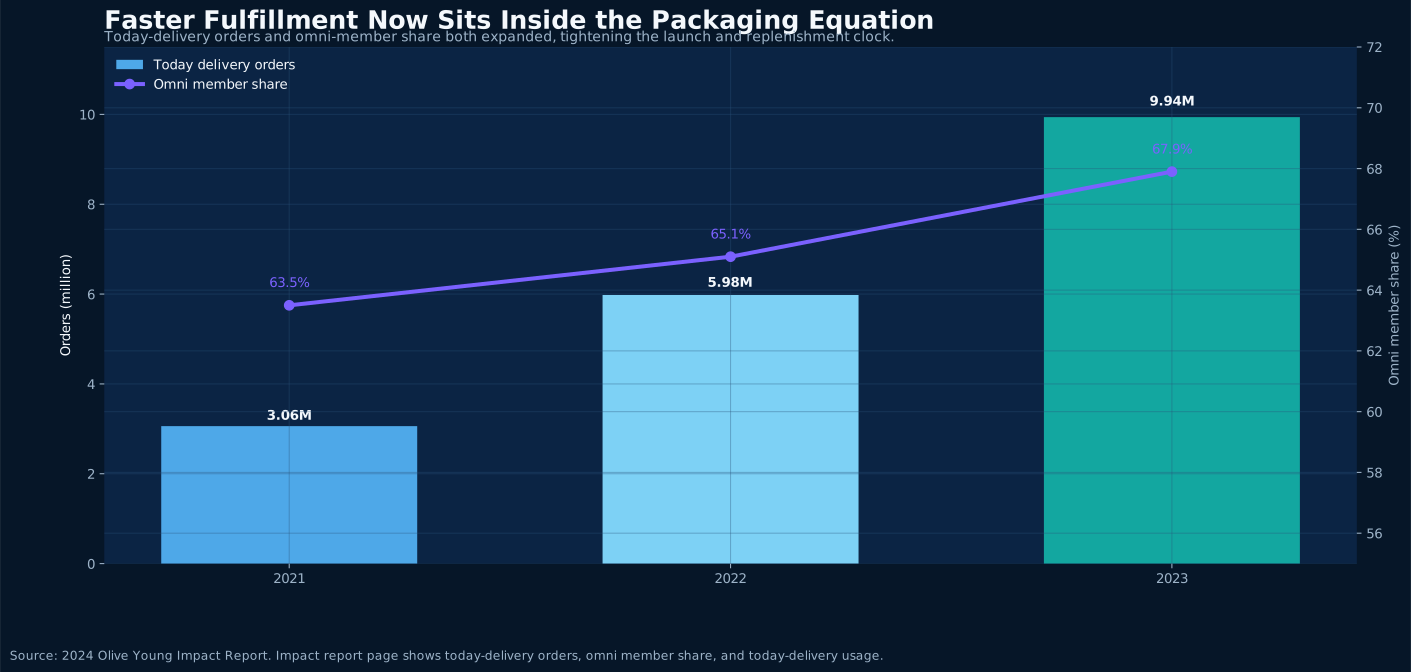
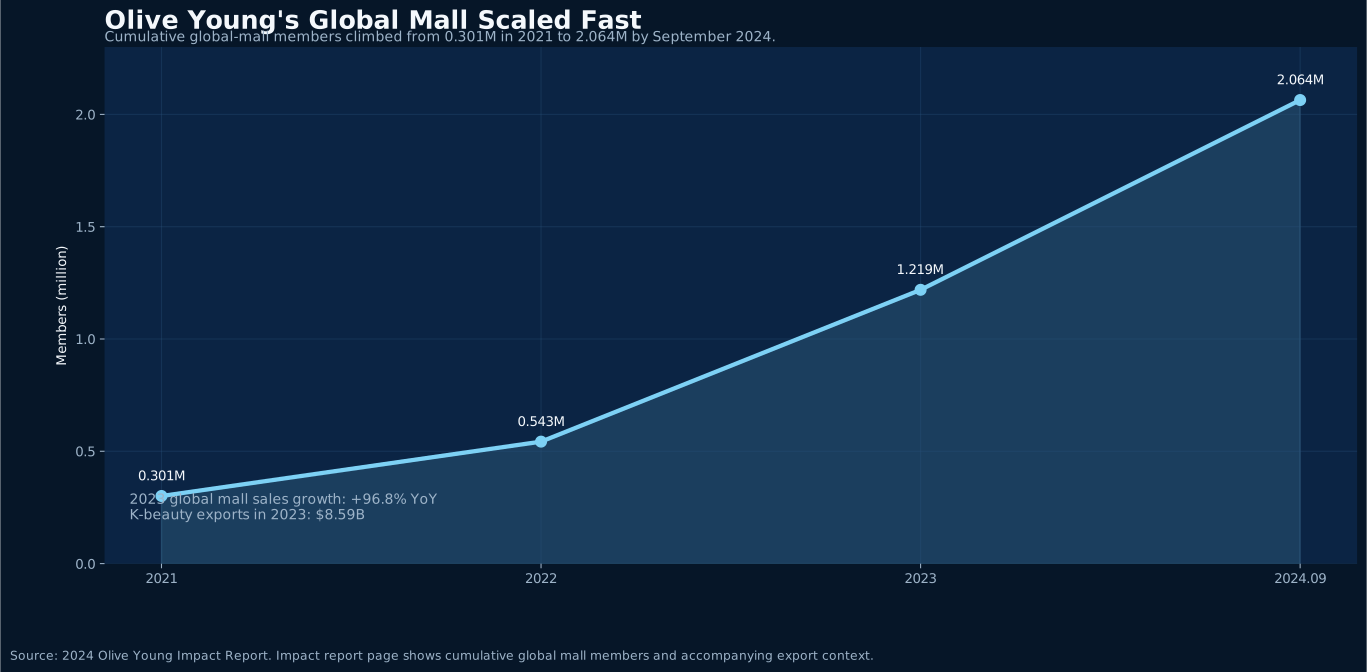
When people talk about K-beauty packaging, they often focus on a breakout category such as mist, serum, cushion, scalp care, or barrier repair. But watching only the product misses the bigger shift: the channel structure itself is being reorganized. Olive Young’s strengthening of offline and content-led retail, Musinsa’s expansion among younger consumers and multi-brand scenarios, and the ongoing linkage between cross-border sales and social content are all accelerating launch tempo.
Once channel speed increases, the role of packaging changes as well. It is no longer a passive container selected at the end of development; it becomes part of the launch plan itself. Brands discuss appearance, volume, pump feel, portability, travel-size options, visual differentiation, and sampling time much earlier. Packaging suppliers are no longer answering only “I need a bottle.” They are increasingly being asked, “How fast can this launch move, and how market-ready can the product feel?”
2. Why low MOQ, many SKUs, and fast sampling are becoming standard needs
The K-beauty brand ecosystem is extremely active. New brands appear constantly, while established ones keep testing sub-lines, limited editions, seasonal packaging, and channel-specific versions. For these teams, the biggest risk is often not a slightly higher purchase cost but missing the timing window. If social momentum, retail scheduling, and launch cadence fall out of sync, even a strong product can lose its scale-up chance. That is why low MOQ, fast sampling, and flexible adjustment can matter more than raw mass-production capacity.
That is also why airless bottles, mist formats, pump containers, travel-size packs, and small-format sets are getting more attention in Korea. These formats fit functional skincare, portable care, and niche-benefit products, while naturally offering room for visual and usability tweaks. For brands, packaging is not just a cost item; it is part of shelf competitiveness and content appeal. For suppliers, the ability to present the right solution quickly is more persuasive than simply sending a standard catalog.
3. Public trade-show signals show packaging competition moving toward solution-based supply
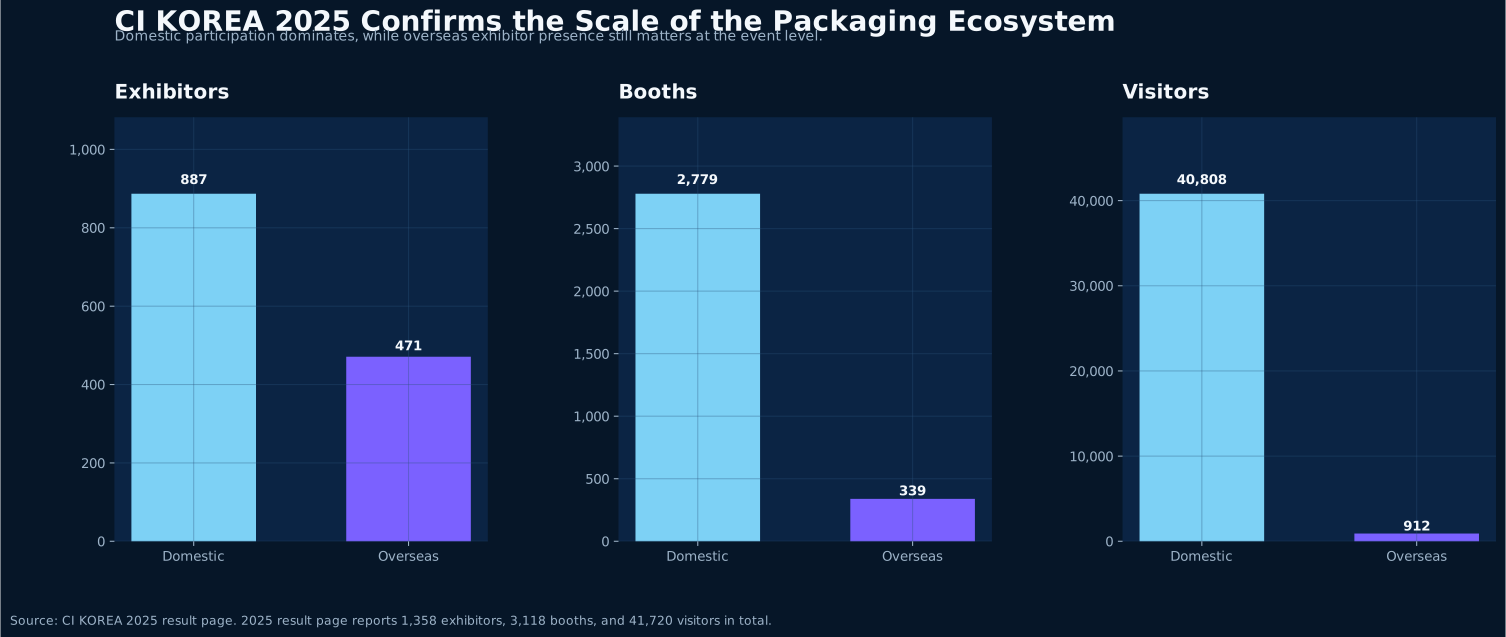
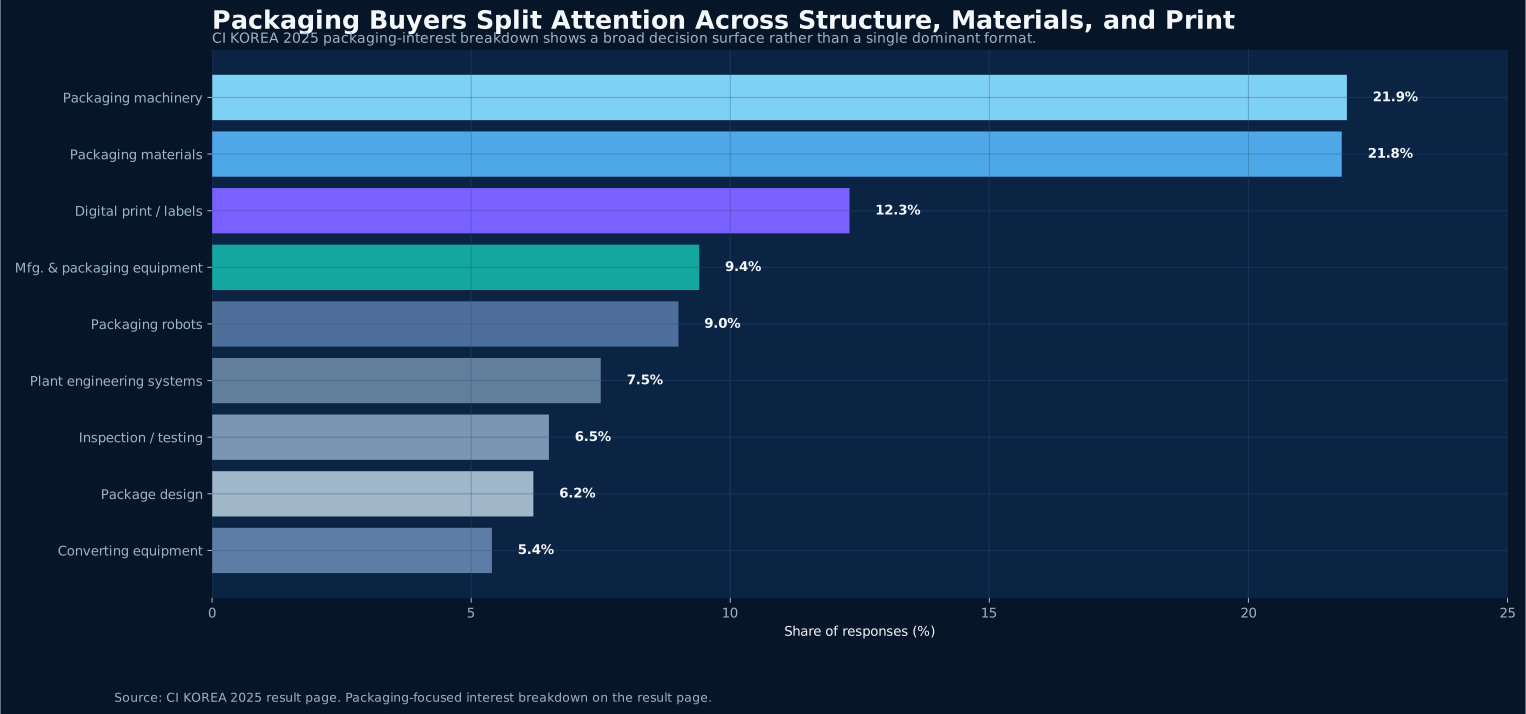
Public trade-show themes such as those seen at CI KOREA consistently elevate OEM/ODM, innovation, functional positioning, and sustainable packaging. These are not just exhibition slogans. They reflect a market where brands and channels judge packaging more holistically. A bottle or pump is no longer only an outer component; it is evaluated together with brand positioning, launch timing, regulatory understanding, tactile experience, and visual performance in digital marketing.
As a result, packaging suppliers can no longer stop at saying what they are able to manufacture. They increasingly need to explain why a given structure fits a brand’s channel strategy and product positioning. Manufacturing still matters, but it is no longer enough by itself. The supplier who can turn material, structure, volume, dispensing feel, sample timing, and visual presentation into one coherent proposal has a stronger chance of entering the brand’s long-term vendor set.
4. Faster Korean launches mean the entire supply rhythm is moving earlier
In the past, packaging was often locked in after formula and brand concept were relatively stable. Now more Korean brands are synchronizing packaging decisions earlier. Competitive pressure no longer starts only in product development; timing must line up before social teasing, retail negotiation, visual production, KOL content, and cross-border shelf placement. If packaging slips, every downstream action slows with it.
From a supply-chain perspective, packaging projects increasingly resemble timing-management projects. Brands want to know how quickly samples can be made, how soon color and printing can be confirmed, how fast revised structures can be returned, how quickly low-volume production can be arranged, and whether replenishment can stay stable. Suppliers who can answer these timing questions clearly will beat those who only present a product catalog.
5. Public signals to watch next: channels, trade shows, functional categories, and packaging experience
To keep reading the Korean beauty-packaging opportunity well, it helps to monitor four kinds of public signal. First, channel news: which retailers and content platforms are expanding brand pools and offline reach. Second, trade shows and launches: whether OEM/ODM, eco materials, portable formats, and functional packaging stay hot. Third, fast-growing treatment categories such as scalp care, barrier repair, localized treatment, and travel sets, since these directly shape packaging form. Fourth, consumer-experience details such as mist fineness, pump resistance, hand feel, portability, and visual recognition.
Taken together, the Korean beauty-packaging market is no longer a simple game of who has stock. It is a speed race over who can connect product concept, channel timing, and packaging experience faster. For outside suppliers, the most valuable capability is not capacity alone, but sample speed, structural understanding, multilingual communication, replenishment stability, and the ability to support a brand through launch rhythm. That is where the stronger competitive moat is forming.
6. For packaging suppliers, support-through-launch will matter more than simple inventory strength
Korean beauty brands increasingly expect suppliers to do more than provide ready-made containers. They want support across sampling, structural choice, printing confirmation, volume planning, visual differentiation, and replenishment rhythm. The reason is straightforward: timing windows are shorter, marketing starts earlier, and any weak link can affect launch performance. A supplier willing to move details forward with the brand is often more valuable than one that only quotes low but reacts slowly.
This helps explain why the stronger moat in packaging is shifting away from factory scale alone and toward service density. Suppliers that understand brand context quickly, give channel-aware structure recommendations, reduce friction in multilingual communication, and keep launch-to-replenishment rhythm stable are more likely to become long-term partners for Korean brands. Once built, that capability tends to be stickier than a one-off price advantage.
Seen this way, the more important question for K-beauty packaging is not which bottle form may suddenly trend, but what kind of supplier can enter the brand’s operating rhythm faster. As launch speed, channel fragmentation, and function-based segmentation keep advancing, suppliers that can support brands from concept to launch to replenishment will continue gaining importance.