1. Latest Progress: Round 13 Achieves Positive Results in Beijing
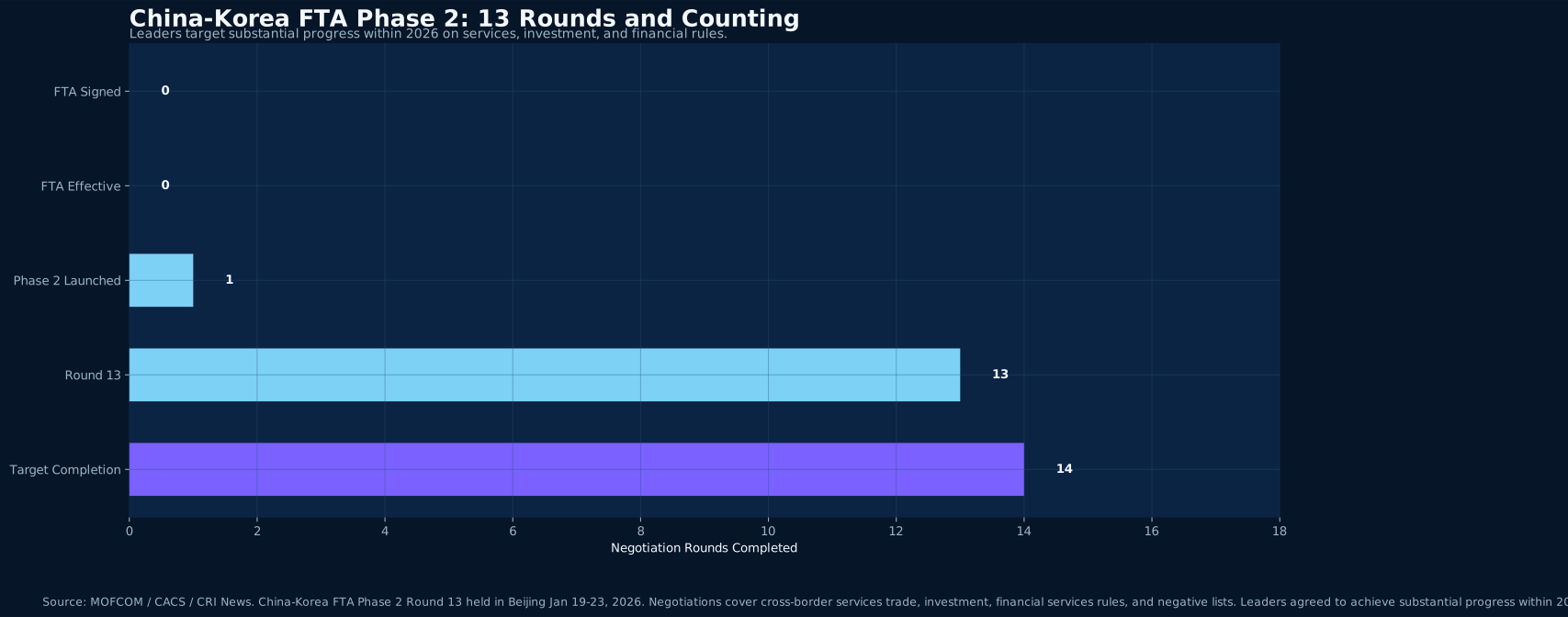
From January 19-23, 2026, the 13th round of China-Korea FTA Phase 2 negotiations was held in Beijing. Continuing the accelerating momentum of recent years, both sides conducted deep and constructive discussions on core topics including cross-border services trade, investment rules, financial services market access, and negative list management. China's Ministry of Commerce used the phrase 'positive progress achieved' in its post-negotiation briefing — in diplomatic language, this typically signals narrowing of gaps on key provisions.
The backdrop to this round is particularly notable. After Lee Jae-myung assumed Korea's presidency in 2025, China-Korea relations entered what observers call a 'year of comprehensive restoration.' Leaders on both sides have explicitly stated on multiple occasions the intent to 'accelerate FTA Phase 2 negotiations toward early substantial results.' The Ministry of Commerce also expressed willingness to 'jointly implement the important consensus reached by leaders of both countries.' This political momentum has elevated Phase 2 from 'technical consultations' to a 'strategic priority.'
2. Services Trade: The 'Weak Link' in a $300B Relationship
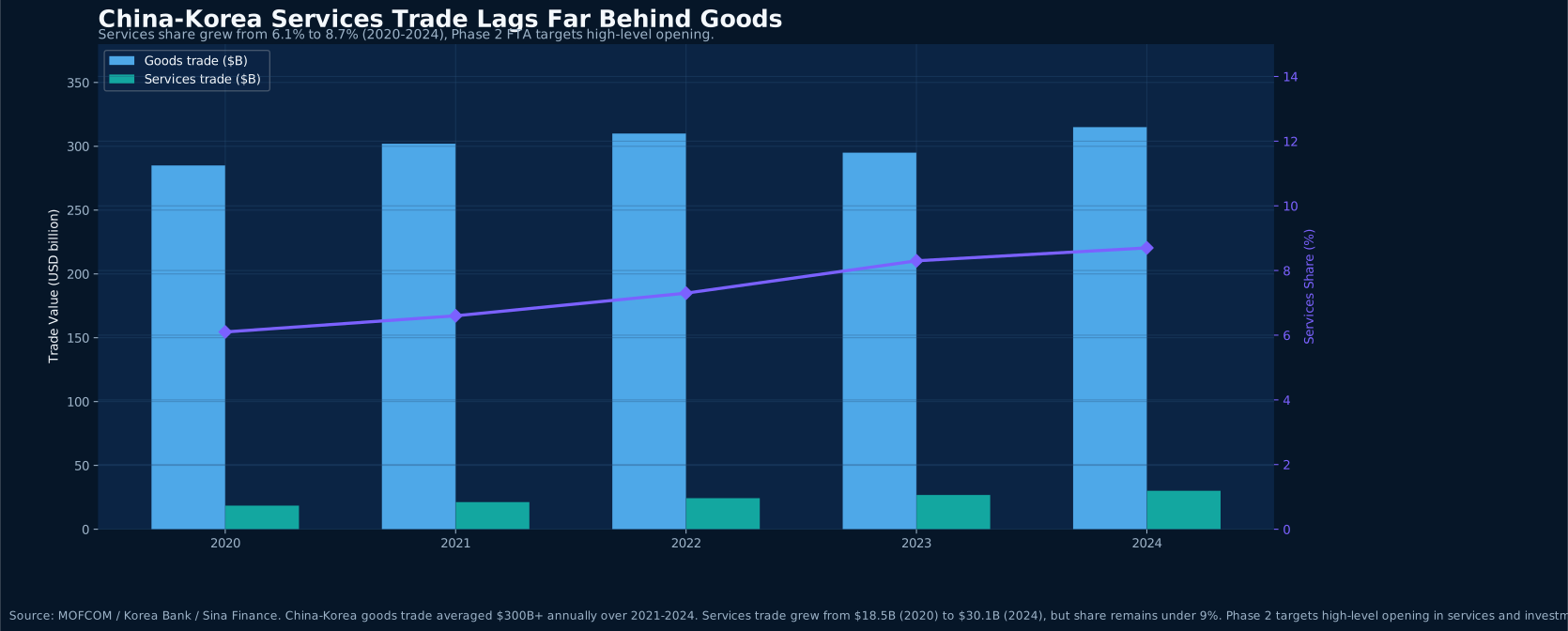
Understanding Phase 2's importance requires first recognizing the structural imbalance in China-Korea trade. From 2021 to 2024, bilateral goods trade averaged over $300 billion annually — China has been Korea's largest trading partner for 20 consecutive years. Yet services trade presents a stark contrast. In 2020, China-Korea services trade was just $18.5 billion; by 2024 it grew to $30.1 billion — impressive growth (12.9% annual average) but still accounting for less than 9% of total bilateral trade.
For comparison, services trade accounts for 25% of US-Korea and 18% of Japan-Korea bilateral trade totals respectively. Multiple factors explain the low China-Korea services ratio: Phase 1 FTA focused primarily on goods tariff concessions with limited services opening commitments; market access barriers remain high in financial, telecom, and legal services; cultural industry cooperation was disrupted by policy factors like the 'Hallyu ban' in recent years. Phase 2 negotiations aim to break through these bottlenecks.
3. Core Negotiation Topics: Negative Lists and Financial Opening
The core of Phase 2 is introducing 'negative list' management. Unlike Phase 1's 'positive list' approach (opening only explicitly listed sectors), a negative list means 'everything is open except restrictions on the list.' This model will dramatically expand the scope of services trade and investment liberalization. Both sides are currently negotiating specific negative list items line by line, covering sensitive areas including financial services, cross-border data flows, and mutual recognition of professional service qualifications.
Financial services is one of the most closely watched negotiation areas. Korea wants China to further open banking, insurance, and securities market access, allowing Korean financial institutions to establish more branches and expand business scope in China. China hopes Korea will provide more facilitation in RMB cross-border settlement and digital currency cooperation. Additionally, cross-border data flows and digital services trade have become new negotiation focal points — as China-Korea e-commerce, cloud computing, and AI cooperation deepens, rules governing cross-border data transmission become increasingly critical.
4. Culture, Tourism, Legal: Three Sectors to Benefit from Services Opening
Korea's Economic Minister at the embassy in China has explicitly expressed hope to extend FTA cooperation from goods trade to 'culture, tourism, legal, and other service sectors.' On cultural industries, 2025 China-Korea tourism flows have recovered strongly — 5.79 million Chinese tourists visited Korea (28.1% of Korea's inbound tourists), while 3.16 million Koreans visited China. Services trade opening is expected to further lower market access barriers for cultural enterprises in both countries, deepening cooperation in co-productions, talent management, and game joint operations.
Legal services opening has the most direct impact on trade service firms. Currently, Chinese law firms establishing branches in Korea and Korean firms practicing in China both face strict restrictions. If Phase 2 achieves breakthroughs in legal services qualification mutual recognition, it will greatly facilitate cross-border business activities for China-Korea enterprises. For firms engaged in trade agency, compliance consulting, and IP protection services, legal services market opening will create significant business growth opportunities.
5. Outlook: Can 2026 Become the Breakthrough Year
The leaders' instruction to 'achieve substantial progress within the year' sets a clear timeline for Phase 2. Based on positive signals from Round 13, 2026 could indeed become the breakthrough year for China-Korea FTA Phase 2. However, challenges cannot be ignored. Line-by-line negative list negotiations require compromise in sensitive areas (especially finance, data, and professional services), typically the most time-consuming process. Additionally, global geopolitical uncertainty — particularly US trade policy direction and semiconductor export controls — could indirectly affect China-Korea negotiations.
For China-Korea trade practitioners, Phase 2 developments deserve close monitoring. If services trade opening achieves substantial breakthroughs, it will create new market access opportunities across logistics, finance, legal, culture, and digital services. Particularly for firms like MO-TEK International Trade that specialize in China-Korea trade services, FTA deepening means offering clients broader cross-border services — expanding from traditional goods import-export agency to compliance consulting, supply chain finance integration, and market access strategy development. China-Korea economic relations are transforming from 'goods-centric' to 'goods + services dual-engine,' and firms that capture this transformation window will gain first-mover advantage in the next decade. Author: Minghao, MO-TEK International Trade (Shanghai)