Toward 23 Million: The Electrification Wave Rolls On
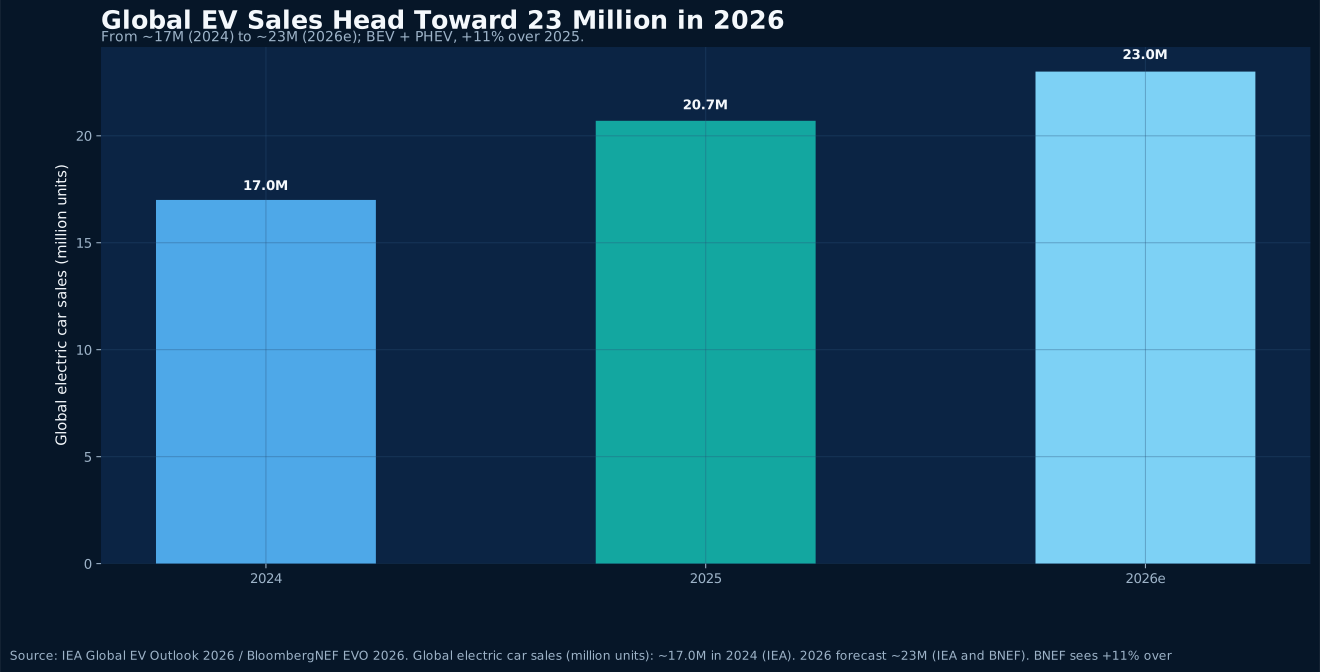
In 2026, the pace of automotive electrification has not slowed. In its latest Global EV Outlook 2026, the IEA expects full-year global EV sales of ~23 million units. Looking back: about 17 million EVs sold globally in 2024, more in 2025, and ~23 million within reach in 2026. In just two years, annual global EV sales have grown by roughly a third.
Behind the numbers is a structural shift from policy-driven to market-driven EV demand. With richer model choice, ever-better charging networks and falling battery costs, more consumers choose EVs on the basis of experience and total cost of ownership. Although markets move at different speeds, the global direction of electrification remains clear, and the ~23 million-unit scale anchors the supply-chain demand that comes with it.
IEA and BNEF Agree: Penetration Nears 30%
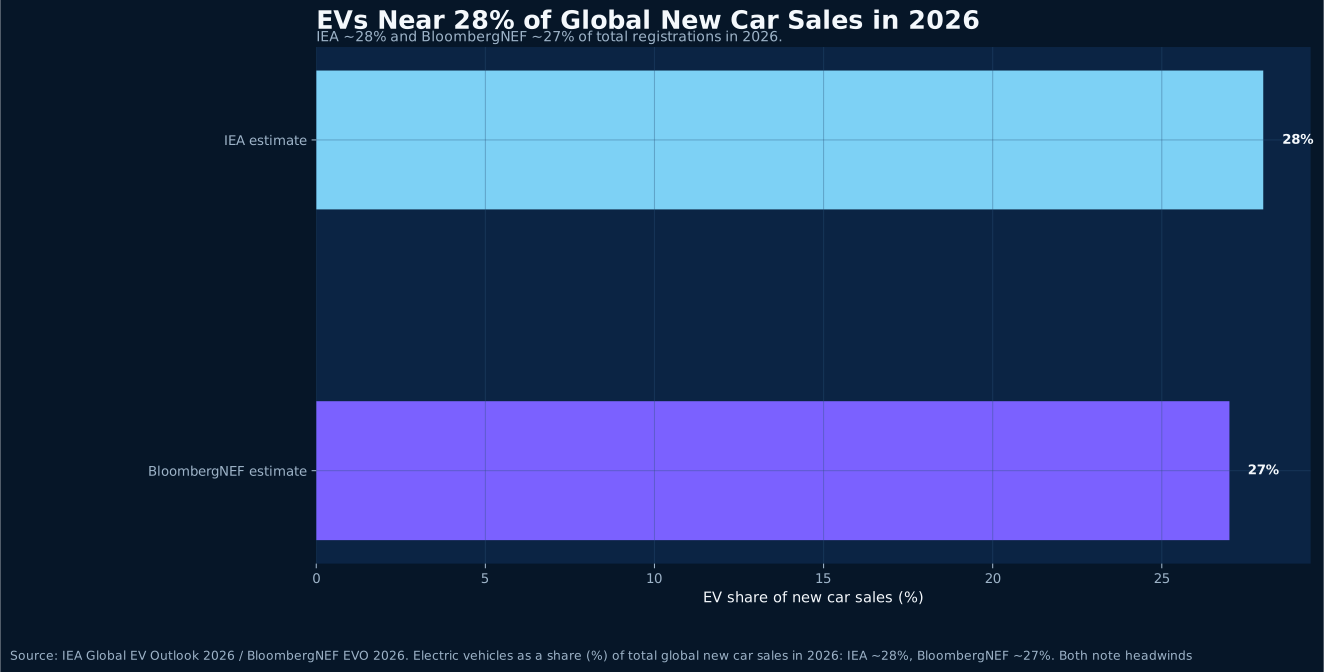
On sales forecasts, the IEA and BloombergNEF are in rare close agreement. The IEA expects EVs at ~28% of global new-car sales in 2026; BNEF sees ~23 million units, up ~11% YoY, implying ~27% penetration. Two houses reaching nearly identical conclusions via different methodologies strengthens confidence in the call: for roughly every four new cars sold worldwide, more than one is electric.
Penetration nearing 30% is a milestone signal. It means EVs are no longer niche but entering a decisive mainstream phase. As a rule, once a new technology's penetration breaks through a critical band, subsequent diffusion tends to accelerate. The message for the auto and component supply chain: demand tied to electrification—batteries, e-drives, power electronics, thermal management and charging infrastructure—should keep growing structurally over the next several years.
Regional Divergence: China and the US Slow, Emerging Markets Step In
Even as the global total keeps hitting records, regions are clearly diverging. Both BNEF and the IEA note that in Q1 2026 the two largest EV markets—China and the US—saw slower growth. In China, a high base and tapering subsidies naturally cooled the pace; in the US, a shifting policy environment and consumer wait-and-see sentiment pressured sales. The deceleration of these two mature markets has sparked debate about the cadence of global electrification.
Yet the baton of global growth is being passed. Emerging markets across Southeast Asia, Latin America and the Middle East—armed with more affordable models (many from Chinese makers) and steadily improving infrastructure—are becoming new sources of incremental demand. At the same time, fast PHEV growth in some markets supports the overall total. This shift from a single engine to multiple drivers makes the basis of global electrification more diversified and resilient.
Supply-Chain and Sourcing Implications: Wide Opportunity Beyond Batteries
EV sales heading toward 23 million imply sustained, massive component demand across the global supply chain. Beyond the highest-cost item—the traction battery—e-drive systems, power electronics, on-board chargers, thermal-management parts, connectors, wiring harnesses, and charging piles and ancillary equipment all rise with volume. As the world's largest EV producer and exporter, China holds scale and cost advantages across most links of this chain.
For overseas buyers and trade partners, electrification is an opportunity in finished-vehicle imports and in the component and aftermarket supply chain alike. As emerging-market demand rises, sourcing needs grow for value-for-money EV models, battery accessories, charging equipment and repair parts. A partner like MO-TEK can connect overseas customers with Chinese suppliers, lowering barriers across model selection, compliance certification, logistics and after-sales support—capturing sourcing opportunities in the global electrification wave.
Outlook: Steady Growth After the Tipping Point
Taken together, the 2026 global EV market shows the marks of a maturing phase: totals keep hitting records, but growth moderates from early explosiveness toward a more sustainable range, while the regional mix grows more diverse. Roughly 23 million units and penetration near 30% mark electrification firmly past the tipping point and into a long mainstream channel. Short-term regional swings do not change this long-term trend.
For the supply chain and buyers, grasping this phase matters: growth is no longer evenly spread but concentrates in specific markets, models and links. Positioning along these structural opportunities—watching emerging-market demand, hybrid growth and component sourcing windows—is how to benefit steadily in the second half of global electrification. By Minghao, Shanghai MO-TEK International Trade (MO-TEK).