Sodium-Ion's Second Chance
Sodium-ion is not a new concept—it began almost alongside lithium-ion but was long shelved as lithium surged. Now the picture is reversing. Volatile lithium prices, highly concentrated supply geographies, and the extreme cost sensitivity of energy storage and low-speed EVs have restored the value of sodium-ion's inherent advantages: cheap, safe, cold-tolerant and abundant in raw materials. 2026 is widely seen as the pivotal moment when sodium-ion moves from demonstration to scale.
Technical progress deserves credit too. Third-generation products have markedly improved energy density and cycle life—BYD disclosed its sodium cells have entered a third-generation platform with a maximum cycle life up to 10,000 cycles. While energy density still trails mainstream lithium, for stationary storage and short-range mobility that fear cold, demand cheapness and value safety, sodium-ion's overall cost-performance is approaching a commercially viable tipping point.
A 400 GWh Capacity Blueprint
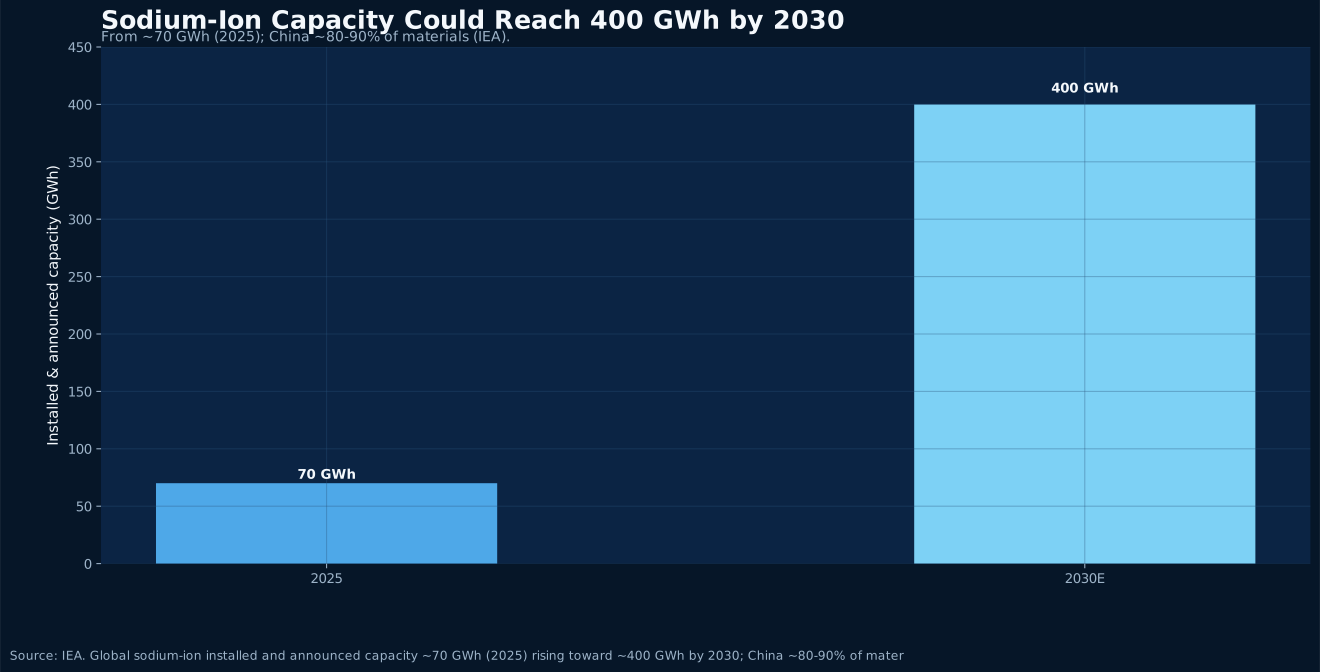
The capacity curve is unusually steep. According to the IEA, global installed and announced sodium-ion capacity could climb from about 70 GWh in 2025 to roughly 400 GWh by 2030—nearly a sixfold rise in five years. This ramp is no castle in the air: it rests on more than $20B of announced investment and hundreds of GWh of planned cell and cathode-material capacity.
Notably, capacity is geographically concentrated. China holds roughly 80-90% of sodium-ion material capacity, forming a complete domestic chain from cathode and anode (hard carbon) to electrolyte. This confers scale and cost advantages but also seeds supply-concentration risk—for overseas buyers, capturing China's cost dividend while building diversified sources will be a core question for years to come.
A $2 Billion Market and the Cost Tipping Point
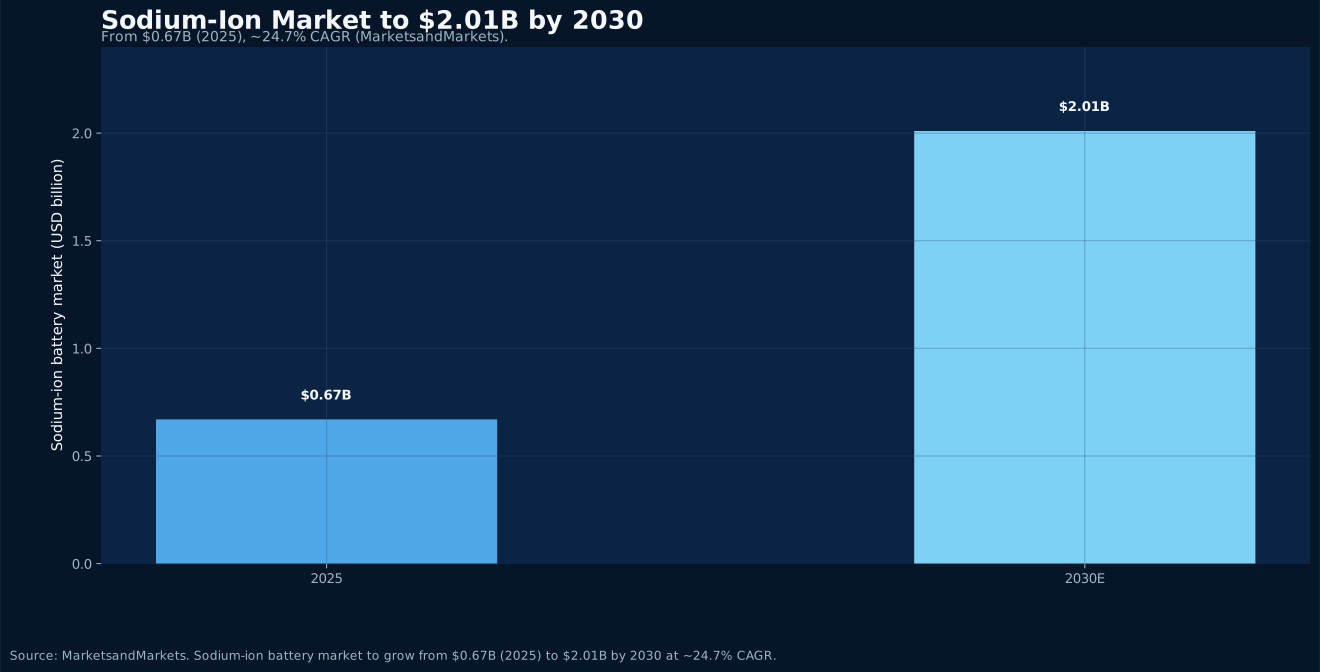
By market value, sodium-ion is still a small-but-fast arena. MarketsandMarkets projects the global sodium-ion battery market will grow from about $0.67B in 2025 to roughly $2.01B by 2030—nearly tripling in five years at a ~24.7% CAGR. That pace far exceeds the mature lithium market, reflecting an industry on the eve of a zero-to-one breakout.
What sets this arena's ceiling is when the cost tipping point arrives. The industry broadly expects that as CATL's Naxtra brand and BYD's 30 GWh Xuzhou lines reach full output, sodium-ion could approach roughly $40/kWh at the cell level around 2027—well below today's mainstream lithium. Once scale cements that cost edge, storage, two-wheelers, start-stop power and even entry-level EVs could become breakout channels for sodium-ion penetration.
Where the Applications Diverge
Sodium-ion will not—and need not—replace lithium-ion; the two are more like complementary champions. Lithium, with high energy density, will keep leading range-sensitive premium EVs and consumer electronics; sodium will shine where cost matters and mileage less so: grid and commercial-industrial storage, telecom backup, low-speed and micro EVs, and cold-region starter power. The battle of chemistries is giving way to a division by use case.
For stationary storage, sodium-ion's cold performance and safety are especially attractive: it retains high capacity even at −20 to −30°C with lower thermal-runaway risk, fitting grid peak-shaving and renewable-storage needs in northern and high-latitude regions. As global storage installations keep growing strongly, this segment alone could support sodium-ion's first wave of scaled volume.
MO-TEK's Observations and Advice
For the Chinese-Korean trading and manufacturing clients MO-TEK serves, sodium-ion's scale-up is an early-but-certain window. Storage-system integrators, two-wheeler and micro-vehicle makers, and portable-power and backup vendors should put sodium-ion on their selection lists—it may not immediately replace existing solutions, but it offers differentiated competitiveness on cost, safety and cold performance. Building supplier relationships and technical understanding early is key to seizing the lead.
At the same time, we urge clients to face the reality of supply concentration. China's absolute dominance upstream is both a cost dividend and a single-source risk. The prudent approach is three-pronged: leverage China's cost, plan diversified sources, and lock in long-term agreements. MO-TEK will keep tracking sodium-ion's cost curve and production progress to help clients find the entry point best matched to their own cadence on this widening lane.