From Concept to Necessity: Why LDES Is Erupting in 2026
For the past decade, storage was almost synonymous with lithium-ion batteries, whose economic sweet spot is 2-to-4-hour peak shaving. But as wind and solar penetration climbs, grids no longer face merely hourly swings but multi-day windless, sunless stretches and seasonal mismatches. To turn renewables into dependable baseload, the industry must solve the long-duration problem — storing surplus power for 8, 24 or even more hours.
In 2026, multiple forces have pushed LDES into the spotlight. First, explosive AI data-center demand forces grids to seek steadier, dispatchable clean power. Second, policy mandates are firming up — the EU calls for roughly 200 GW of storage by 2030. Third, maturing technology and falling costs make multi-day options like iron-air and flow commercially viable for the first time. LDES is moving from slide decks to real tenders and orders.
The Numbers: A $17 Billion Decade-Long Runway
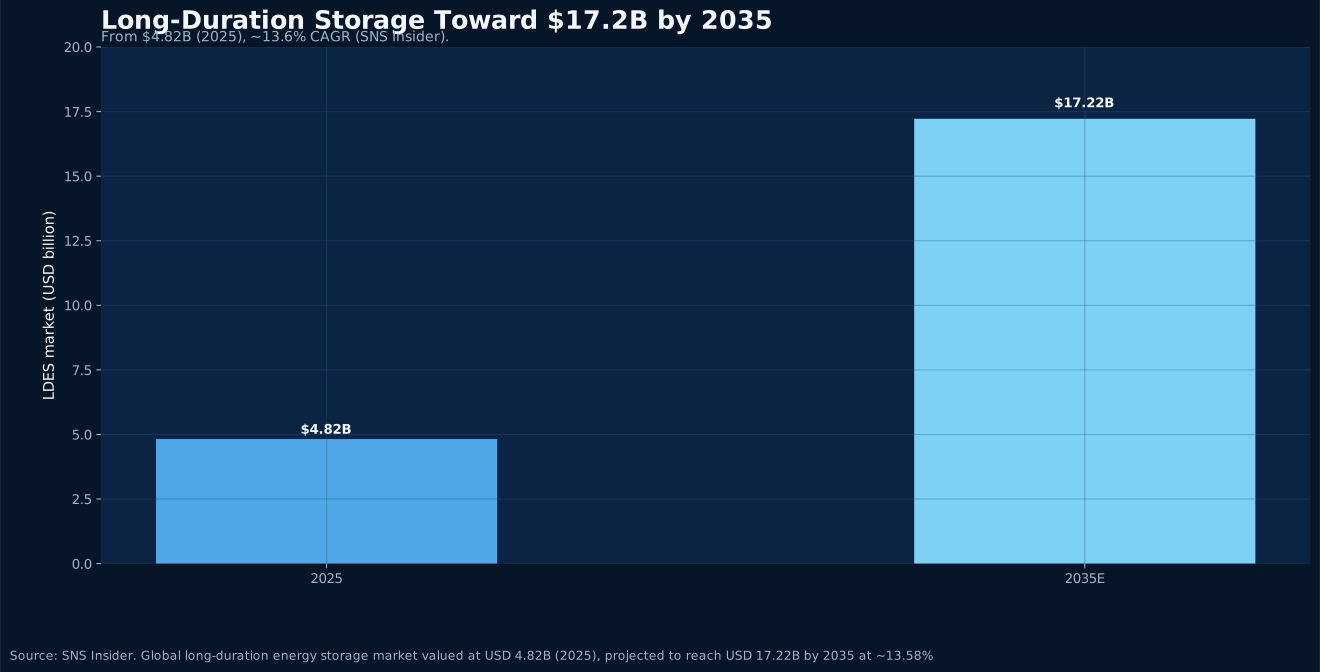
The market size confirms the trend. Per SNS Insider, the global LDES market was about $4.82B in 2025 and is projected to reach $17.22B by 2035 — more than 3.5x in a decade at ~13.6% CAGR. This growth is not linear but accelerates once renewable penetration crosses a tipping point: beyond a certain wind-and-solar share, the economic value of long-duration storage magnifies exponentially.
Notably, estimates vary widely across research firms — precisely because the industry is still early and definitions are not yet standardized. But whatever the methodology, the conclusion is consistent: LDES is a high-certainty, steadily growing long-runway market. For manufacturing and trade players, early positioning means seizing first-mover advantage in standards, supply chains and customer relationships.
Technology Routes: Iron-Air, Flow and Compressed Air Compete
LDES has no single winner; multiple technology routes run in parallel. Iron-air batteries use iron, water and air — extremely cheap and suited to multi-day storage, with Form Energy already in commercial delivery. Flow batteries (vanadium, iron-based) offer long cycle life and deep discharge, fitting 4-to-12-hour use cases. Compressed-air and gravity storage target large-scale, long-cycle grid applications. Each route seeks its economic optimum in a specific duration and scenario.
This diversity is good news for the supply chain: it means multiple growth entry points across upstream materials, electrolytes, tanks and power electronics. China's supply chain holds clear cost and scale advantages in iron-based materials, tank manufacturing, BMS and PCS, while Korea has strengths in battery management, system integration and overseas project experience. The parallel-route landscape leaves room precisely for Chinese-Korean division of labor and collaboration.
AI Data Centers: LDES's Most Unexpected New Buyer
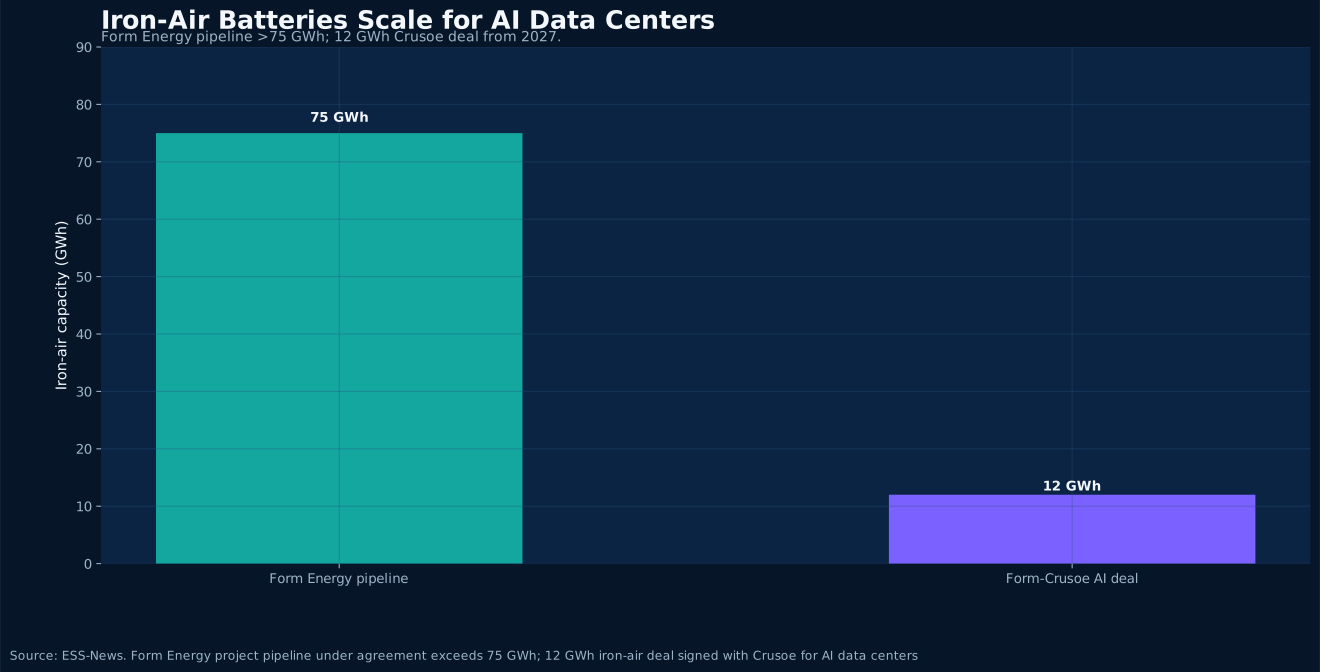
The most emblematic signal of 2026 comes from an unexpected direction: AI data centers. Per ESS-News, iron-air leader Form Energy's contracted pipeline now exceeds 75 GWh, including a 12 GWh partnership with AI-infrastructure developer Crusoe, delivering from 2027. AI data centers need round-the-clock, ideally clean power, and grid volatility plus renewable intermittency make long-duration storage the crucial power buffer.
The deeper meaning: LDES demand is expanding from traditional utilities to deep-pocketed, fast-expanding tech giants. The flood of AI capex injects new, relatively price-insensitive, high-quality orders into the storage industry. For upstream suppliers, that means steadier production schedules, longer contract cycles and higher premium headroom — a new storage cycle, indirectly pulled by AI compute, is beginning.
China-Korea Supply Chain: Opportunities from MO-TEK's Vantage
From the China-Korea trade angle, the scale-up of LDES brings a triple opportunity. First, China holds a complete, cost-effective supply chain in iron, vanadium, tanks, structural parts and power electronics, able to supply key components to global LDES projects. Second, Korean power and renewable firms bring rich overseas EPC and system-integration experience, making them important partners for Chinese components going global. Third, the two sides can deepen collaboration on standards alignment, mutual certification and joint bidding.
For a trade-service firm like MO-TEK, the key is to identify next-generation storage projects' specific component-spec needs early, master certification timing and delivery cycles, and help quality Chinese suppliers connect with Korean and global buyers. LDES is not a sprint but a marathon that rewards patience and foresight — today's technology choices and partnerships will decide who has a seat at the table over the next decade.