From Drug to Phenomenon: The GLP-1 Market Explosion
GLP-1 receptor agonists began as diabetes therapies, but when semaglutide (Wegovy, Ozempic) and tirzepatide (Mounjaro, Zepbound) showed striking efficacy for weight loss, they rapidly moved from endocrinology to the mass market, becoming rare blockbuster phenomena in pharmaceutical history. Demand ran so hot that the world briefly saw shortages and patients queuing.
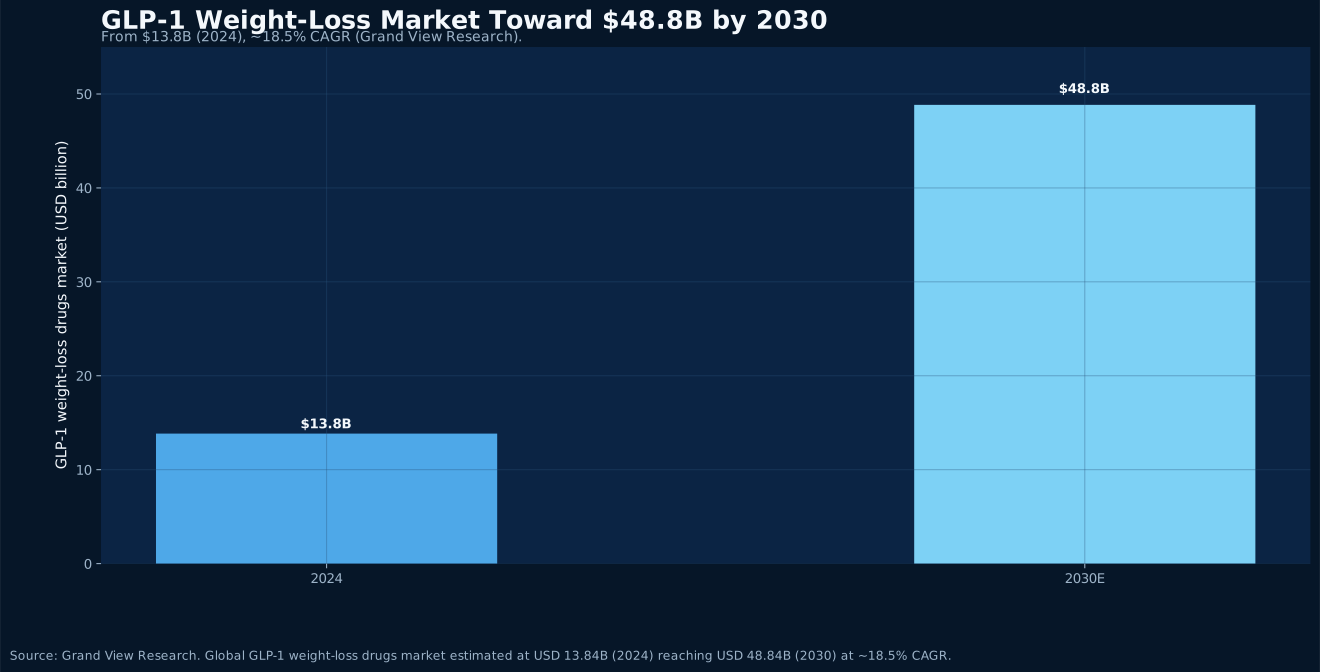
The market-size figures confirm the explosion. Per Grand View Research, the global GLP-1 weight-loss market will grow from ~$13.8B in 2024 to ~$48.8B in 2030 — more than 3.5x in six years at a ~18.5% CAGR. North America dominates, with over 70% share in 2024; and as oral formulations and next-generation dual- and triple-agonist drugs advance, the ceiling on growth keeps rising.
The Duopoly: Lilly vs. Novo Nordisk
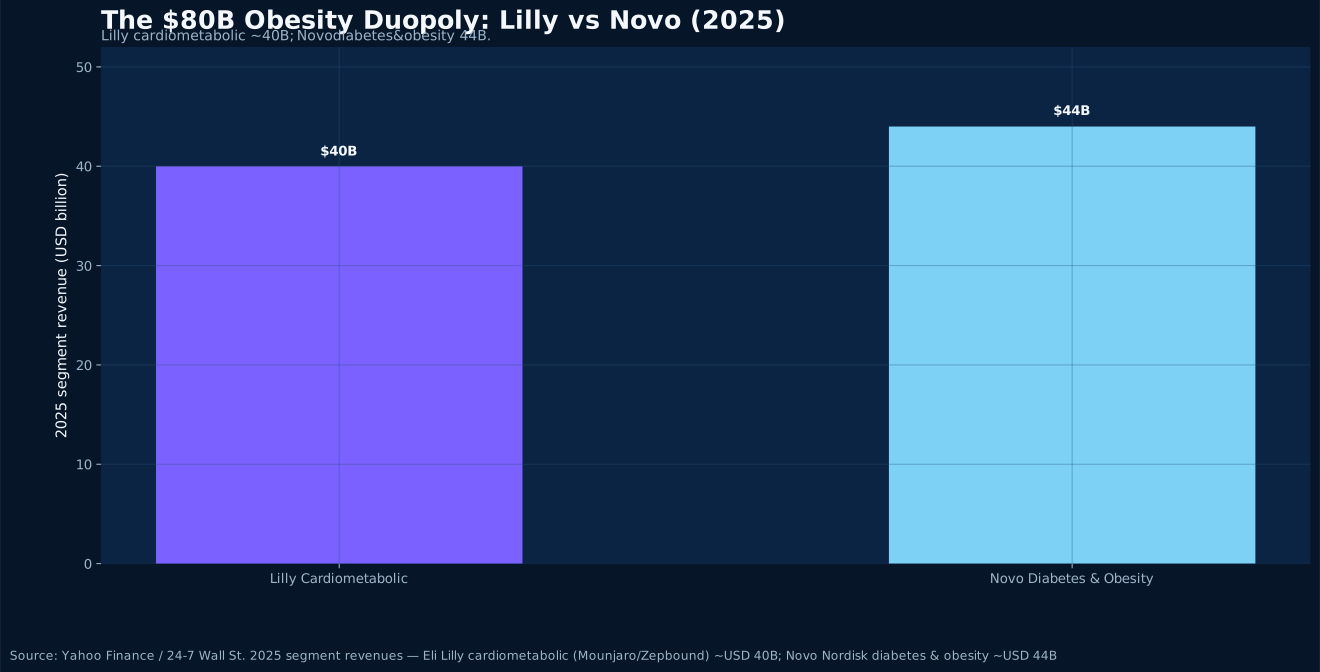
The market is currently dominated by two companies: America's Eli Lilly and Denmark's Novo Nordisk. In 2025, Lilly's cardiometabolic unit — covering Mounjaro and Zepbound — brought in nearly $40B, while Novo Nordisk's diabetes and obesity segment reached about $44B. Together, annual revenue in this single niche exceeds $80B, forming a genuine obesity-drug duopoly.
Notably, the balance of competition is shifting subtly. Analysts broadly believe Lilly, with stronger clinical data, faster capacity expansion and wider distribution, is gradually widening its lead; Novo Nordisk in 2026 faces the combined challenges of U.S. pricing pressure, patent expiries and a relative capacity disadvantage. It is a reminder that in a supply-constrained market, whoever can turn capacity into product faster and more reliably holds the upper hand.
Capacity Is King: A Tens-of-Billions Arms Race
If pharma competition once hinged on R&D pipelines, in the GLP-1 era the core has clearly shifted to capacity. Lilly has publicly committed over $50B in U.S. capital expenditure, building new plants in Alabama and Pennsylvania; it plans to invest about $3B in Katwijk, Netherlands for oral-drug capacity, and over $1B with contract-manufacturing partners in India. It is an arms race trading capital for market share.
The difficulty of capacity expansion lies not just in building plants but in coordinating the whole chain of sterile injectable fill-finish, active pharmaceutical ingredient (API) synthesis and cold-chain logistics. GLP-1 drugs are mostly peptides with complex synthesis and exacting quality requirements; a bottleneck anywhere propagates to end supply. That is why leading firms invest upfront over multi-year horizons at a tens-of-billions scale — because in this market, capacity itself is the moat.
China–Korea Opportunity: The CDMO, Raw-Material and Device Window
In this capacity arms race, Asian supply chains are gaining a rare support role. Lilly's investment in Indian contract manufacturers signals that multinationals are outsourcing part of capacity to Asian CDMO (contract development and manufacturing) partners. China's manufacturing capabilities in peptide APIs, syringes and prefilled pen injectors, and packaging consumables, together with Korea's strengths in biologics and precision medical devices, could all become parts of the global GLP-1 supply chain.
MO-TEK's read is that as patents expire and biosimilars and oral formulations advance, the GLP-1 supply chain will move from single-originator dominance toward multi-tier division of labor, opening a wider window for Asian suppliers. For manufacturing and trade firms looking to enter, connecting early with the compliance systems of multinationals and CDMOs (GMP certification, audit requirements) is the prerequisite for turning the industry dividend into actual orders.
A Pragmatic Read and Risk Notes
It bears noting that the GLP-1 market's high growth carries risks that cannot be ignored: ongoing drug-pricing and reimbursement-negotiation pressure in major markets like the U.S. may compress margins; the influx of generics and biosimilars after patent expiry will reshape competition; and clinical questions around long-term safety, adherence and post-discontinuation weight regain remain under observation. The ceiling is high, but the road is not smooth.
For trade and manufacturing firms, the rational approach is not to bet on a single drug or company but to understand this globalizing supply chain and find opportunities in the relatively stable support links — raw materials, devices, packaging and logistics. When a market's annual revenue runs into the tens of billions, being even one link in its supply chain can sustain a substantial business. Steady participation beats chasing hype.
Outlook: A Decade-Long Track Still Expanding
Taking the long view, GLP-1 is only the opening of a metabolic-disease drug revolution. As indications expand from weight loss and diabetes toward cardiovascular disease, chronic kidney disease, sleep apnea and even neurodegenerative conditions, and as dosing evolves through oral, weekly and monthly formulations, the ceiling of this track keeps rising. Several firms' longer-term forecasts already point to the hundreds-of-billions level, meaning demand for capacity build-out and supply-chain support will persist for years.
For China–Korea supply-chain players, the key is not to predict which drug will win, but to understand which links along the value chain are stable, participable and accessible in threshold. API intermediates, injection and delivery devices, precision packaging, cold-chain logistics — the certainty of these support links is often higher than end-drug competition itself. MO-TEK will keep tracking multinationals' and CDMOs' capacity plans and compliance requirements, helping clients find pragmatic, sustainable entry points in this decade-long capacity race and turn a global health trend into steady business growth.