1. A Staggering Number: What a 64× Gap Really Means
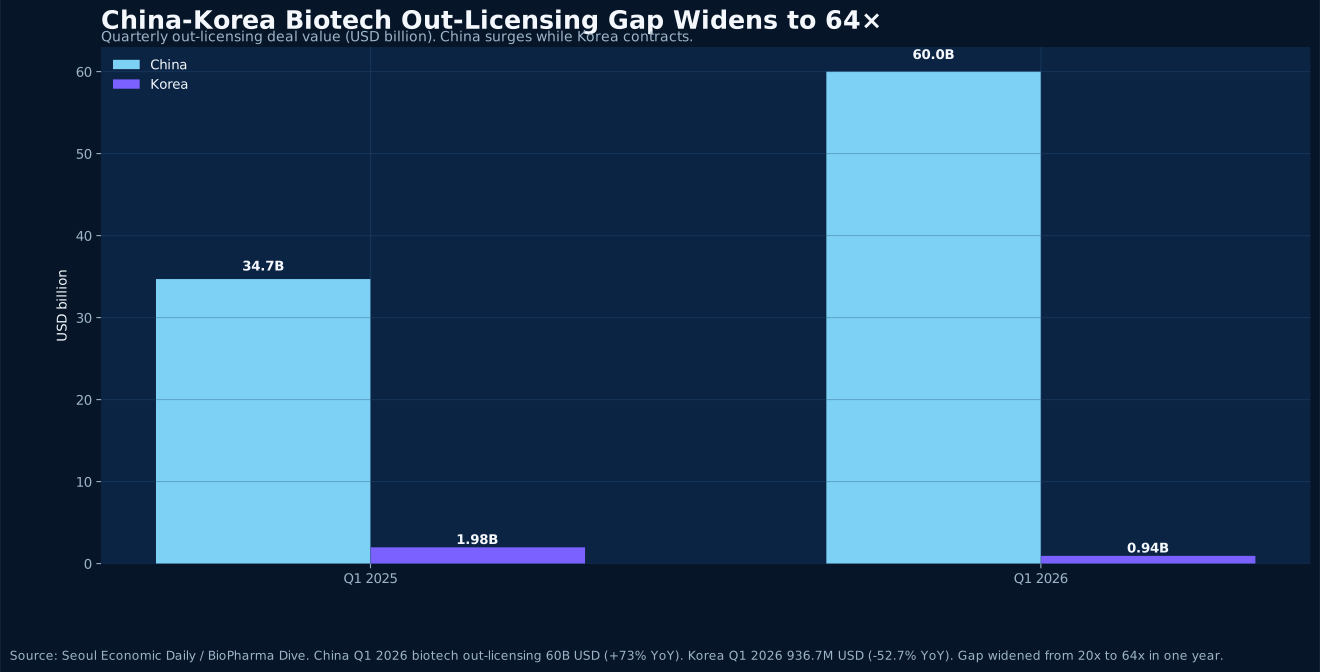
When Q1 2026 biotech technology export data was released, it sent shockwaves through the Korean industry. According to the Seoul Economic Daily, Chinese biotech companies signed out-licensing contracts totaling USD 60 billion in Q1 2026, up 73% YoY and setting a new all-time record. This figure represents 44% of China’s full-year 2025 deal value, essentially achieving nearly half of the previous year’s total in just three months. In stark contrast, Korea’s technology export contracts in the same period amounted to just USD 937 million, plunging 52.7% YoY and hitting a five-year low.
This means the biotech technology export gap between China and Korea has widened dramatically from roughly 20× a year ago to approximately 64×. The gap is not widening slowly — it is accelerating. For observers tracking China-Korea technology trade, this figure’s significance extends far beyond the biotech sector itself — it reflects a systemic divergence in innovative drug R&D investment, industrialization efficiency, and global commercial network expansion capabilities that is rapidly materializing.
2. China’s Innovative Drug Breakthrough: From Imitation to Leadership
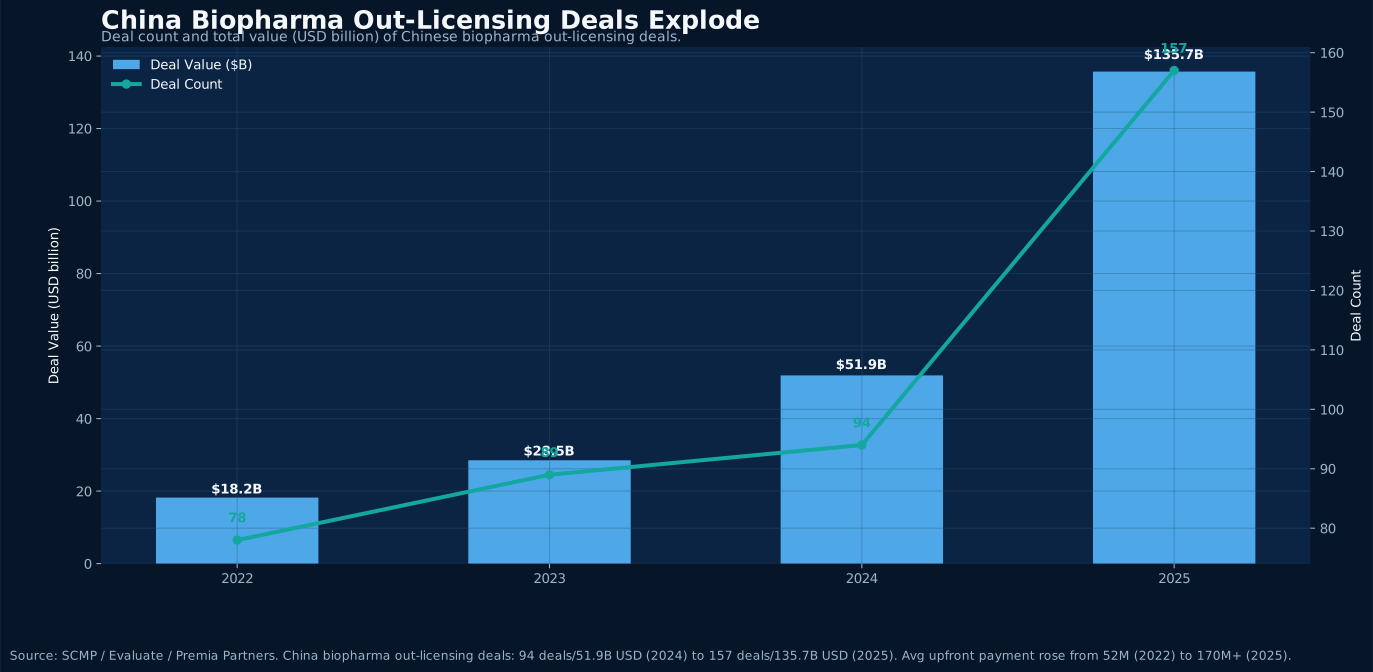
China’s biopharma rise did not happen overnight, but its acceleration is remarkable. In 2022, Chinese biopharma out-licensing deals totaled 78 transactions worth approximately USD 18.2 billion; by 2024, this grew to 94 deals / USD 51.9 billion; in 2025, it surged to 157 deals / USD 135.7 billion. In three years, deal value grew nearly 6.5×. Even more noteworthy is the improvement in deal quality: average non-refundable upfront payments rose from USD 52 million in 2022 to over USD 170 million in 2025, more than tripling. This signals that global pharma giants’ confidence in China’s innovative drug pipeline has shifted from exploratory cooperation to strategic commitment.
Several landmark deals in early 2026 further reshaped industry perceptions. CSPC Pharmaceutical signed an USD 18.5 billion obesity drug out-licensing deal with AstraZeneca, and Innovent Biologics reached an USD 8.5 billion co-development agreement with Eli Lilly for oncology and immunotherapy. Such figures would have been unimaginable for Chinese drugmakers five years ago. A consensus is forming across the global pharma industry: China is no longer a source of cheap generics but one of the world’s core innovative drug pipeline suppliers. About one-third of global pharma’s licensing spend in 2025 went to China-sourced drugs, and this share continues to rise.
3. Why Korean Biotech Has Fallen into a Trough
The Korean biotech sector is not without strength. In 2024, Korea’s bio-health technology exports reached a record 21 trillion KRW, with projections of USD 30.4 billion for 2025. However, structural issues in technology exports are surfacing. Korea maintains global leadership in biosimilars, but in first-in-class innovative drug development, the gap with China in pipeline depth and deal quality is widening rapidly. Korea’s Q1 2026 technology exports plunged 52.7% YoY, partly because it lacks breakthrough pipelines capable of attracting large upfront payments from global pharma companies.
The deeper causes lie in differences in R&D investment and industrial ecosystems. China has steadily increased innovative drug R&D spending in recent years, with NMPA approving 48 first-in-class drugs in 2024 alone, a five-year high. In comparison, Korea’s innovative drug R&D remains concentrated in a few large enterprises, while small and mid-sized biotech companies face bottlenecks in funding environments and clinical trial infrastructure. A widespread concern in the Korean industry is that without breakthroughs in innovative drug pipelines, the gap with China could widen to over 100×.
4. Practical Implications for China-Korea Pharmaceutical Trade
China’s leap in innovative drug capabilities is changing the traditional China-Korea pharmaceutical trade landscape. Previously, bilateral pharmaceutical trade centered on active pharmaceutical ingredients (APIs) and intermediates, with China playing an upstream raw-material supplier role. But as Chinese drugmakers achieve global breakthroughs in innovative drugs, trade structure is evolving toward higher value-added activities. Chinese pharmaceutical companies are seeking partners in the Korean market, not just for distribution channels but to leverage Korea’s clinical trial management and Asia-Pacific market-access expertise.
For Korean companies, this presents both challenges and opportunities. The challenge is that Korea is being rapidly overtaken by China in innovative drug exports, requiring a re-examination of the traditional “Korea innovates, China manufactures” narrative. The opportunity lies in Korea’s potential to play a unique bridge role in China’s innovative drug globalization — Korea’s regulatory framework, clinical trial network, and Asia-Pacific distribution channels remain valuable for Chinese drugmakers entering markets like Japan and Southeast Asia. The China-Korea pharmaceutical cooperation model is shifting from one-way supply to two-way collaboration, creating new business space for trade service firms in both countries.
5. Korea’s Response Strategy and Industry Reflection
Facing the rapidly widening gap, the Korean government and industry are engaged in deep reflection and strategic adjustment. Korea’s Ministry of Trade, Industry and Energy has designated bio-health as a priority export-growth sector for 2026, and 86.1% of medical and biotech firms hold a positive outlook for 2026 exports. Korea’s core competitive advantages — world-leading biosimilar manufacturing, high GMP standards, and stable supply chains — remain valuable differentiating assets. The key question is how to accelerate innovative drug pipeline development while preserving existing strengths.
From a China-Korea trade perspective, the shifting balance of power in biopharma is redefining bilateral cooperation models. Korean companies are more actively seeking partnerships with Chinese innovative drugmakers, including licensing China-originated drugs for Korean commercialization and co-developing biologics for global markets. This cooperation trend represents a new direction for China-Korea trade service firms — pharmaceutical trade is evolving from traditional raw-material supply toward technology cooperation, market-access services, and co-development at a higher level. Author: Minghao, MO-TEK International Trade (Shanghai)