From Pilot to Commercial: Robotaxi Crosses the Tipping Point
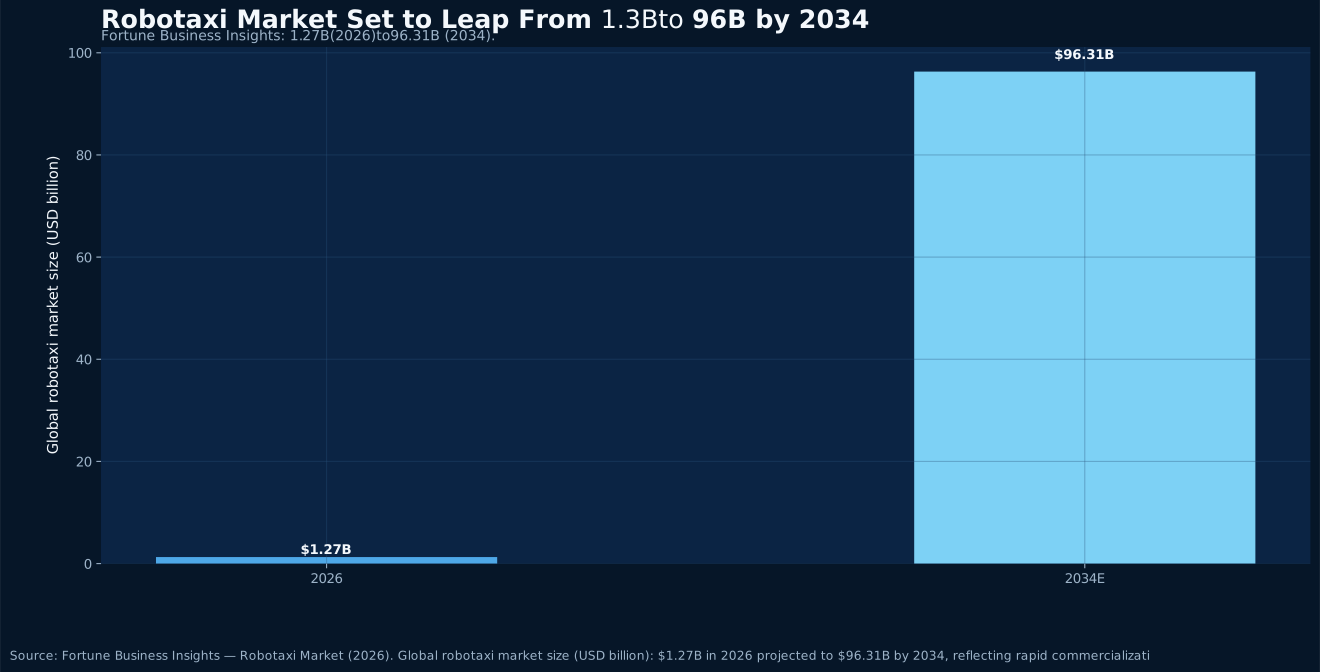
For a decade, robotaxis were the technology that was perpetually five years away. The 2026 numbers show the industry has genuinely crossed its commercial tipping point. Fortune Business Insights estimates the global robotaxi market will grow from about $1.27B in 2026 to roughly $96.31B by 2034, a CAGR near 74%. That pace outstrips most technology niches, reflecting simultaneous gains in fleet scale, the number of operating cities, and unit economics.
Three forces drive it. First, the falling cost of lidar, domain controllers and end-to-end AI models gives per-vehicle hardware real economies of scale. Second, leading operators have accumulated enough safe miles within defined zones to persuade regulators. Third, capital from ride-hailing platforms and automakers supplies the fuel for sustained expansion. Together these turn robotaxis from showcase projects into a replicable operating business.
Waymo Leads, but Its Moat Is Not Unassailable
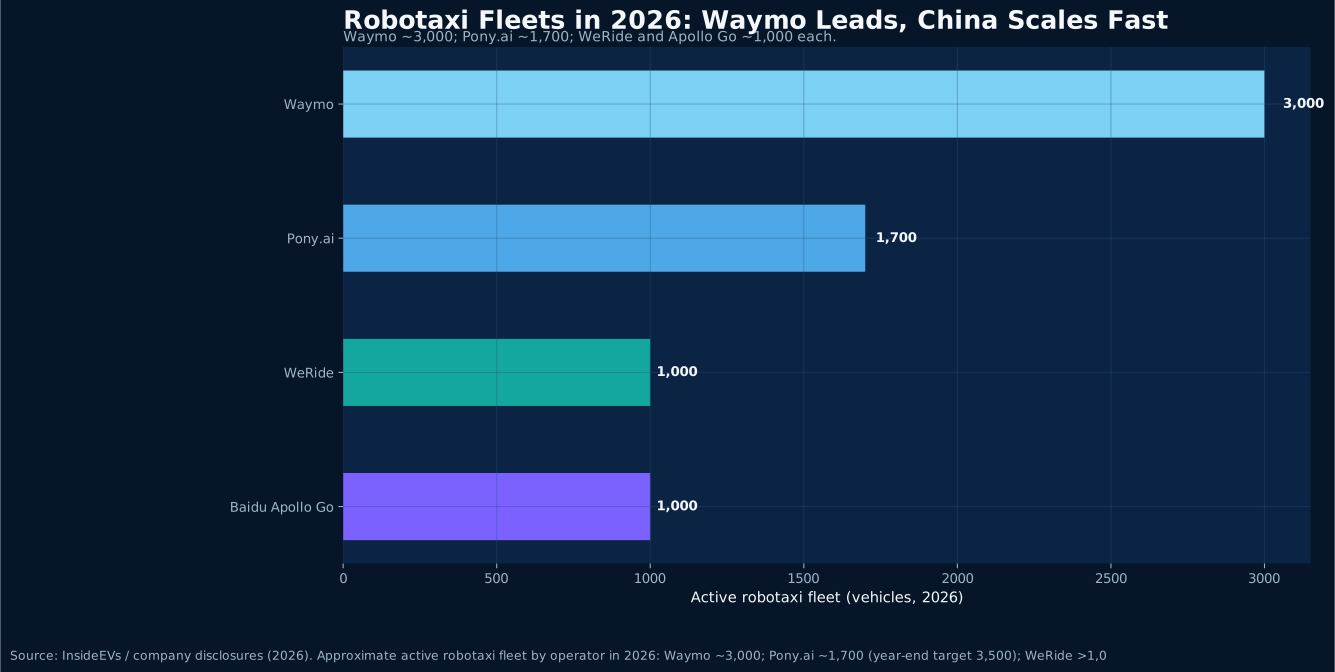
Globally, Waymo remains the most commercially mature player. As of mid-2026 its fleet is around 3,000 vehicles delivering roughly 500,000 rider-only paid trips per week across about ten U.S. cities, with cumulative rides exceeding 20 million. Waymo's edge lies in years of accumulated real-world data and a mature remote-assistance system—an operating moat that is hard to replicate quickly.
Yet the moat is not unassailable. Waymo's expansion is constrained by costly retrofit vehicles and a cautious city-rollout cadence, while Chinese and emerging players narrow the gap more aggressively. For the global supply chain, this means demand for sensors, compute platforms and vehicle integration will spread from a single giant to many operators—diversifying procurement and widening the customer base for component suppliers.
China Speed: Trading City Expansion for Scale
China's playbook trades expansion speed for scale. Pony.ai's fleet exceeds 1,700 vehicles and it raised its end-2026 target to 3,500, with weekly paid orders up about 119% year over year in May. Baidu Apollo Go covers 22 cities with over 1,000 vehicles and 17 million+ cumulative rides, while WeRide runs 1,000+ vehicles across 30-plus cities in 11 countries. Chinese players favor purpose-built mass production tied closely to automakers, lowering per-vehicle cost and enabling rapid rollout.
The trade-off is that per-vehicle safe-mileage is less deeply accumulated than Waymo's, but with policy support and a domestic supply chain, Chinese players focus on closing the operating loop. For China-Korea trade, China's mature supply chain for lidar, domain controllers and steer-by-wire chassis is becoming a key procurement source for global robotaxi operators—and an opening for Korean Tier-1 suppliers to collaborate and co-supply.
Going Overseas via the Middle East: A New Global Chessboard
One of 2026's most notable trends is that U.S. and Chinese players alike chose the Middle East as their first overseas stop. Baidu Apollo Go launched fully driverless service in Abu Dhabi early in the year and is targeting Dubai; WeRide already runs driverless in Abu Dhabi; Waymo and others are assessing the Gulf. With high fares, strong government push and relatively accommodating regulation, the region is an ideal proving ground for a global operating model.
For an international trade firm like MO-TEK, robotaxi globalization implies new supporting demand—from automotive-grade sensors and cleaning/maintenance equipment to charging and depot infrastructure. Operational rollouts in the Gulf and Southeast Asia will spawn a fresh supply chain around fleet operations and maintenance, where cross-border procurement and localized service increasingly intersect.
Outlook and Risks: A Marathon Even After the Tipping Point
Despite the steep growth curve, full robotaxi adoption remains a marathon. City-by-city regulatory approval, reliability in extreme weather and complex traffic, liability allocation in accidents, and the ethics and public acceptance of mixing with human drivers can all slow the pace. Capital markets stay cautious about when unit economics turn positive, and views differ on the timing of the profitability inflection.
Overall, 2026 marks the shift from whether robotaxis can run to how to scale them profitably. For China-Korea supply chains and traders, the key is not betting on a single operator but positioning in the pick-and-shovel layers—sensors, compute, maintenance and infrastructure. Whoever ultimately wins, that underlying demand will keep expanding.