Sourcing China for Korean Buyers

Tracks the channels, replenishment patterns, compliance signals, and buying behaviors that matter when Korean buyers source from China.

Topic Overview

Sourcing from China for Korean buyers is rarely only about finding a factory. It also depends on where demand signals appear first, which channels are replenishing faster, and how compliance expectations shape product selection.

This topic groups public news and market movement into a sourcing-oriented read. It is meant for buyers who want to understand channel rhythm and purchasing signals before going deep on individual SKUs.

Core Topic

China-Korea Trade Trends

A topic page for reading the direction of China-Korea trade through tariffs, FTA updates, policy changes, and export structure shifts.

Sourcing Watch

Sourcing China for Korean Buyers

Tracks the channels, replenishment patterns, compliance signals, and buying behaviors that matter when Korean buyers source from China.

Sector Cluster

Key Industry Watch

Groups sector-specific signals across glass, beauty, packaging, and retail where market shifts often connect directly to sourcing decisions.

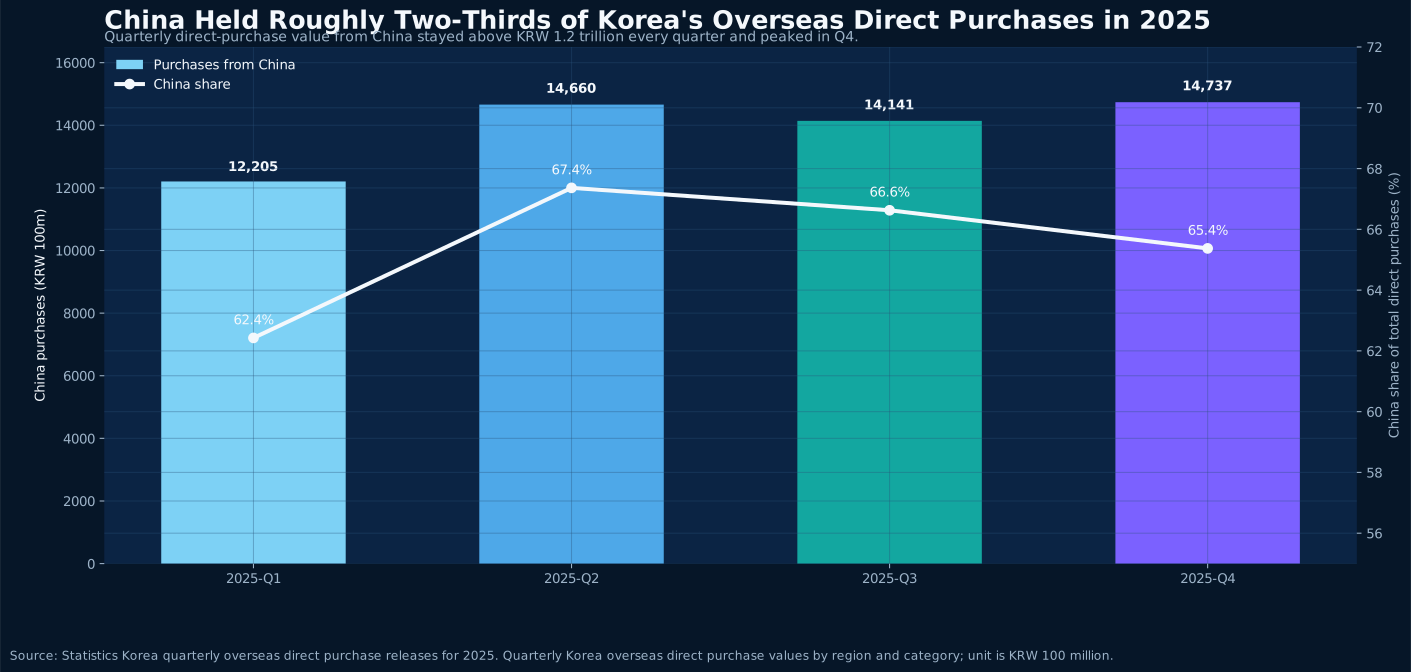
Official chart: Statistics Korea's 2025 direct-purchase data shows China staying above 60 percent of Korea's overseas direct-purchase mix in every quarter, indicating that Chinese platforms are not being treated as a temporary substitute.
Cross-Border Ecommerce Insight · 2026-04-05

Why Korean Consumers Keep Buying from China: 2025 Overseas Direct-Purchase Data Points to Replenishment Speed, Not Just Low Prices

Across all four quarters of 2025, Statistics Korea shows China remaining Korea's largest source of overseas direct purchases, climbing from KRW 1.2205 trillion in Q1 to KRW 1.4737 trillion in Q4. The more important signal is the stability of China's supply position across fashion, food, and daily-use categories.

Read Article
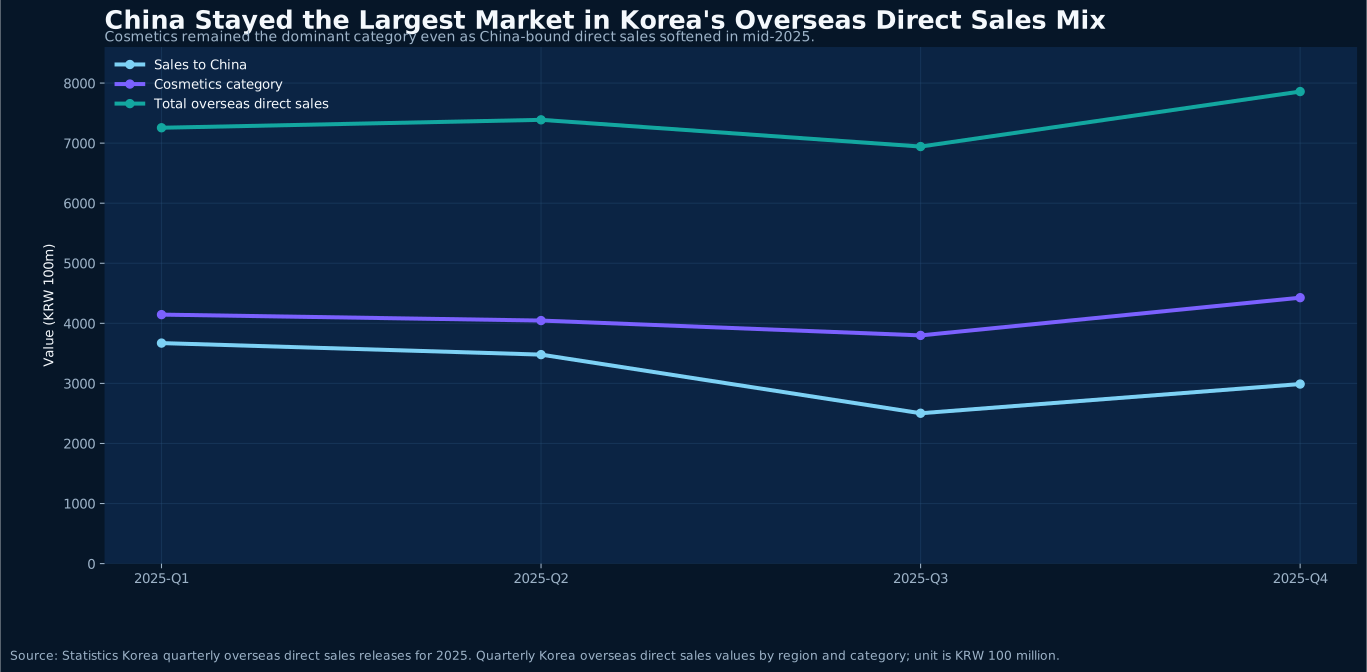
Official chart: Statistics Korea shows China remaining the No.1 destination for Korea's direct sales in every quarter of 2025, while cosmetics stayed the largest category throughout the year.
Beauty Export Insight · 2026-04-05

K-Beauty Sales to China Are Shifting from Traditional Distribution to D2C and Compliance Speed: What 2025 Direct-Sales Data Means for Packaging and Supply Chains

Statistics Korea's 2025 overseas direct-sales data kept China in the No.1 position across all four quarters, while Korean authorities simultaneously rolled out ecommerce HS-code support and new K-beauty export initiatives. For packaging, filling, warehousing, and brand-service operators, the real shift is that channel speed and compliance are now moving forward together.

Read Article
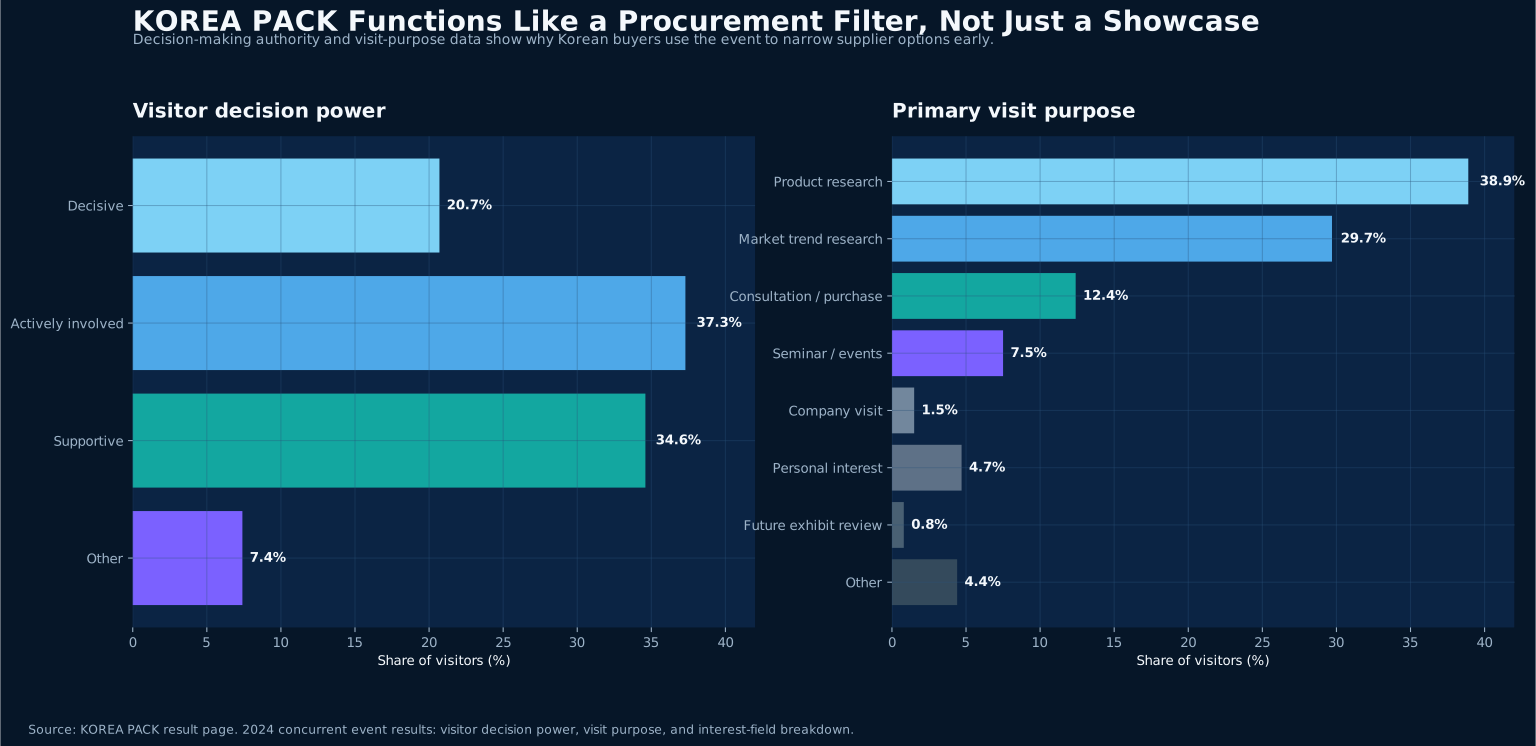
Official chart: KOREA PACK 2024 results show 20.7% decisive buyers and 37.3% active participants, with product research and market-trend scanning dominating visit purpose.
Exhibition & Channel Insight · 2026-04-05

KOREA PACK Is Selling More Than Booth Space: Why Korea’s Packaging Show Is Becoming an Early-Warning Channel for Korea-China Supply Chains

Many suppliers still treat major Korean packaging exhibitions as ordinary places to meet contacts, hand out brochures, and look at trends. The structure in KOREA PACK’s official results says something stronger. A combined 58.0% of visitors were decisive or actively involved in purchasing decisions, while 68.6% came primarily for product research or market-trend scanning. This makes the show less of a branding exercise and more of a concentrated window where Korean buyers screen the next round of supplier relationships.

Read Article
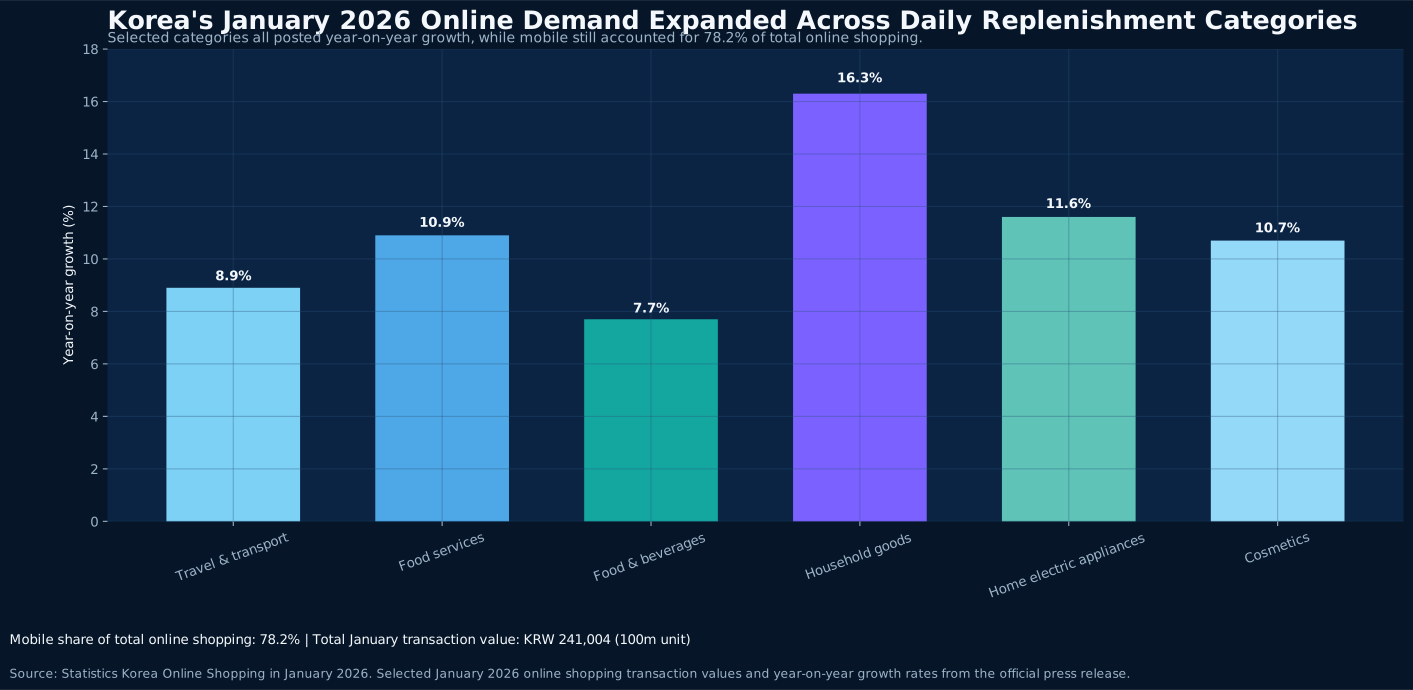
Official chart: Statistics Korea shows six selected online retail categories all posted year-on-year growth in January 2026, while mobile kept a 78.2% share of total transactions.
Retail & E-commerce Insight · 2026-04-05

Korea’s Online Demand Is Returning to a High-Frequency Replenishment Logic: Why January 2026 Matters for Korea-China Supply Timing

The signal in Statistics Korea’s January 2026 online shopping release is not a single breakout category. It is the simultaneous expansion of multiple high-frequency daily-use and service categories. Travel, food service, beverages, household goods, appliances, and cosmetics all moved higher year on year, while mobile still accounted for 78.2% of transactions. That suggests Korean platform demand is leaning less on isolated campaign spikes and more on faster, fragmented, replenishment-driven consumption.

Read Article
FAQ

Why do channel shifts matter for sourcing decisions?

Because channel movement often shows up before purchase orders do. Retail, ecommerce, and trade-show signals can reveal which specifications and delivery assumptions are becoming more relevant.

Can this topic help with supplier discovery too?

Yes. Once channel behavior is clearer, it becomes easier to screen factories by MOQ flexibility, lead time, packaging format, compliance support, and other fit criteria.

Which public sources are most useful here?

Trade-show summaries, official platform releases, distributor reports, and brand announcements are particularly useful because they reflect real movement in demand and distribution.